
The US launches a new economic crackdown on Iran.
The US announced an expansion of sanctions against Iran, threatening to impose secondary sanctions on countries and entities that continue to trade with Tehran, in an effort to increase economic pressure after nearly six months of conflict.
The US expands economic sanctions against Iran.
On August 24, US Treasury Secretary Scott Bessent announced what he called a plan."Economic stranglehold" on Iran, which expands the scope of threats of secondary sanctions and warns that countries not participating in Washington's pressure campaign may face consequences.
According to Bessent, Washington's goal is to cut off the economic resources that help Tehran maintain its operations. US President Donald Trump is also speaking with world leaders, urging them to limit relations with Iran.
The U.S. Treasury Department said the expanded secondary sanctions would target a range of sectors of Iran, includingdigital assets, technology, gold, aviation, and shipping..
Washington also imposed new sanctions on60 individuals, companies, and shipsIt is accused of assisting Iran in generating revenue from oil, purchasing weapons, and conducting cyber operations.
The affected entities are located in various parts of the world, including the United Arab Emirates (UAE), Hong Kong (China), China, Singapore, and Europe.
Mr. Bessent warned that organizations assisting Iran in money laundering risk being excluded from the US dollar payment system.
Iran declares it is prepared to respond.
Tehran rejects renewed pressure from Washington and predicts that the US will continue to fail.
Iranian Economy Minister Ali Madanizadeh said the government had been preparing for a long time and had a two-year plan to respond to economic pressure measures.
Iran has lived with sanctions for decades and built complex international financial networks to circumvent restrictions. Before the conflict broke out, the country still exported millions of barrels of oil, primarily to China.
When asked whether Chinese banks could become targets of the new measures, Bessent affirmed that no entity is outside the scope of U.S. sanctions.
According to expert Ali Vaez of the International Crisis Group, Washington is seeking to use a variety of tools to exert maximum economic pressure. However, Iran has faced similar measures before and believes it is capable of withstanding significant pressure and can retaliate with military means.
Tensions in the Strait of Hormuz continue to escalate.
According to maritime tracking company Kpler, the US naval blockade has caused Iranian oil exports through the Strait of Hormuz to fall from approximatelyProduction, which was 2 million barrels per day before the war, dropped to 400,000 barrels per day by mid-August..
Risks to maritime operations continue to rise after an oil tanker off the coast of Oman was struck by an "unidentified object" on August 24. The vessel sustained damage but no casualties were reported, according to the UK Maritime Trade Authority (UKMTO).
US Defense Secretary Pete Hegseth said that Washington's shift in focus to economic pressure does not rule out the possibility of continued military action in the Strait of Hormuz or the area surrounding Iran.
Meanwhile, Iranians risk continued economic pressure following years of high inflation, a situation that contributed to large-scale anti-government protests in December 2025 and January 2026.
Pakistan and Oman step up diplomatic efforts.
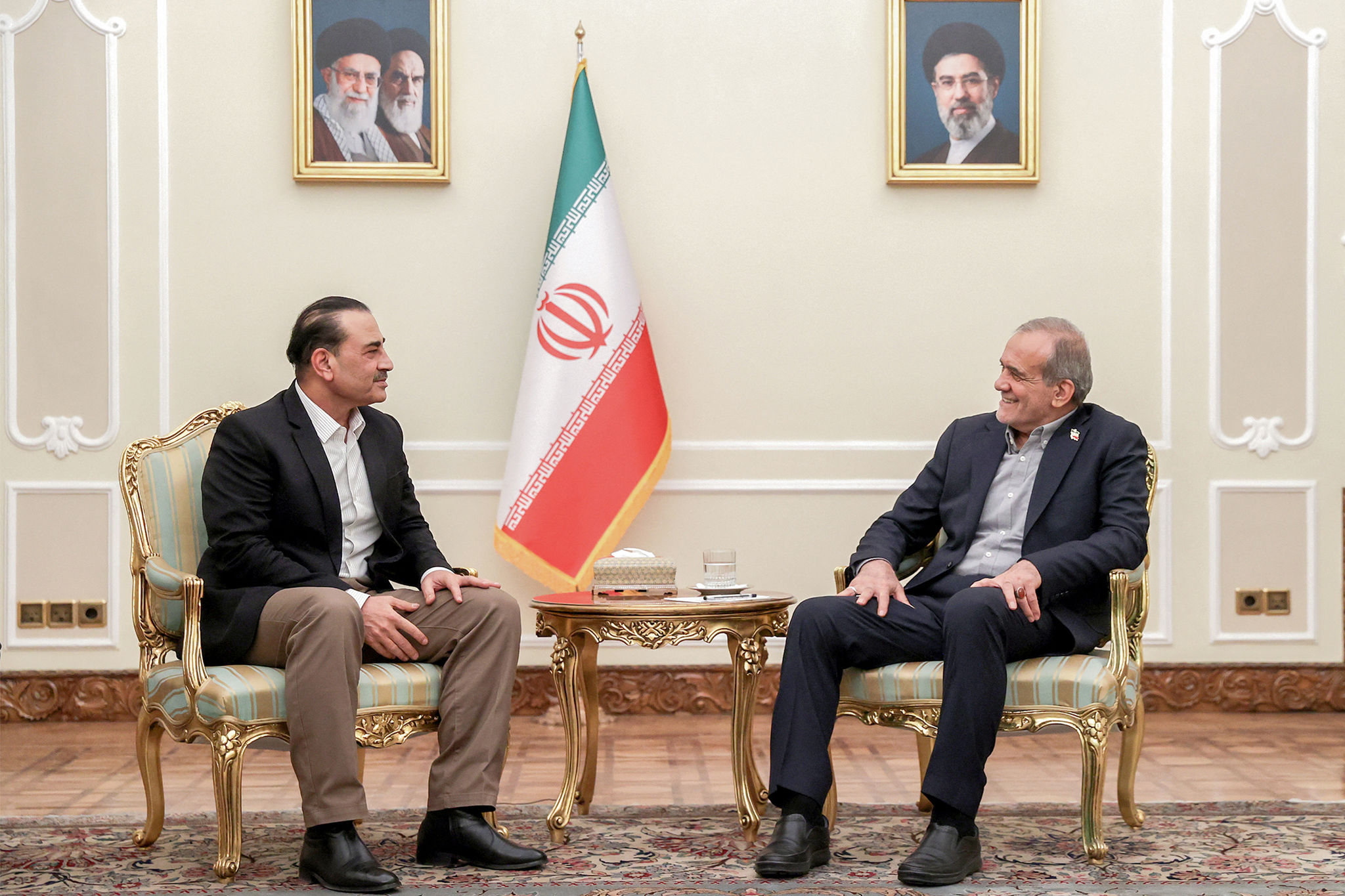
On August 24, Pakistani Army Chief Asim Munir, one of the key mediators in the conflict, arrived in Iran and held private meetings with the Iranian President, the chief negotiator, and the head of the country's top national security agency.
The visit comes after President Donald Trump spoke with Mr. Munir by phone last week.
Pakistan played a crucial mediating role in the negotiations that led to the ceasefire in April, before that agreement collapsed. As a major trading partner of Iran, Pakistan could also be impacted by new sanctions from Washington.
The Omani foreign minister is expected to arrive in Iran on August 25, as Muscat and Tehran seek an agreement on regulating traffic through the Strait of Hormuz.


