
By 2025, traffic accidents will decrease significantly across all three criteria.
Traffic accidents nationwide decreased significantly across all three criteria compared to 2024: the number of incidents decreased by 22.21%, the number of deaths decreased by 6.35%, and the number of injuries decreased by 29.93%.
On the afternoon of January 6th, the Government held an online conference to summarize the work on ensuring traffic order and safety in 2025 and to implement directions and tasks for 2026. Deputy Prime Minister Tran Hong Ha - Chairman of the National Traffic Safety Committee - chaired the conference.
At the Nghe An location, the meeting was co-chaired by: Mr. Hoang Phu Hien - Vice Chairman of the Provincial People's Committee, Deputy Head of the Standing Committee of the Provincial Traffic Safety Committee; Mr. Nguyen Duc Cuong - Deputy Director of the Provincial Police; and Mr. Nguyen Dinh Khang - Deputy Director of the Department of Construction. Also present were members of the Provincial Traffic Safety Committee and representatives from relevant departments and agencies.

Many positive results
During the period 2021-2025, Vietnam achieved many outstanding results in perfecting its legal framework and modernizing its transportation infrastructure. The promulgation and synchronized implementation of the Law on Road Traffic Order and Safety, the Road Law, and Decree 168 have created a unified and modern legal framework; shifting strongly from administrative management to data-driven management, thereby enhancing the awareness of traffic participants regarding compliance with the law.
Furthermore, the application of AI-powered monitoring systems has improved the efficiency of detecting and handling violations, increasing deterrence. The decentralization of national highway management to local authorities has brought about significant changes in the management, operation, and maintenance of transportation infrastructure.
By 2025, the whole country will have exceeded the target of 3,000 km of expressways, contributing to improving traffic conditions, reducing congestion and traffic accidents. Urban railway lines are beginning to show effectiveness, reducing traffic pressure in major cities. The synchronized development of transportation infrastructure has had a positive impact on ensuring traffic safety.
As a result, in 2025, traffic accidents nationwide are expected to decrease significantly across all three criteria compared to 2024: the number of accidents will decrease by 22.21%, the number of deaths by 6.35%, and the number of injuries by 29.93%.
In Nghe An province, traffic safety and order maintenance in 2025 achieved many positive results. The province recorded 362 traffic accidents, a decrease of 37 cases (9.3%); resulting in 261 deaths, a decrease of 5 deaths (1.9%); and 203 injuries, a decrease of 27 injuries (11.7%). Notably, there were no inland waterway traffic accidents... To achieve these results, the province's functional forces intensified patrols, inspections, and strictly handled violations. Investment and infrastructure upgrades were implemented comprehensively and effectively by the province.
Reduce traffic accidents by at least 50%.
In 2026, the whole country will continue to pursue the goal of sustainably controlling and reducing traffic accidents across all three criteria; overcoming traffic congestion at key routes and hubs; and reducing environmental pollution from transportation activities.
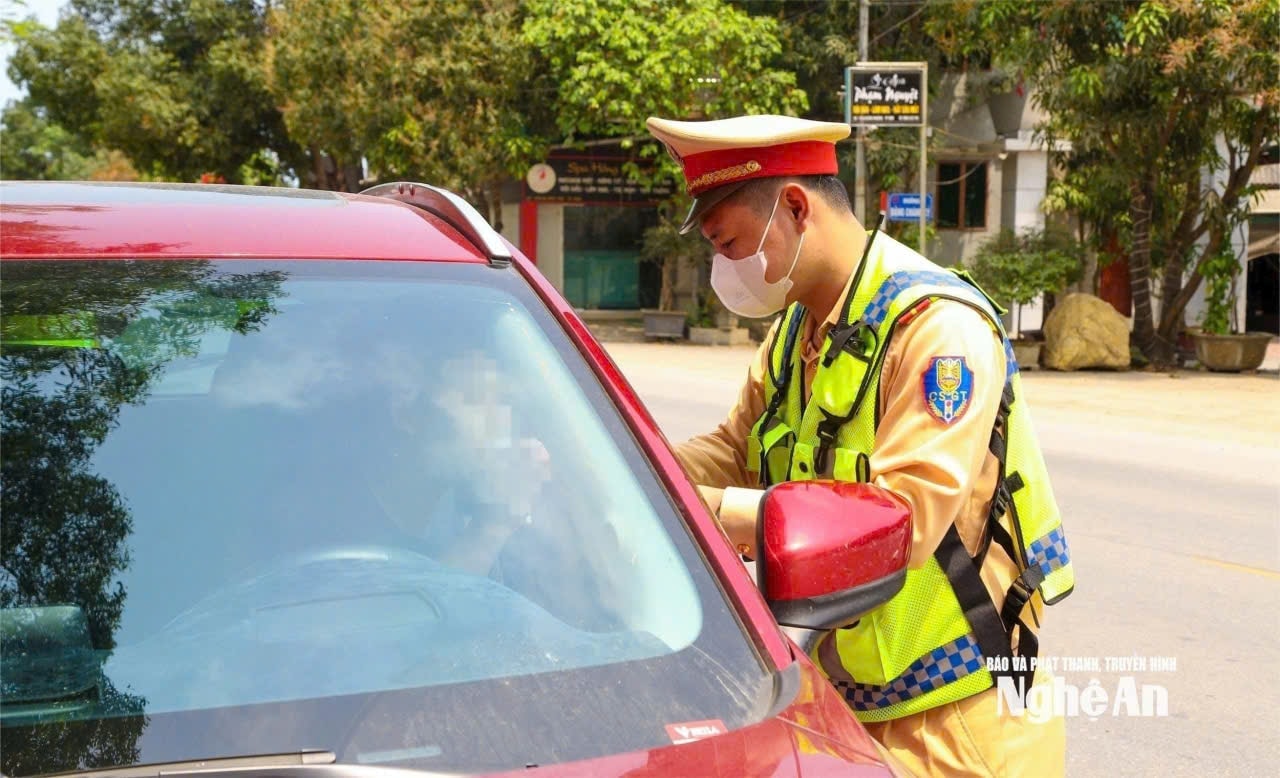
In his remarks at the conference, Deputy Prime Minister Tran Hong Ha instructed: The Ministry of Public Security is responsible for conducting driving tests, issuing driver's licenses, and establishing standardized training areas to ensure that 90% of drivers have valid licenses; it will lead campaigns to control passenger and cargo transport vehicles; conduct direct patrols and inspections on the roads and use data from dashcams to monitor vehicle journeys; and it will coordinate with the Ministry of Education and Training to provide legal guidance and safe driving skills training for students, especially those using motorbikes.
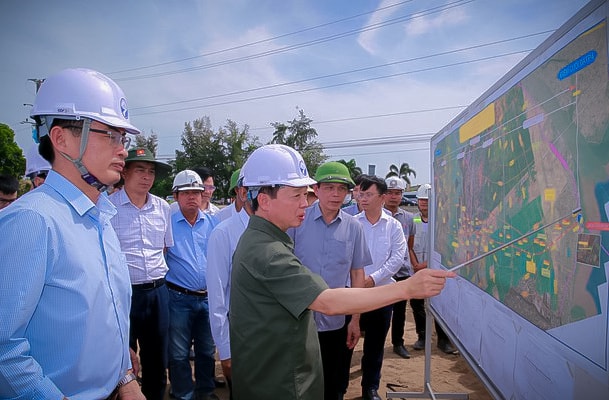
The Ministry of Construction is responsible for the inspection and technical safety assessment of vehicles and needs to have a clear improvement plan; it will take the lead in coordinating with the Ministry of Finance to eliminate 100% of direct causes of accidents such as black spots and unauthorized crossings between railways and roads by 2026; and it will review and issue standards for different types of roads, ensuring infrastructure is suitable for each type of vehicle and road class.
The Ministry of Education and Training has incorporated traffic safety education into the curriculum in a specific manner; ensuring that 100% of students understand traffic laws and that students who ride motorbikes attend skills training classes. School administrators and principals will be held responsible if violations of traffic safety regulations occur within schools.
Local authorities must proactively set and register traffic accident reduction targets with the Government; they must reduce the number of accidents, deaths, and injuries. The general target is to reduce traffic accidents by at least 50% in 2026 compared to 2025 (for areas that have already achieved this level, the target must be higher, from 60-70%). Local authorities must assign specific targets to each transport enterprise and related units in their area.
Following the directives, in 2026, Nghe An will continue to effectively implement Directive 23-CT/TW; strictly enforce the Law on Road Traffic Order and Safety, the Road Law, and the Prime Minister's Directives.
Authorities are intensifying patrols and inspections, strictly handling behaviors that directly cause serious accidents such as drunk driving, drug use, speeding, overloading, and modifying vehicle bodies; developing control plans for each route and area, especially industrial zones and tourist areas; and promoting the habit of "if you have drunk alcohol, don't drive."
In addition, the province continues to invest in and improve transportation infrastructure; repair landslides and road breaks in mountainous areas, and repair suspension bridges swept away by floods; and enhance the effectiveness of state management in transportation, traffic organization, and driver training and testing.


