
NASA successfully tested the X-59 QueSST aircraft, achieving a supersonic speed of Mach 1.1.
NASA's X-59 prototype aircraft has just completed a significant milestone, reaching Mach 1.1, opening up prospects for quiet supersonic flights over land.
NASA's X-59 QueSST drone has officially achieved supersonic speed in its latest test flight. This is a key milestone in the next-generation aviation technology development program, aiming to demonstrate the ability to fly at supersonic speeds while ensuring quiet operation for populated areas below.
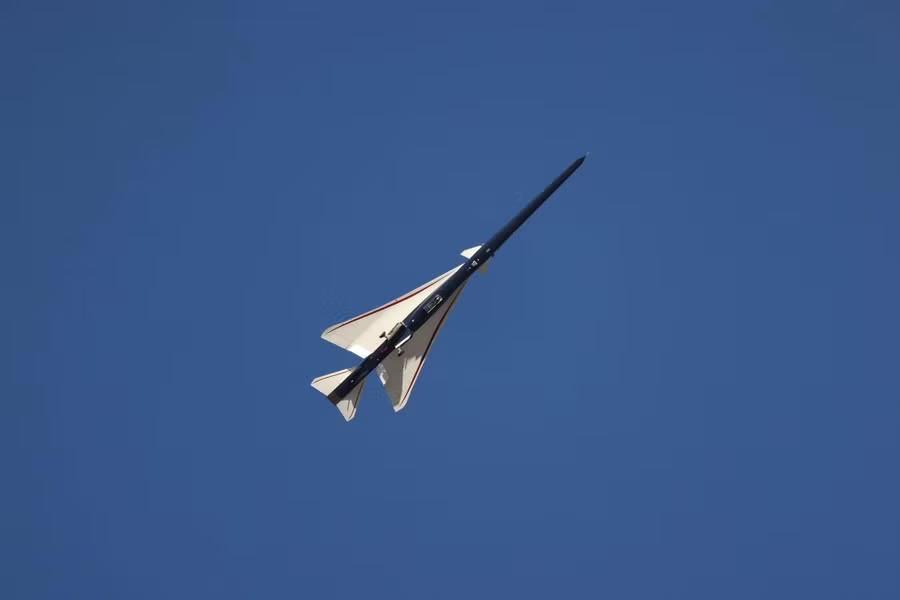
The Mach 1.1 test flight sequence
The flight, conducted by test pilot Jim "Clue" Less, took off from Edwards Air Force Base in California. According to NASA, the aircraft reached a speed of approximately Mach 1.1 (faster than the speed of sound) during its 81-minute journey, which began at 11:08 a.m. (Pacific Time).
Throughout the testing process, experts conducted detailed assessments of the aircraft's flight characteristics in both subsonic and supersonic modes. Notably, a NASA F-15 fighter jet flew alongside to monitor and measure the acoustic data generated by the X-59.
QueSST technology: Eliminating ultrasonic noise.
The core objective of the QueSST (Quiet SuperSonic Technology) program is to replace the sonic boom with smaller noises, described as gentle "thumps." This is achieved through a special aerodynamic design with a nose section that is 28.7 meters long and extremely pointed.
This design allows for the dispersion of shock waves, preventing them from coalescing into a large explosion when the aircraft breaks the sound barrier. If this technology proves successful, international regulations restricting supersonic flight over land could be lifted, ushering in a new era for high-speed commercial air transport.
Key technical specifications of the X-59 aircraft.
This experimental aircraft is equipped with the most advanced aviation technologies available today to optimize performance and reduce noise:
- Engine:It uses the powerful F414-GE-100 jet engine.
- Size:Its total length reached 28.7m with a wingspan of 9m.
- Target speed:Designed for stable operation at supersonic speeds with minimal acoustic impact.
The X-59 is scheduled to make its maiden flight in late October 2025. Upcoming tests will focus on measuring community reactions to the sounds emitted as the aircraft flies overhead, providing data for aviation regulators to consider changes to current regulations.


