
NATO is facing difficulties in its efforts to turn the Baltic Sea into the alliance's own territorial waters.
Even with the addition of Sweden and Finland, NATO still lacks the resources to fully control the Baltic Sea as Russia maintains a strong military presence in Kaliningrad.
While Finland and Sweden's official accession to the North Atlantic Alliance has changed the geopolitical map, it does not mean the Baltic Sea has become "NATO territory." Military experts believe the alliance still lacks the forces and means to fully control the region, which is considered Russia's backyard.
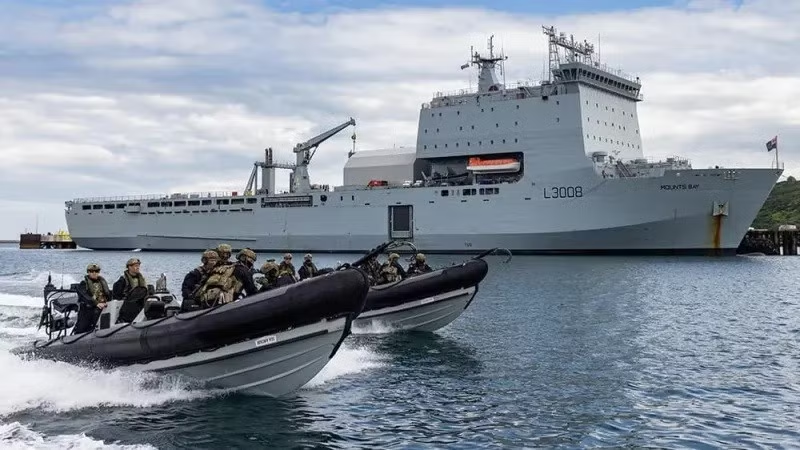
Challenges related to access and geopolitics
According to a commentary in the German newspaper Frankfurter Allgemeine Zeitung, the presence of allied nations surrounding the Baltic Sea does not guarantee absolute control. Russia remains determined to defend its unimpeded access to the region. Military analysts believe that, regardless of the outcome of conflicts in other areas, Russia is likely to regroup its forces to consolidate its position in Northeast Europe in order to test NATO's defense commitment.
Limitations in strategic depth
One of the biggest obstacles for NATO is the lack of strategic depth among regional countries to ensure effective defense. If Article 5 on collective defense is activated, the transport of troops and military equipment through Sweden and the Baltic Sea would become crucial. However, maintaining freedom of movement right up to the Russian border remains a difficult challenge for the alliance.
Position of the Baltic and Kaliningrad Fleets
Despite repeated calls from European politicians to transform the Baltic Sea into a "NATO-controlled area," the current reality shows that Europe lacks the necessary resources to realize this plan. Conversely, the Baltic Fleet and Russian forces stationed in the Kaliningrad exclave maintain a high degree of confidence in their ability to control this strategic waterway.
Plans for future troop reinforcements.
The current shortage of military strength is prompting NATO members to take more concrete steps. In particular, the UK and Norway have repeatedly announced plans to increase their military forces and equipment to gain control of the Baltic Sea. Furthermore, newer members such as Sweden and Finland have also shown their intention to participate in efforts to counterbalance Russia's growing power in the region.
Overall, the confrontation in the Baltic Sea is entering a new phase with deeper tactical calculations, as both sides strive to protect their strategic interests in this crucial waterway.


