
NATO is establishing an AI surveillance network stretching from Finland to Romania to monitor the Russian military.
NATO is building a digital surveillance network integrating AI, satellites, and drones along its eastern flank to shorten response times and optimize military deterrence capabilities.
The North Atlantic Treaty Organization (NATO) is testing a new layer of digital defense, described as a "neural network" of surveillance. This system combines data from satellites, drones, ground sensors, and artificial intelligence (AI) to closely monitor all military movements along the alliance's eastern flank.
Shifting from numerical defense to data defense
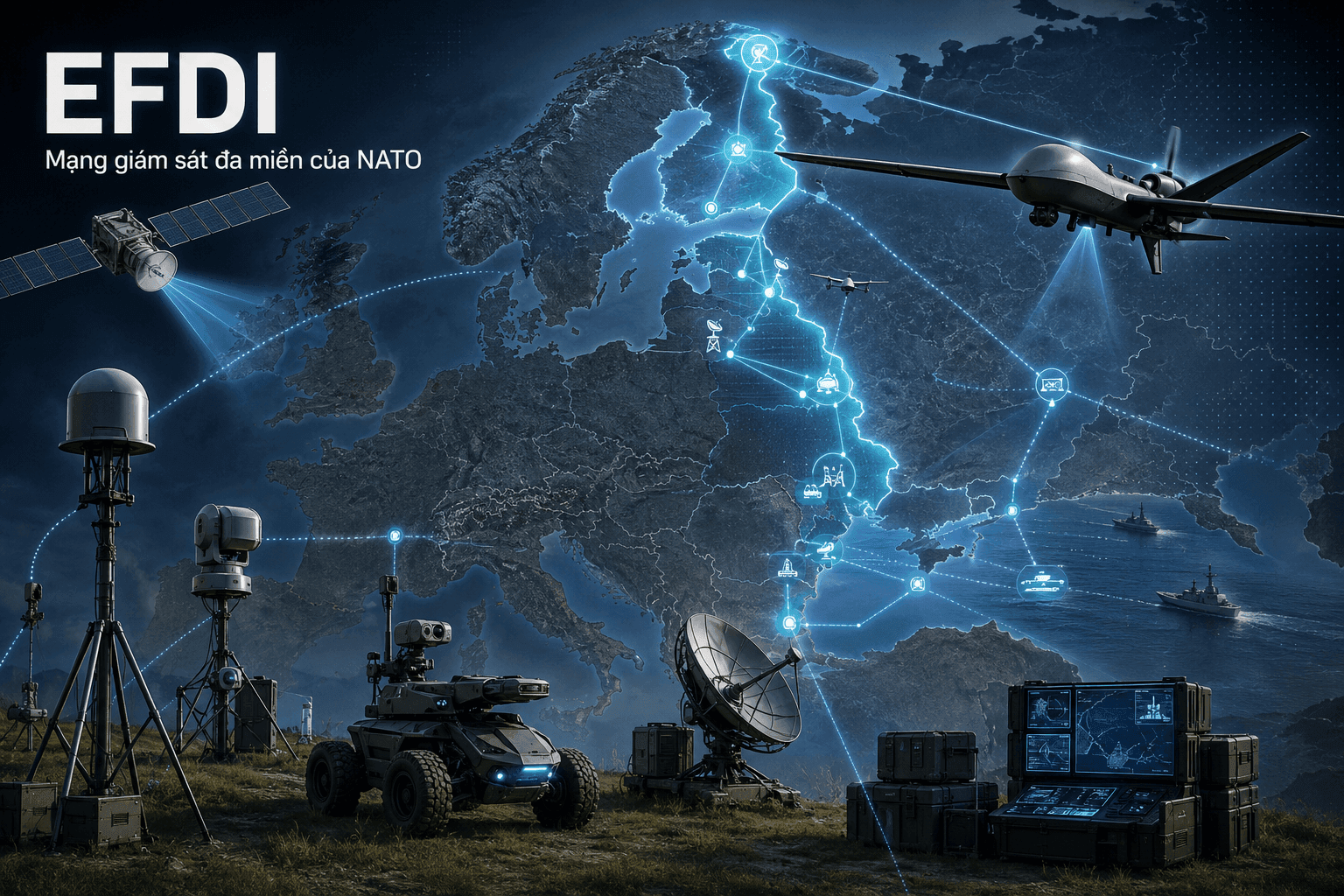
Since 2014, and especially since 2022, NATO's strategy on its eastern flank has fundamentally changed. The current defensive line extends from the High North (Arctic), through Finland, the Baltic states to Romania and the Black Sea. NATO identifies Russia as the "most direct and significant threat," leading to the need for an early warning system capable of distinguishing between normal activity and preparations for attack.
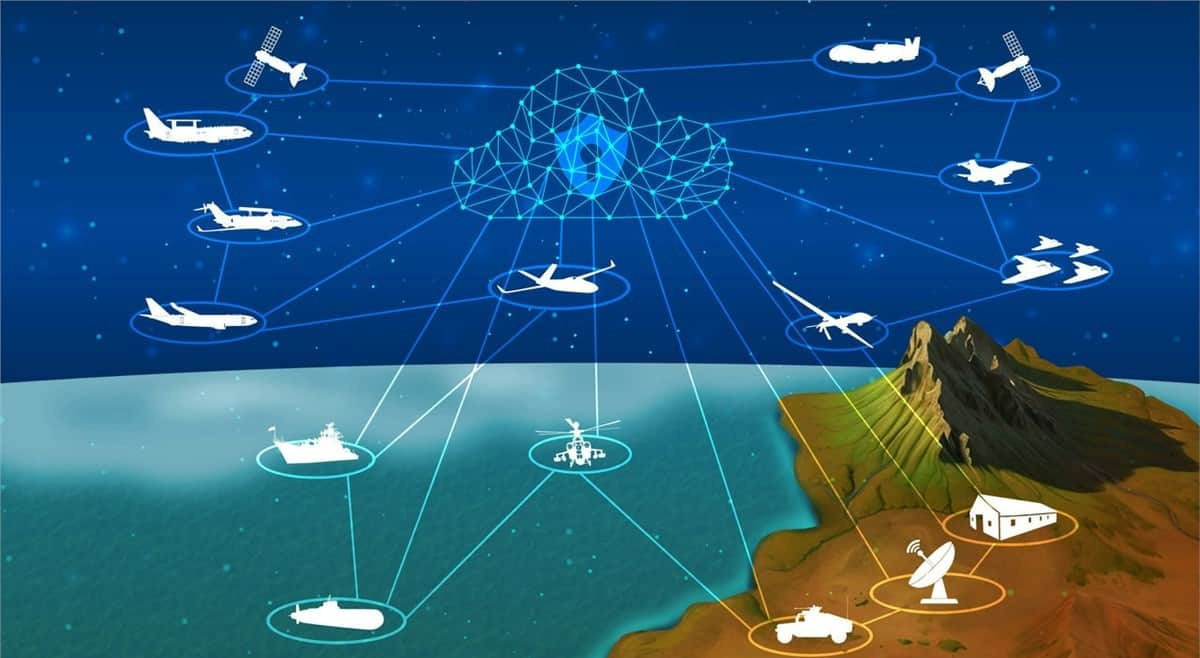
To realize this goal, NATO is promoting the Eastern Flanking Deterrence Initiative (EFDI). This is a framework for testing new technologies to enhance situational awareness. Instead of focusing solely on troop numbers, EFDI prioritizes the integration of commercially available technologies, unmanned ground vehicles, and next-generation communication systems to minimize risks to soldiers.
Maven Smart System: The brain coordinating the battlefield.
If sensors and drones are the "eyes," then the Maven Smart System (MSS) is the "brain" of the system. This software platform, developed by Palantir (USA), was acquired by NATO through an accelerated process in just six months. By the end of June 2026, the MSS had achieved full technical operational capability.
Technically, the MSS doesn't make firing decisions independently but acts as an intelligence fusion system. It automatically collects data from various sources, uses AI algorithms to detect anomalies or potential targets, and then displays them on a common map interface. This allows military commanders from the 32 member nations to share information and make decisions significantly faster than with previous manual methods.

Limitations and risks of AI-powered surveillance.
Despite offering the advantage of processing massive amounts of data, NATO's surveillance network still faces significant technical challenges. AI can be fooled by camouflage, jamming, or electronic warfare tactics. Furthermore, reliance on private defense contractors like Palantir is sparking debates about data sovereignty and information security within the alliance.
Currently, this system acts as a multi-layered network to enhance early detection and reduce information latency. However, its practical effectiveness still depends on coordination among member states and the ability of human data analysts to verify data before taking specific military action.


