
NATO is building a top-secret cloud for Ukrainian data.
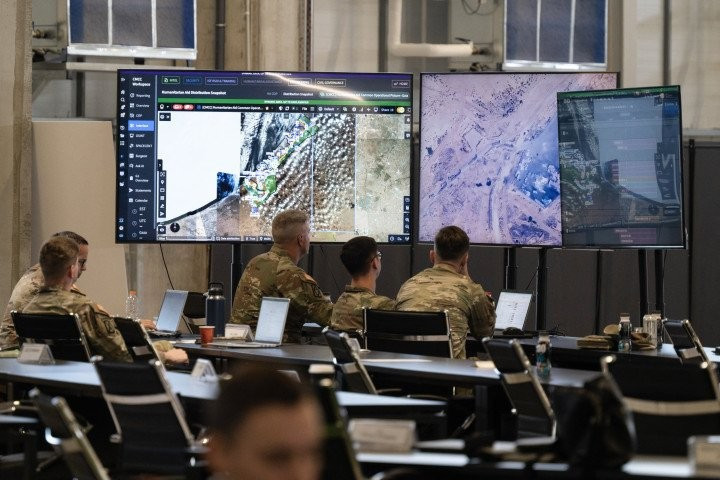
NATO is developing a secure cloud platform to integrate Ukraine's sensor and operational data; this data will be sent to a joint training center in Poland, which is expected to be operational from January 2026.
NATO is building a secure cloud platform to consolidate and process the massive amount of battlefield data generated by Ukraine. According to Tom Goffus, NATO Assistant Secretary General for Operations, the data will be transferred to a joint training center in Poland for processing, with the goal of having the system operational by January 2026.
Overview: Goals and Timeline
The central objective of the system is to receive, integrate, and distribute battlefield data from multiple Ukrainian sensors and combat platforms to allies. NATO has identified the remaining obstacles as primarily procedural and policy-related, not technical. The current focus is on standardizing security procedures so that member states can trust and use them together.
Architecture and security: From network to cloud
NATO officials said current tools are designed according to a “network-centric security” model, while the new effort shifts to “cloud-centric security.” This shift requires a consistent set of policies for access control, classification, and data processing for sensitive information.
To achieve this goal, NATO will learn from the model of major US cloud providers operating “secret clouds” for national security, while also supporting improved secure communication between the Pentagon and allies. The new infrastructure must be controlled and owned by the government; NATO will act as a “gatekeeper,” ensuring standards and procedures are followed.
Instead of expanding the existing network, NATO chose to build a new platform from scratch. This approach aimed to avoid the technical constraints and monopolies of previous federal architectures, which hampered the integration of multinational tools, sensors, and data. The design would be based on open, commercially available architecture technologies, allowing equipment from multiple vendors to operate in the same environment.
Main Information Board
| Category | Detail |
|---|---|
| Target | Integrating, processing, and distributing Ukrainian battlefield data to allies. |
| Expected time | Operational from January 2026 |
| Processing location | Joint training center in Poland |
| Main barrier | Security procedures and policies, not technical details. |
| Architecture | Cloud platform, open technology, build from scratch. |
| Administration | Infrastructure is controlled by the government; NATO is the "gatekeeper". |
| Model reference | Learn from the "cloud computing" of American suppliers. |
Data flow and operational applications
The volume of battlefield data from fighter jets, drones, warships, and other platforms is rapidly increasing, creating pressure to access, analyze, and transmit information in a timely manner. This cloud platform aims to ensure a seamless data flow for command and control as well as support tasks, including medical support.
The long-term vision is for individual nations to equip themselves with sensors and data collection platforms, while NATO takes responsibility for consolidating and perfecting the data flow through a shared cloud-based "information backbone." The result is the formation of a unified data layer that can be exploited by multiple parties within the alliance according to a decentralized system.
Reasons for choosing open architecture and new construction.
Avoiding the expansion of legacy networks aims to overcome the integration limitations of current federal architectures, where technical constraints and proprietary systems make standardized multi-vendor connectivity difficult to achieve. Open architecture allows for compatibility between sensors, analytics tools, and systems across multiple countries, while maintaining common policy security safeguards.
Context for supporting Ukraine
Previously, it was reported that NATO allocated nearly $40 million to equip the Ukrainian armed forces with satellite communications equipment, secure digital services, and support for innovation centers. This portfolio included the DELTA combat management system, based on Ukraine's expertise in cloud technology and artificial intelligence.
Points to monitor
- Refine the security policy framework to ensure mutual trust among members.
- Integrating sensors and tools from multiple vendors using an open architecture standard.
- NATO's ownership of infrastructure and its role as a "gatekeeper" in its operation.
- Real-time responsiveness for large data streams from multiple platforms.
- Deployment milestone: target operational start in Poland from January 2026.
Overall, NATO's focus is on building a secure, interconnected, and scalable cloud platform to transform dispersed battlefield data into a unified information layer that supports operations and allies in a timely manner.


