
Traditional customs "weave" into modern Tet celebrations.
There is a unique Nghe An province during Tet: a place where boats are cherished like life partners, and where words are treasured as prayers for peace. These customs are like soft threads, binding the past to the present, ensuring that Tet remains the warmest haven for people's hearts.
.png)
In many rural areas, the custom of "slaughtering a pig" during Tet (Lunar New Year) has become a unique cultural tradition, a way for people to get through the Tet holidays together through sharing and warmth.
On the morning of the pig slaughter, the whole village woke up earlier than usual. The clanging of knives and chopping boards echoed like a lively drumbeat. Adults were busy, children ran around, each with an indescribable joy in their eyes.
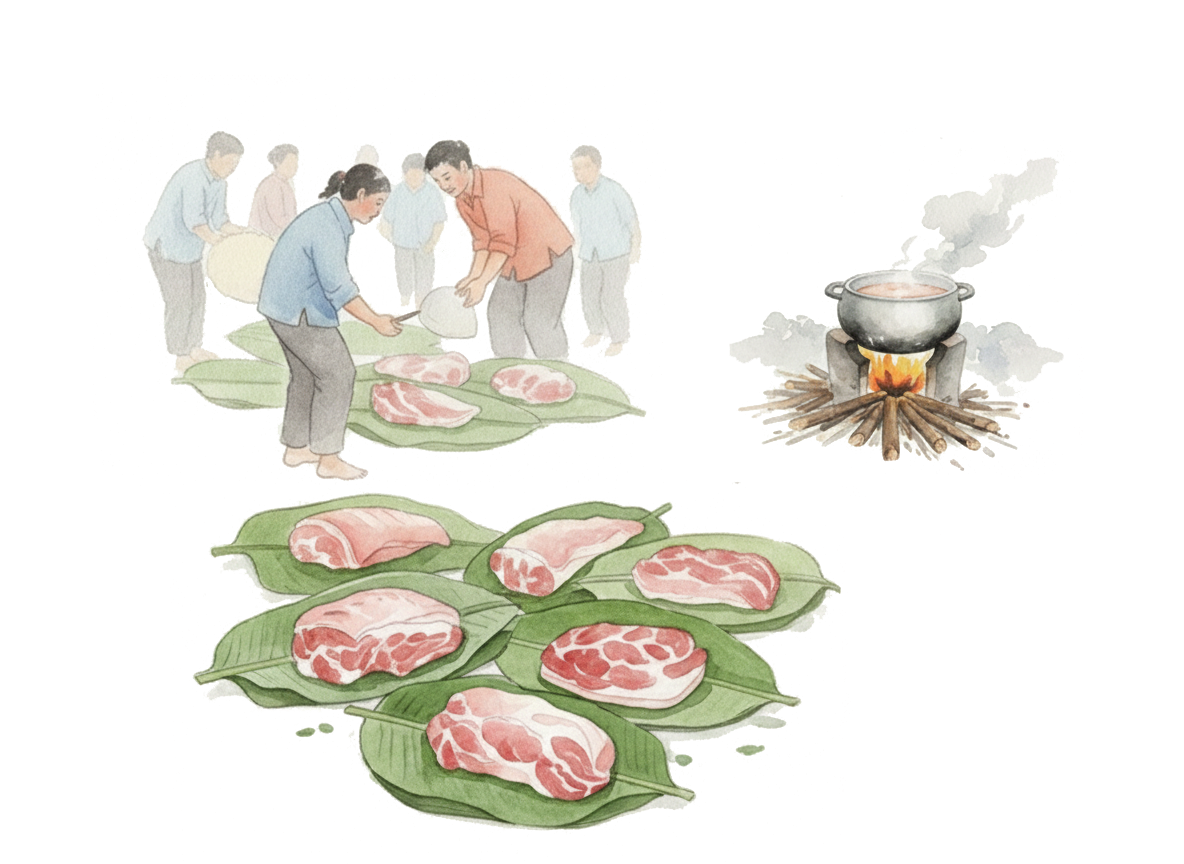
The day of the pig slaughter usually falls between the 23rd of the 12th lunar month and the eve of New Year's Eve. Beforehand, tasks are clearly assigned: who takes care of the cooking, who butchers the pig, and who prepares the vegetables and spices. The yard on the day of the pig slaughter transforms into a miniature Tet market. Strong men tie up the pig, while women nimbly pick vegetables and light the fire. Laughter and chatter mingle with the kitchen smoke, warming a corner of the village.
The adults chatted while they worked, talking about how many sticky rice cakes they had made this year, what they had bought, and whether their children who worked far away would be able to come home for Tet...
Ultimately, slaughtering a pig is how people in the countryside prepare for Tet (Vietnamese New Year) with a strong sense of community and neighborly spirit. It's a collective memory, a vivid expression of Vietnamese village culture – where Tet doesn't come from the supermarket, but begins in the courtyard, from the boiling pot of water, from the fragrant sausage, and from the laughter that spreads throughout the village.
In increasingly cramped urban life, the traditional custom of making banh chung (Vietnamese rice cakes) is becoming difficult to practice. Adapting to this context, the custom of making banh chung in cities has changed somewhat. Instead of making cakes within each house, people have found another way: gathering many families together to make them jointly, so that Tet (Vietnamese New Year) still has a place to anchor itself amidst the bustling city streets.
The atmosphere during the bánh chưng wrapping was lively yet incredibly relaxed. Skilled hands sat alongside beginners, showing them how to arrange the leaves, measure the rice, and tie the strings to make the bánh chưng perfectly square. Some bánh chưng were beautiful, others were misshapen, but no one cared. What mattered wasn't the perfection of the bánh chưng, but the feeling of sitting together long enough, sharing stories that had been missed during the busy year.
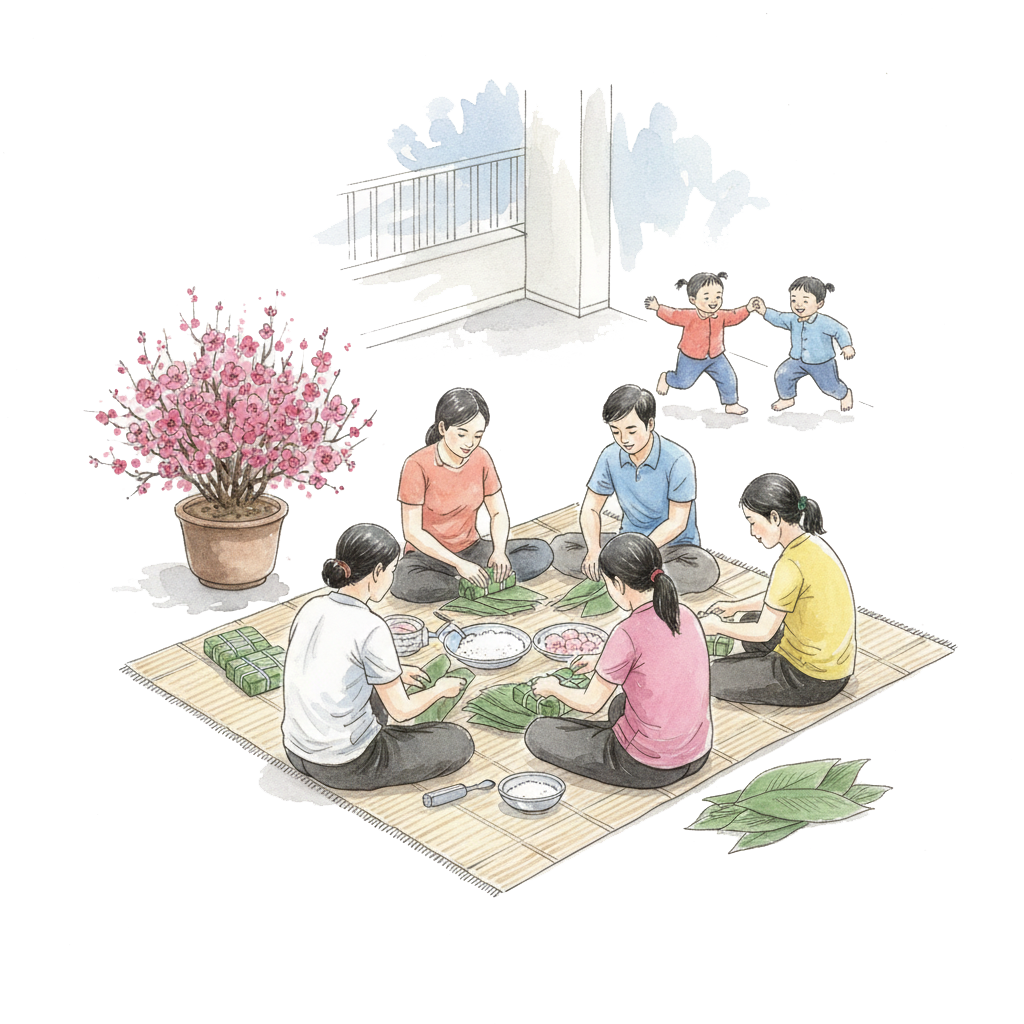
Once the rice cakes were wrapped, a large pot was placed on the stove, and a fire was lit in the late afternoon light. The atmosphere suddenly became quiet, warming with the bubbling sound of boiling water. Adults hurried to set the table and enjoy an early New Year's Eve meal together. In some places, bonfires were lit, and people gathered around to watch over the cakes all night. The flickering firelight and the endless conversations made the end-of-year time seem to slow down in the heart of the city.
Wrapping banh chung (traditional Vietnamese rice cakes) in this "shared" way is not only a solution for modern living conditions, but also a very natural way to preserve the spirit of Tet. When space is shared, joy is multiplied. And in the banh chung made by many hands, people realize that reunion is not just within each house, but can be the bond of an entire community - warm enough to keep Tet alive, even as life has changed.
In the coastal villages of Nghe An province, where the land ends at the sandy beach and begins with the salty scent of the sea breeze, the boat is not just a means of livelihood. It is a second home, a place to entrust one's life, a silent companion that accompanies fishermen through countless stormy seasons. Therefore, when the last fishing trip of the year concludes, and Tet (Lunar New Year) has not yet arrived at every door, the ritual of offering sacrifices to the boat has already quietly begun.
In the days leading up to Tet (Lunar New Year), the docks are chilly and cold. A light spring rain falls, and the fishing village seems to quiet down after a year of tossing and turning with the tides. Yet, on the boat landing, one can still see people busily working: washing nets still smelling of fish, cleaning the decks, sweeping every corner of the cabins, and re-tying the mooring ropes worn down by years. The boats are meticulously cared for as if preparing for a sacred moment – a moment of being listened to and appreciated.
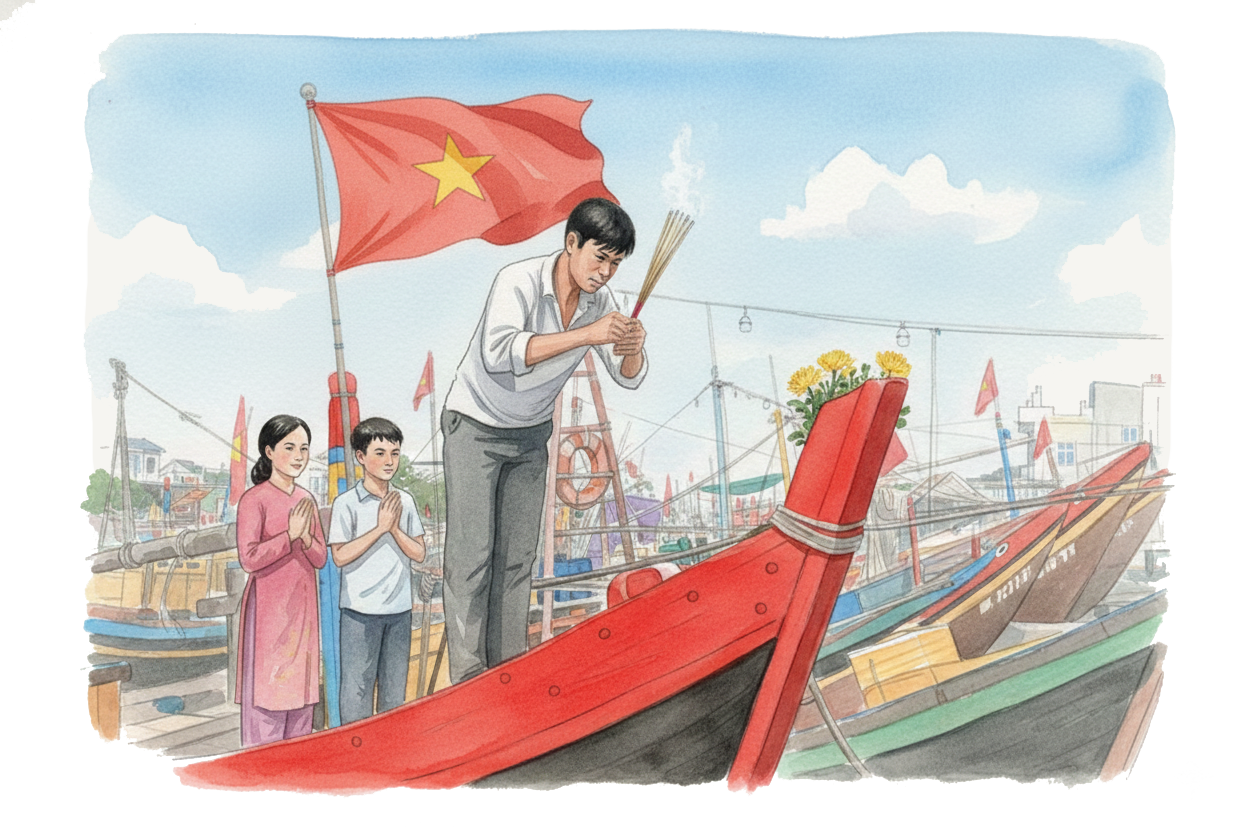
The boat blessing ceremony is a quiet ritual, yet it holds many layers of meaning. It's a time for seafarers to bow their heads in remembrance of their ancestors who opened waterways and passed down the experience of making a living on the open sea. It's a time for them to silently thank their boats for braving the waves and winds, bringing them back after each long journey. And it's also a time to offer prayers to the river and sea gods, hoping for a peaceful new year, a full boat full of fish, and the health and unity of the crew.
Some have been in the profession since their late teens or early twenties, having sailed the seas and served as "boatmen" in charge of cooking on the boats. For them, the boat worship ceremony is a lifelong memory, like a familiar rhythm of breathing each spring. Besides the boat worship ceremony, there are also customs such as opening the sea, dipping the boat in the first waters of the year, and worshipping the Whale God… all creating a beautiful system of spiritual values, reflecting how fishermen live in harmony with the sea.
On the morning of the first day of the Lunar New Year, everything is unusually clear and fresh. The air seems cleansed after a long New Year's Eve, pure and sacred. Adults often take their children and grandchildren to temples and shrines in the thin, silken morning mist. People speak softly, whispering, as if afraid to disturb the unique tranquility of the first morning of the year. The practice of requesting calligraphy usually takes place in the temple or shrine space – where the scent of incense blends with the smell of old wood, where the ringing of bells is enough to calm the heart. Amidst this solemn and sacred atmosphere, the characters are no longer just ordinary writing, but become a prayer.
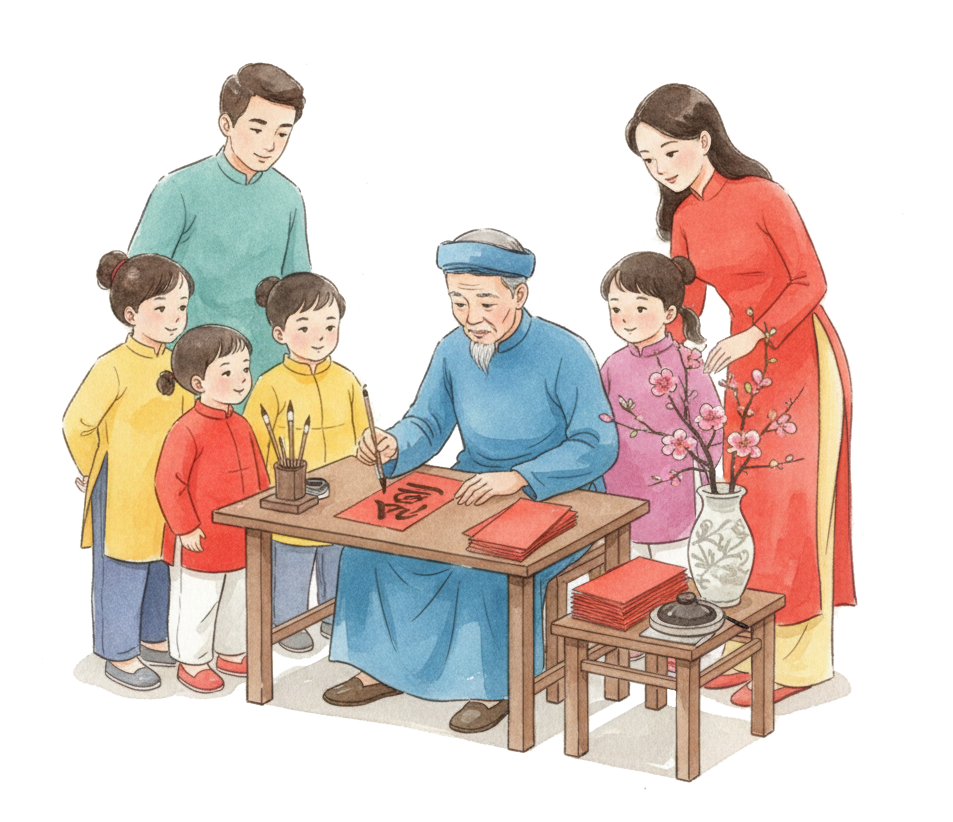
Those seeking calligraphy stood waiting in an orderly fashion, each carrying a subtle sense of anticipation. Children huddled close to their parents, their curious eyes gazing at the neatly arranged sheets of colored paper, awaiting the first stroke of the pen in the new year.
In Nghe An, asking for calligraphy at the beginning of the year is also a way for adults to teach children to appreciate literacy and good manners. Bringing the calligraphy home to hang in the house, people keep not just a piece of paper with ink, but the pure feeling of the first day of the new year. The characters lie there, silently reminding: The new year has begun with a good intention. And for the people of Nghe An, that alone is enough to enter the new year with peace of mind, steadfastness, and full of hope.


