
Russia adds 24 Su-34s and Su-35Ss: changing the pace of the attack.
Ukrainian sources indicate that Russia received approximately 14 Su-34s and 10 Su-35Ss in 2025, increasing its long-range strike and air support capabilities while reducing the risk to Ukrainian air defenses.
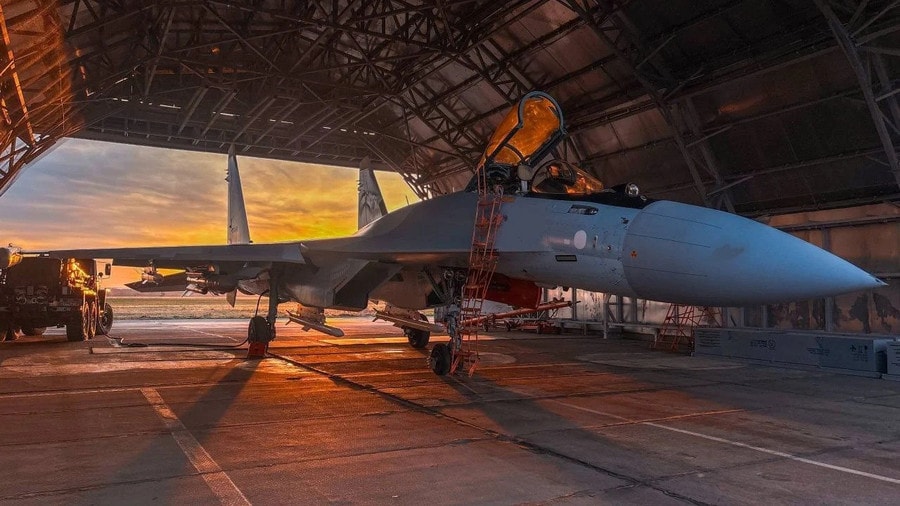
According to sources from Ukraine, Russia received approximately 24 new fighter jets in 2025, including about 14 Su-34s and 10 Su-35Ss, to supplement its air force. This move is seen as helping Moscow increase the pace of using guided air-to-ground weapons and strengthen air support for the front lines as the conflict enters its fourth year.
Overview and context
The new aircraft allow Russian forces to conduct more attacks from within Russian airspace, while Ukraine remains restricted from using certain types of missiles supplied by its partner to attack Russian air bases. These constraints reduce Ukraine's ability to directly pressure enemy air infrastructure, thereby helping Russia maintain an operational air force near the front lines.
Characteristics and roles according to source
The Su-34, manufactured by the Sukhoi Design Bureau and operated by the Russian Aerospace Forces, is a twin-engine attack aircraft specializing in launching glide bombs and precision weapons from long distances. The Su-35S is described as Russia's most modern mass-produced fighter jet, playing a key role in achieving air superiority.
| Aircraft | Number of admissions (2025) | Role by source |
|---|---|---|
| Su-34 | Around 14 | Attack, launch glide bombs and precision weapons from long distances. |
| Su-35S | About 10 | Main fighter aircraft, achieving air superiority. |
Deployment and tactics
According to the assessment, Russia is increasing its long-range offensive capabilities using guided weapons launched from safe zones, reducing direct contact with Ukrainian air defenses. This method maintains ground fire pressure while supporting ground advances with air support, especially in battlefield areas where glide bombs are considered to play a decisive role.
Losses and their causes in 2025
Ukrainian experts have noted a shift in the causes of Russian aircraft losses in 2025: instead of being primarily shot down by air defenses or destroyed at airfields as in the early stages, the majority of recent losses are non-combat in nature, including technical malfunctions and pilot error. The open-source monitoring group Oryx previously reported that Ukraine had destroyed “at least 41 Su-34s and 8 Su-35S” since the full-scale conflict began, with the majority occurring in the early stages.
| Losses according to Oryx (since the start of full-scale conflict) | Quantity |
|---|---|
| Su-34 | At least 41 |
| Su-35S | 8 |
Industrial capacity and campaign maintenance
Russia is believed to still maintain the capability to commission additional Su-34s and Su-35S aircraft to compensate for losses, although some subsystems may be simplified or downgraded due to the impact of sanctions. The addition of new airframes expands potential attack capabilities and enhances air support in priority areas.
Impact on the battlefield
Ukrainian units in several regions reported continuing to suffer glide bomb attacks from Su-34s, launched from beyond the reach of Ukrainian air defenses. This reflects a shift in how Russia deploys its air force: prioritizing long-range attacks to minimize risks to air defenses, while masking internal technical and personnel problems.
Technical and tactical conclusions
Based on the figures presented, the acquisition of approximately 24 Su-34 and Su-35S aircraft in 2025 would support Russia in enhancing its long-range strike capabilities and maintaining air support for ground forces. Simultaneously, the risk from Ukrainian air defenses tends to decrease as Russia maintains a safe distance, while challenges regarding technical maintenance and pilot training quality become more prominent. These factors could continue to shape how both sides adjust the intensity and form of air combat.


