
Russia grants patent for Arena-M system to help tanks destroy FPV drones.
The Russian Machine-Building Design Bureau has developed a new radar algorithm for the Arena-M system, enabling main battle tanks to accurately detect and intercept FPV drones.
The Federal Institute of Industrial Property of Russia (FIPS) has just published documents detailing a new advancement in the country's defense industry in protecting armored forces. Specifically, the Machine Building Design Bureau (KBM) in Kolomna has been granted a patent for an improved operating method of the Arena-M active protection system (APS).
Technical solutions to counter drone attacks.
This move is seen as a direct response to the existential challenge facing modern tanks, as FPV drones are increasingly proving highly effective on the battlefield and changing the landscape of tank and armored vehicle warfare.
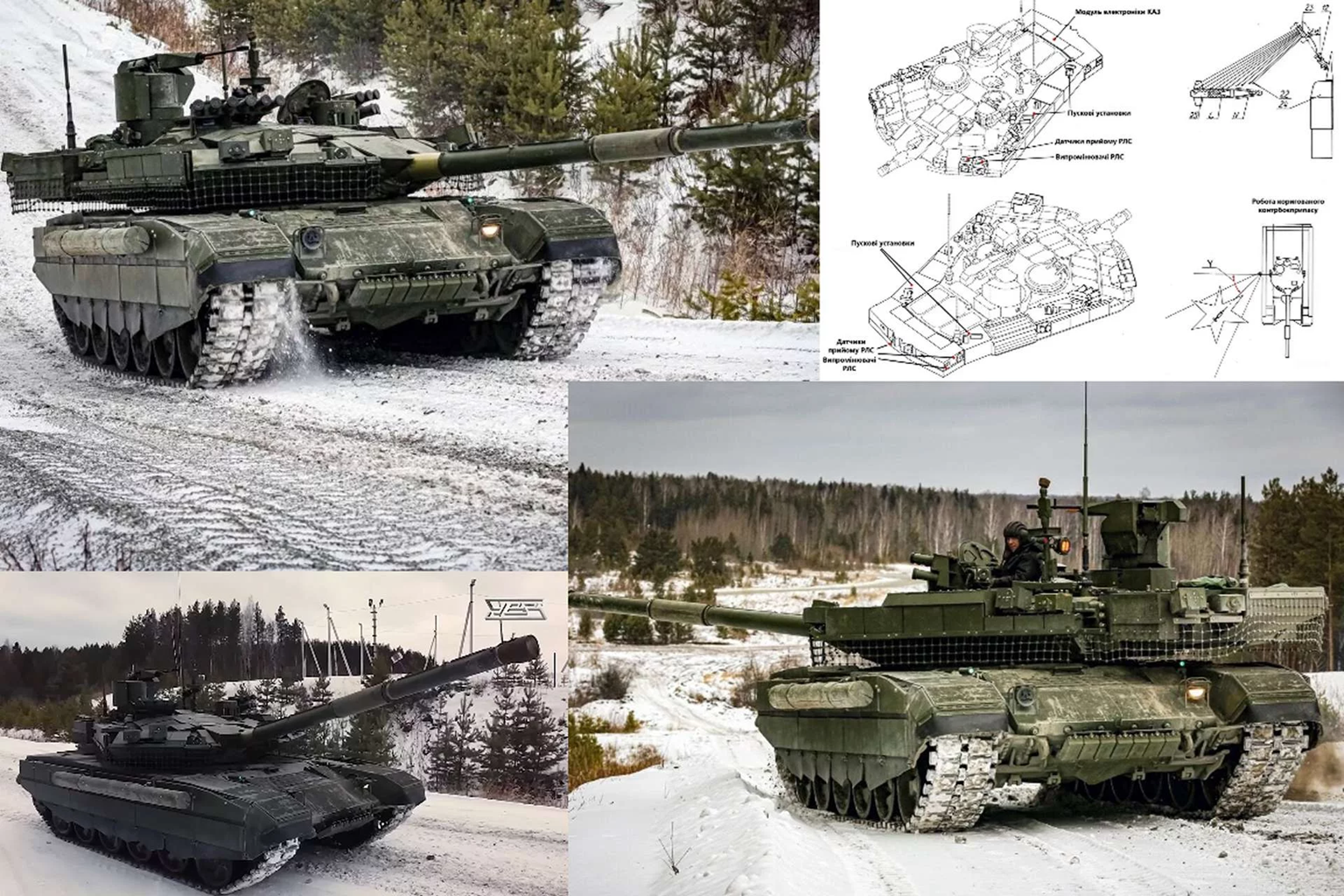
Patent number 2853544, effective from May 23rd, focuses on addressing the "fatal flaw" of tanks against small, slow-flying, and inexpensive drones. In the context of the Russian military integrating Arena-M onto main battle tanks such as the T-72B3M and T-90M, this filing demonstrates a shift from rudimentary measures like steel cages to an integrated defense system based on intelligent algorithms.
Multi-layered target locking algorithm
The document describes an improved process that allows the APS to track and intercept threats more accurately. The tank's radar continuously scans the area and detects objects when they cross a pre-set "alert threshold." The system immediately records the target's location, velocity, and timestamp.
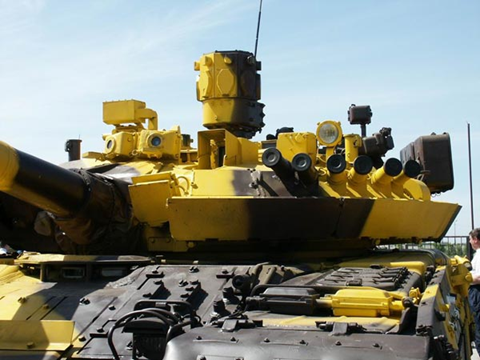
Based on the data, the processor adjusts the warning thresholds as the tank gets closer, creating a mechanism to continuously "lock onto" the target until it enters the kill zone. There, the interceptor rounds explode, creating shrapnel that incapacitates the target.
The breakthrough lies in its ability to identify multi-rotor drones. The radar will alternate between a long-range scanning capability for missiles and a short-range scanning capability for drones. Instead of searching for the drone's body, which has a small radar cross-section, the radar switches to identifying the distinctive signals from the rotating propellers, allowing it to detect targets even when they are flying slowly or hovering.
Tactical advantages and practical challenges
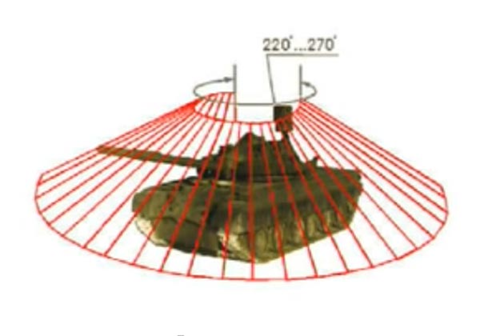
In theory, this combination creates a hemispherical protection zone with a radius of several tens of meters around the tank. Utilizing existing sensor hardware helps limit the need to install additional bulky equipment.
However, observers note that there is still a gap between patents and actual combat. Micro-drones made from low-radar-reflective materials and flying close to the ground remain a significant challenge. Furthermore, the risk of false alarms could waste limited defensive ammunition and endanger accompanying infantry.
The system also hasn't completely addressed the vulnerability at the top of the turret, a target often posed by top-attack projectiles and dive drones. Adding passive steel cages sometimes interferes with radar scanning, creating a complex integration problem for Russian military engineers.


