
Russia has released specifications for the RS-28 Sarmat missile, stating its range is 35,000 km.
Russia's new generation RS-28 Sarmat intercontinental ballistic missile (ICBM) system possesses near-orbital flight capabilities, allowing it to strike targets from unexpected directions and neutralize defensive shields.
Russian President Vladimir Putin has just released details about the RS-28 Sarmat, a heavy intercontinental ballistic missile (ICBM) considered the most powerful weapon system in the world today. According to publicly available data, the Sarmat boasts a range of up to 35,000 km, setting a new record in the history of global military equipment.
Suborbital flight technology and destructive power
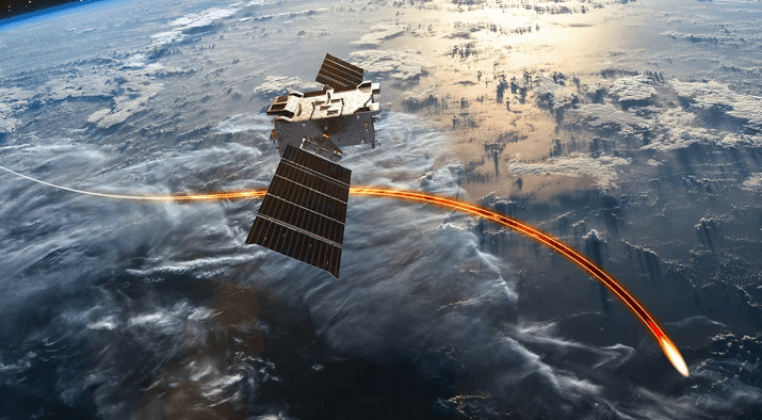
The core difference between the RS-28 Sarmat and traditional ICBMs is its ability to operate on a near-orbital trajectory. Instead of flying along a conventional ballistic path, the Sarmat can travel at extremely high altitudes, allowing it to approach its target from any direction, including over Antarctica. This makes it easier for the missile to bypass early warning radar networks and missile defense systems (NMDs), which are designed to intercept attacks from the shortest possible distances.
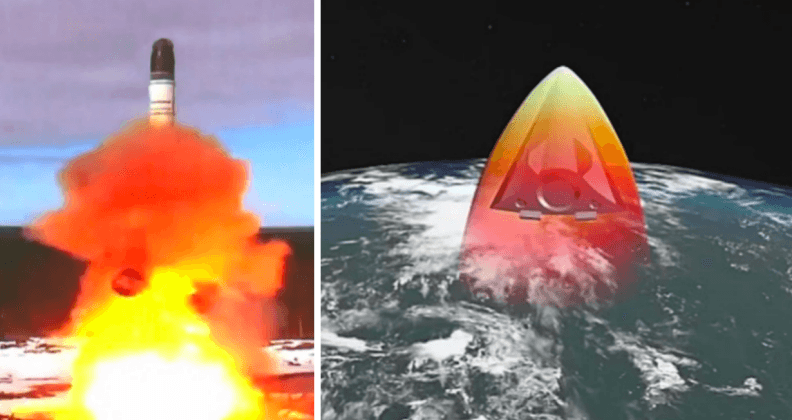
In terms of offensive power, the Sarmat inherits and develops from the Soviet-era R-36M2 Voyevoda. The total explosive yield from the Sarmat's warheads is said to be four times greater than that of comparable Western systems. Notably, this missile integrates the Avangard hypersonic glide vehicle (HGV), capable of dynamically changing its trajectory in the atmosphere at extremely high speeds.
Strategic missile balance
The emergence of Sarmat has significantly altered the strategic nuclear power landscape. Compared to its predecessors and rivals, Sarmat is far superior in terms of range and military payload.
| Missile system | Nation | Estimated range (km) |
|---|---|---|
| RS-28 Sarmat | Russia | 35,000 |
| DF-41 / DF-5 | China | ~15,000 |
| Hwasong-17 / Hwasong-18 | Chosen | ~15,000 |
| LGM-30G Minuteman III | America | 13,000 |
| Topol-M / Yars | Russia | 11,000 |
Technical specifications of the 208-ton "Monster"
The RS-28 Sarmat is a liquid-fueled missile with a launch weight exceeding 208 tons, making it the heaviest missile in Russia's arsenal. Unlike the highly mobile Yars series, which are launched from mobile launchers, the Sarmat is deployed in fortified silos. This is part of a strategy combining survivability and heavy deterrence capabilities in Russia's nuclear forces.
The Russian military put the Sarmat into combat readiness in August 2023 after completing successful testing. Moscow claims that the system will have no equal for decades to come thanks to its ability to penetrate all current and future defense systems.
The reaction of the Western military.
The development of hypersonic technology integrated into ICBMs, such as the Avangard and Sarmat programs, is creating significant pressure on NATO nations. US military officials have expressed concern about the rapid development of hypersonic weapons by adversaries, as current missile defense systems are primarily based on calculating fixed ballistic trajectories.
In 2024, Russia stated that its investment in asymmetric technologies like Sarmat had rendered the enormous costs of enemy missile defenses ineffective. The ability to strike targets from incredible distances and along complex trajectories allows Russia to maintain its leading position in the field of strategic weapons.


