
Russia announces Su-57 lifecycle; Germany tests Sky Sphere anti-UAV system.
The Su-57 will serve for another 20-30 years, and will undergo further flight testing after integrating new weapons; Diehl Defence inspects the Sky Sphere at Grafenwoehr; South Korea launches the ROKS Jeonnam FFG-831.
Russia says the Su-57 fighter jet can continue service for another 20–30 years, while maintaining testing whenever new weapons or systems are integrated. In Germany, Diehl Defence completed a series of tests of the Sky Sphere modular anti-UAV system at the Grafenwoehr training ground. South Korea launched the ROKS Jeonnam (FFG-831) Chungnam-class frigate, aiming for commissioning by the end of 2026.
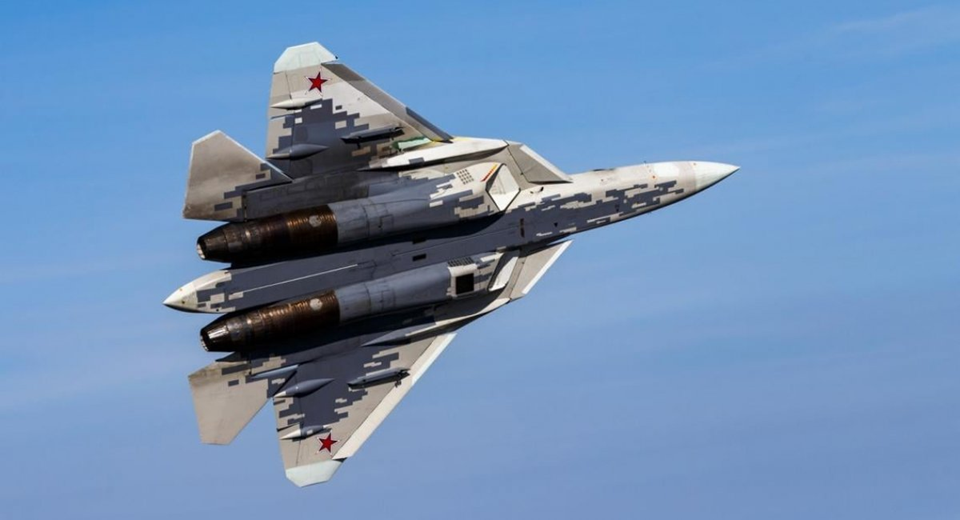
Russia announces the lifecycle of the Su-57 fighter jet.
According to Sergei Bogdan, Sukhoi's chief test pilot, the Su-57 could serve for another 20–30 years. Each time new weapons or systems are integrated, the aircraft will undergo re-test flights to assess its maneuverability, stability, and structural durability.
The Su-57, often described by Russia as a “4++ generation” aircraft, made its first flight in 2010 and entered service eight years later. The PAK FA program, launched in 2001, was approved as a state program in late 2002. The first full-size model appeared in 2004; the T-50-1 prototype first flew in 2010. During the testing phase, Russia built a total of 10 prototypes to finalize the design. In August 2017, the aircraft was officially named the Su-57; Russia announced serial production in 2019 and received the first aircraft from this production line in 2020.
Defense Express cites the example of the Kh-101 cruise missile for the Tu-95MS bomber, which took over 20 years to perfect, and predicts that Russia will need a similar timeframe if it wants to create a long-range weapon like the JASSM for the Su-57. With a projected long lifespan, the stated goal is to maintain current capabilities while carrying out periodic upgrades, from integrating long-range weapons to modernizing avionics.
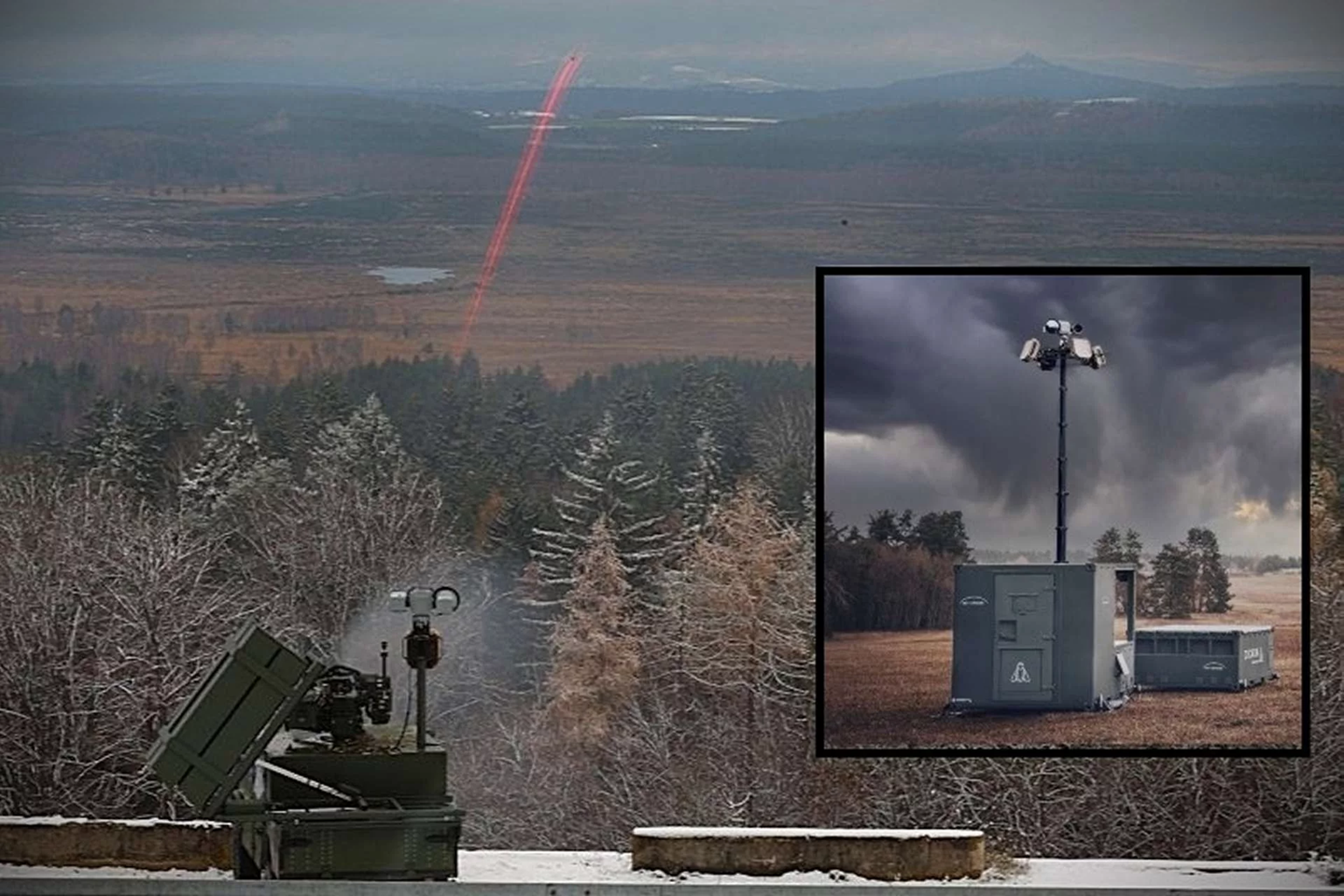
Germany tests Sky Sphere, a new generation anti-UAV system.
Diehl Defence announced the completion of a series of crucial field tests at the Grafenwoehr training ground in Germany, aimed at building a multi-layered defense against inexpensive UAVs – from suicide drones to fixed-wing UAVs – that are significantly impacting battlefields in Ukraine and the Middle East.
At the heart of the Sky Sphere modular anti-UAV system are two supporting assets: the KDV mobile air defense vehicle and the CICADA electronic missile system. The KDV is a highly mobile platform using radar, electro-optical sensors, and a remotely controlled weapon station to automatically detect, track, and engage close-range UAVs. Its compact design on a 4x4 chassis is suitable for protecting mobile formations, command centers, convoys, and critical infrastructure.
CICADA is an electronically controlled missile specifically designed to counter small UAVs. It can carry fragmentation or mesh warheads, allowing commanders to choose between destroying or neutralizing them without causing casualties, depending on operational rules. According to Diehl Defence, the test marks a transition from a display model to actual combat capability.
The KDV – which had already been transferred to Ukraine for anti-drone operations – has been upgraded with improved sensors, recognition algorithms, and an expanded effects suite, increasing its effectiveness against a variety of targets, including multirotor drones and high-speed fixed-wing UAVs. Simultaneously, containerized Sky Sphere systems were used to test the "detection-to-kill" cycle under realistic simulations, including classification, tracking, and seamless engagement. Tests also incorporated a long-range munition to counter high-flying fixed-wing UAVs, demonstrating the system's suitability for multi-layered defense rather than standalone operation.
This approach emphasizes cost-effectiveness: instead of using expensive medium-range anti-aircraft missiles like the IRIS-T SLM to shoot down low-cost commercial drones, forces can use KDV or CICADA, saving budget and reserving strategic weapons for larger targets. With its open design, Sky Sphere can integrate additional sensors, high-performance weapon systems (HPEMs), or non-lethal effects in the future.
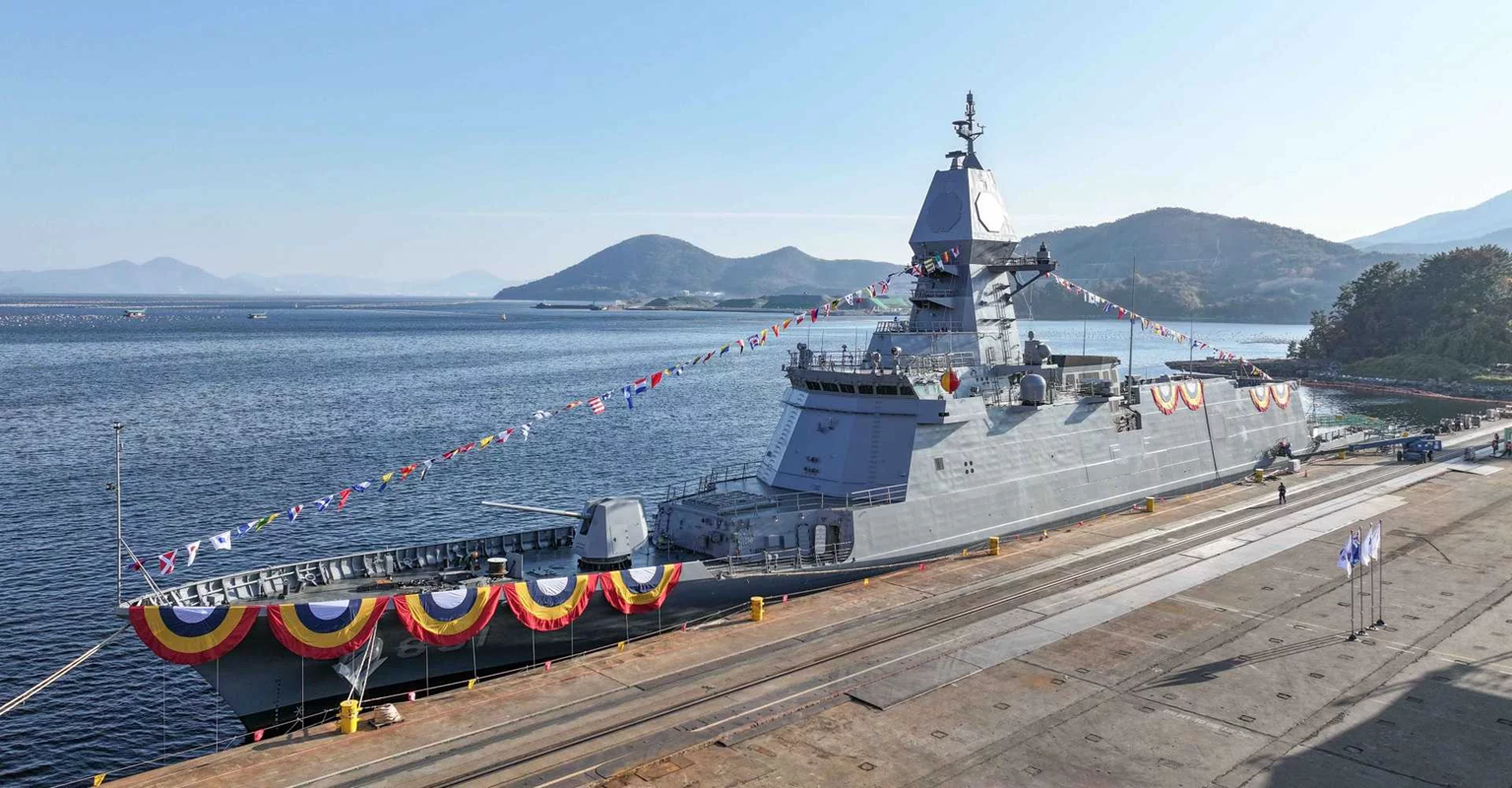
South Korea launches the ROKS Jeonnam frigate.
The South Korean Navy launched ROKS Jeonnam (FFG-831), the third Chungnam-class destroyer, at the SK Oceanplant shipyard in Goseong on November 25. The 3,600-ton vessel will be completed and tested by the end of 2026 before being commissioned, replacing the Ulsan and Pohang-class ships.
The ship belongs to the latest generation of multi-role frigates, utilizing an integrated sensor tower, a four-sided active electronically scanned array radar, and a new generation combat control system, allowing for 360° monitoring and simultaneous engagement of multiple targets in the air, at sea, and underwater.
In terms of firepower, the ship is equipped with a 127mm main gun, a close-in defense system, and 16 vertical launch tubes capable of firing anti-aircraft missiles, ground-attack missiles, and anti-submarine rounds. It carries 8 anti-ship missiles, 2 x 324mm torpedo tubes, and has a helipad and hangar for operating an AW159 or Super Lynx helicopter. A hybrid propulsion system combining gas turbines and electric motors allows for smooth operation during patrols and a maximum speed of approximately 30 knots (55.5 km/h) when maneuvering is required.
A quick summary of the equipment.
| System | Role | Key technical points | Status |
|---|---|---|---|
| Su-57 | Multirole fighter jet | Lifespan of 20–30 years; flight testing when integrating new weapons/systems; PAK FA since 2001; 10 prototypes; designated Su-57 August 2017; serial production 2019; first deliveries 2020 | Continue testing and upgrading. |
| Sky Sphere (KDV, CICADA) | Multi-layered anti-UAV protection | KDV 4x4 with radar, electro-optical sensors, RWS; electronic CICADA, fragmentation/mesh warhead; seamless detection-kill cycle; integrated long-range munitions to counter high-flying UAVs. | Field trials at Gravenwoehr have been completed. |
| ROKS Jeonnam (FFG-831) | Multipurpose frigate | Integrated sensor tower, 4-sided AESA radar, new CMS; 127mm gun, CIWS, 16 VLS, 8 anti-ship missiles, 2 x 324mm torpedo tubes; operates AW159/Super Lynx; 30 knots (55.5 km/h) | Launched on November 25th; completion and testing by the end of 2026. |


