
Russia conducts drills on transferring nuclear warheads to missile forces in Belarus.
The Russian military carried out the procedure of handing over nuclear warheads to the Iskander-M system in Belarus as part of a large-scale strategic exercise involving more than 64,000 servicemen.
The Russian Ministry of Defense has confirmed the completion of the transfer of nuclear warheads to field storage facilities of a missile brigade in Belarus. This is part of combat training during the ongoing strategic nuclear forces exercise, focusing on the operational capabilities of specialized weapons on the Iskander-M long-range missile system.
Training procedures for combat operations with the Iskander-M system.
Soldiers from the Belarusian missile brigade are practicing complex technical tasks, including receiving special nuclear warheads and loading them into the launch tubes of the Iskander-M system. After completing the preparations, the unit carries out a secret movement procedure to designated deployment areas to be ready for simulated launches.
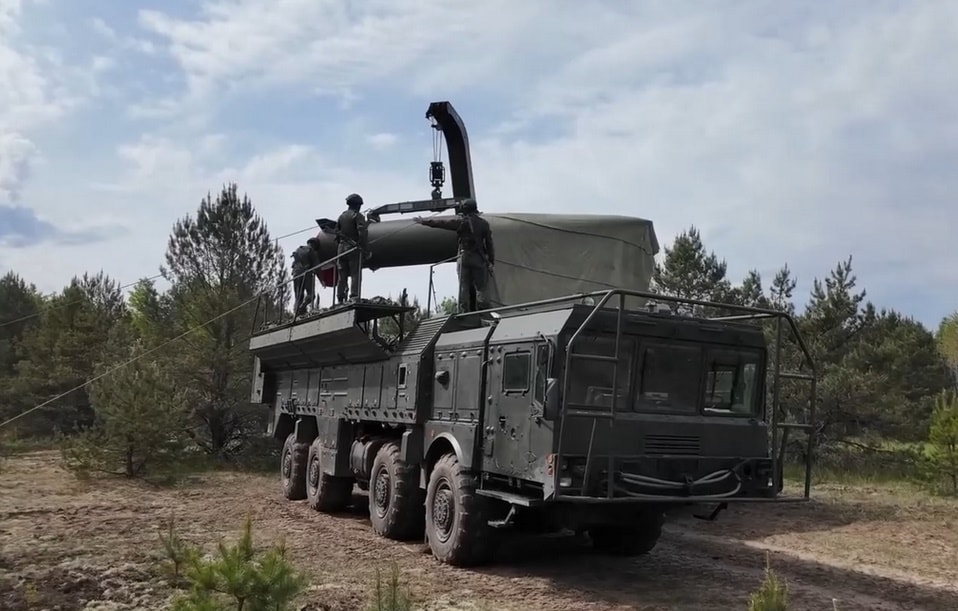
The exercise also emphasized comprehensive logistical coordination and preparation for the joint use of nuclear weapons deployed on Belarusian territory. According to a statement from the Russian Ministry of Defense, the main objective was to ensure the combat readiness of nuclear units in defending the sovereignty of both allied nations.
Scale of strategic nuclear force mobilization
Data from the Tass news agency indicates that this was one of the largest exercises in recent years. Russian forces mobilized enormous resources, including:
- Personnel:Over 64,000 military personnel participated directly.
- Ground equipment:Over 7,800 pieces of military equipment, including more than 200 missile launchers.
- Air Force:Over 140 aircraft of various types.
- Naval forces:73 surface vessels and 13 submarines, including 8 strategic ballistic missile submarines.
As part of the program, the Russian military plans to conduct test launches of ballistic and cruise missiles at various test ranges across the country to verify the reliability of its strategic weapons arsenal.
The deterrent capability of the Oreshnik hypersonic missile.
Of particular note in the context of the exercises is the deployment of the Oreshnik missile system by Russia in Belarus. This is a modern hypersonic ballistic missile with an estimated range of approximately 5,500 km. With these specifications, the Oreshnik system is fully capable of reaching most key targets in Europe.
This event occurred at a sensitive time, as the New Strategic Arms Reduction Treaty (New START) between Russia and the United States had expired. Military analysts viewed the increased nuclear presence in Belarus as a step to bolster Moscow's deterrence capabilities. Meanwhile, on the northern border, Ukraine also took steps to strengthen its defenses in response to new military activities from Belarus.


