
Russia deploys a squadron of Su-57 stealth fighters to a base near the Japanese border.
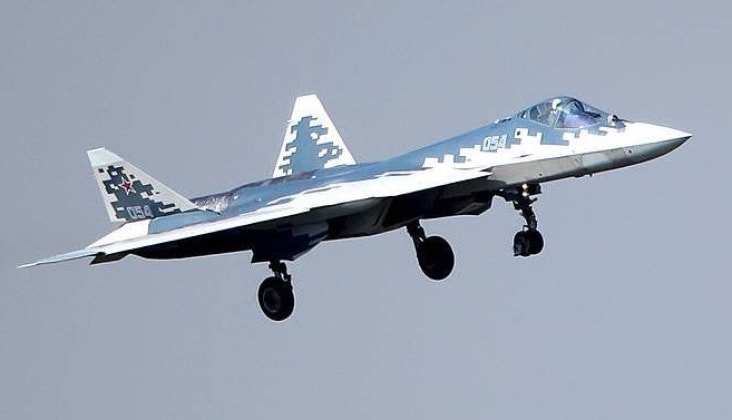
The Russian Aerospace Forces have concentrated at least 15 Su-57 aircraft at the Dzyomgi base. This move is aimed at strengthening strategic deterrence and supporting joint training in the Far East.
Russia has deployed at least 15 fifth-generation Su-57 fighter jets to Dzyomgi Air Base in the Khabarovsk region, located near the border with Japan. According to reports from Ukrainian sources, this represents a significant reinforcement of the Russian Aerospace Forces (VKS) in the Far East region following the acquisition of the latest batch of aircraft, which have been upgraded with improved weaponry and electronics.
Optimizing technical support at Dzyomgi Base
The Dzyomgi base is strategically located near the Gagarin Aircraft Plant in Komsomolsk-on-Amur. This facility performs the final assembly for all of Russia's mass-produced Su-35 and Su-57 aircraft. Stationing the first Su-57 regiment near this production facility allows engineers and specialists to more easily address and resolve technical issues that may arise during the initial operational phase of the new squadron.
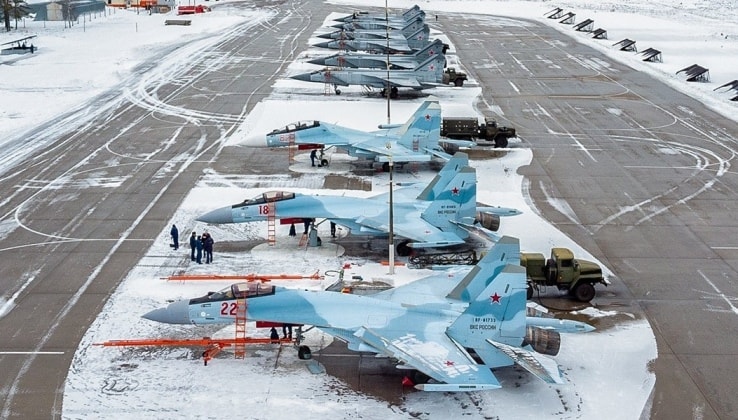
The goal of this training is to coordinate efforts and simulate the opponent's actions.
Besides technical aspects, deploying the Su-57 alongside Su-35S fighters and MiG-31BM interceptors facilitates coordinated combat training exercises. In this arrangement, the MiG-31, with its large sensor system, acts as an airborne command post, supporting the stealth aircraft's combat capabilities.
Notably, the Su-57 can conduct Differential Air Combat Training (DACT) to simulate the capabilities of the F-35 fighter jets that the Japan Air Self-Defense Force and the US military are heavily deployed in the region. This squadron expansion enables Russia to maintain a simultaneous presence on both the Ukrainian and Far Eastern fronts.
Deterrence capabilities and operational range in the Pacific
The presence of the Su-57 at Dzyomgi is seen as a deterrent message to Japan amidst Tokyo's accelerated remilitarization process. With its superior range and combat radius compared to the F-35 or F-22, the Su-57 can undertake bomber escort and reconnaissance missions far out into the Pacific Ocean or the Bering Strait near Alaska.
Although this capability is still somewhat limited due to delays in the development of the next-generation AL-51F engine, the appearance of the Su-57 at forward bases in the Far East is still a direct response to the US concentration of the highest density of fifth-generation fighters in Alaska.


