
Russia used Mi-26 helicopters to deliver Pantsir-SMD-E systems to rooftops in Moscow.
The Russian military deployed heavy Mi-26 transport helicopters to lift Pantsir-SMD-E air defense systems onto high-rise buildings in Moscow to optimize their range against UAVs.
Russian authorities have deployed Mi-26 transport helicopters to deliver Pantsir-SMD-E fixed air defense systems to the rooftops of high-rise buildings in Sokolniki, Moscow. This is part of an effort to expand a multi-layered defense network to protect the capital from drone attacks.
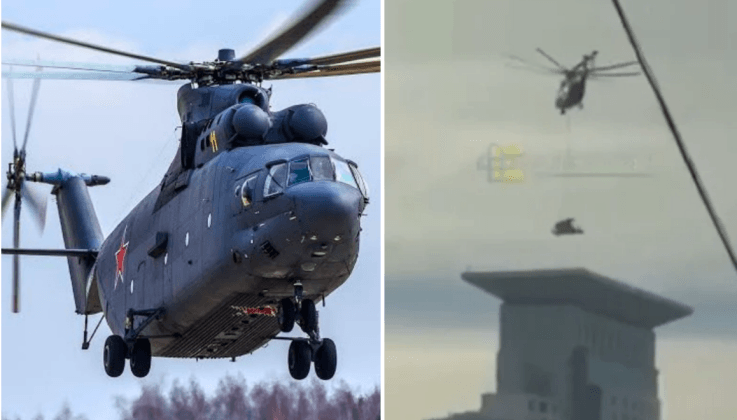
The transport capacity of the Mi-26 helicopter.
The Mi-26 is currently the world's largest and heaviest commercial and military helicopter ever mass-produced. With a maximum payload of up to 20 tons, this helicopter has twice the lifting capacity of Western heavy helicopters such as the CH-47 Chinook, and is comparable to the capabilities of some fixed-wing tactical transport aircraft.
The Mi-26's operating system is based on two D-136 turboshaft engines, driving an eight-bladed main rotor with a diameter of 32 meters. This design allows the helicopter to transport enormous loads of cargo such as armored vehicles, heavy artillery, or engineering equipment directly to locations inaccessible to fixed-wing aircraft.
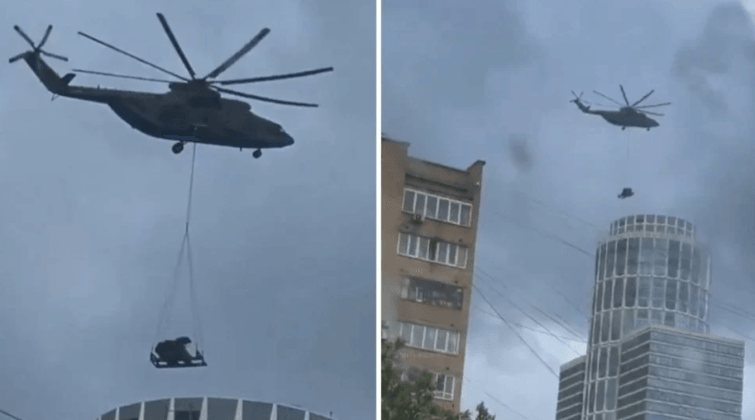
Specifications of the Pantsir-SMD-E system
The Pantsir-SMD-E system deployed on rooftops in Moscow is a specialized variant designed to protect fixed infrastructure. A key feature of this system is its diverse interception capabilities:
- TKB-1055 missile:Up to 48 specialized interceptor missiles can be integrated into small UAVs.
- 57E6 missile:Equipped with 12 command-guided, short-range surface-to-air missiles for larger targets.
Positioning these systems at a higher elevation minimizes the obstruction of radar and firing ranges by surrounding buildings. This tactic enhances the ability to respond to small, low-flying unmanned aerial vehicles (UAVs).
Urban defense tactics in Moscow
The deployments at Sokolniki indicate that Russia is focusing on protecting critical infrastructure, residential areas, and government buildings. Analysts believe that the deployment of air defenses at high altitudes is a necessary solution given the increasing frequency of UAV attacks.
In addition to Moscow, key industrial centers in the Ural region may also be subject to similar reinforcement measures. However, the sustainability of relying entirely on static interception systems is a concern for Russian military leaders, leading to proposals for direct attacks on the enemy's technical supply lines.


