
Russia installed a rear camera on the Shahed to evade drone interception.
Ukraine says Russia has fitted cameras and thermal sensors to the rear of some Shahed drones to detect interceptor drones and maneuver to avoid them, indicating a rapid technological counter-strategy.
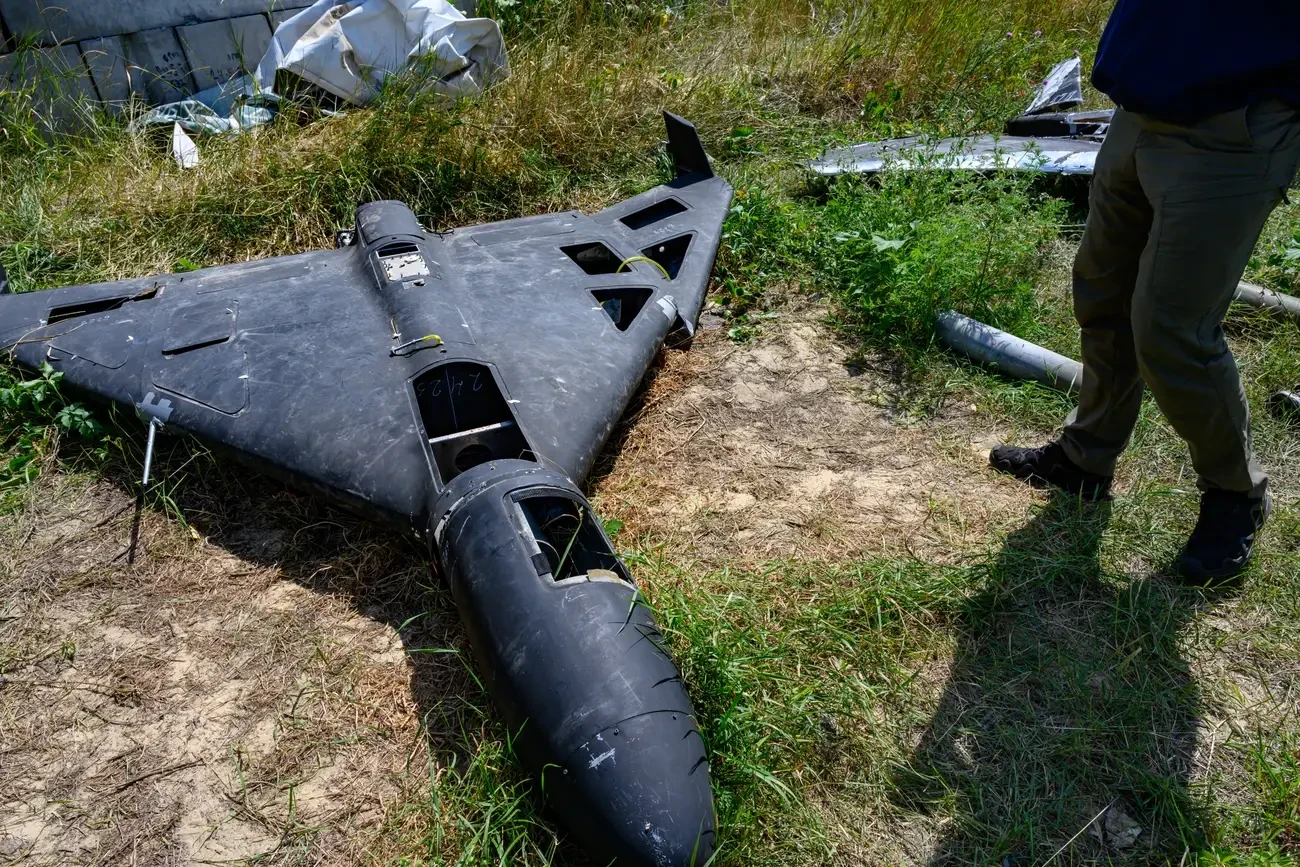
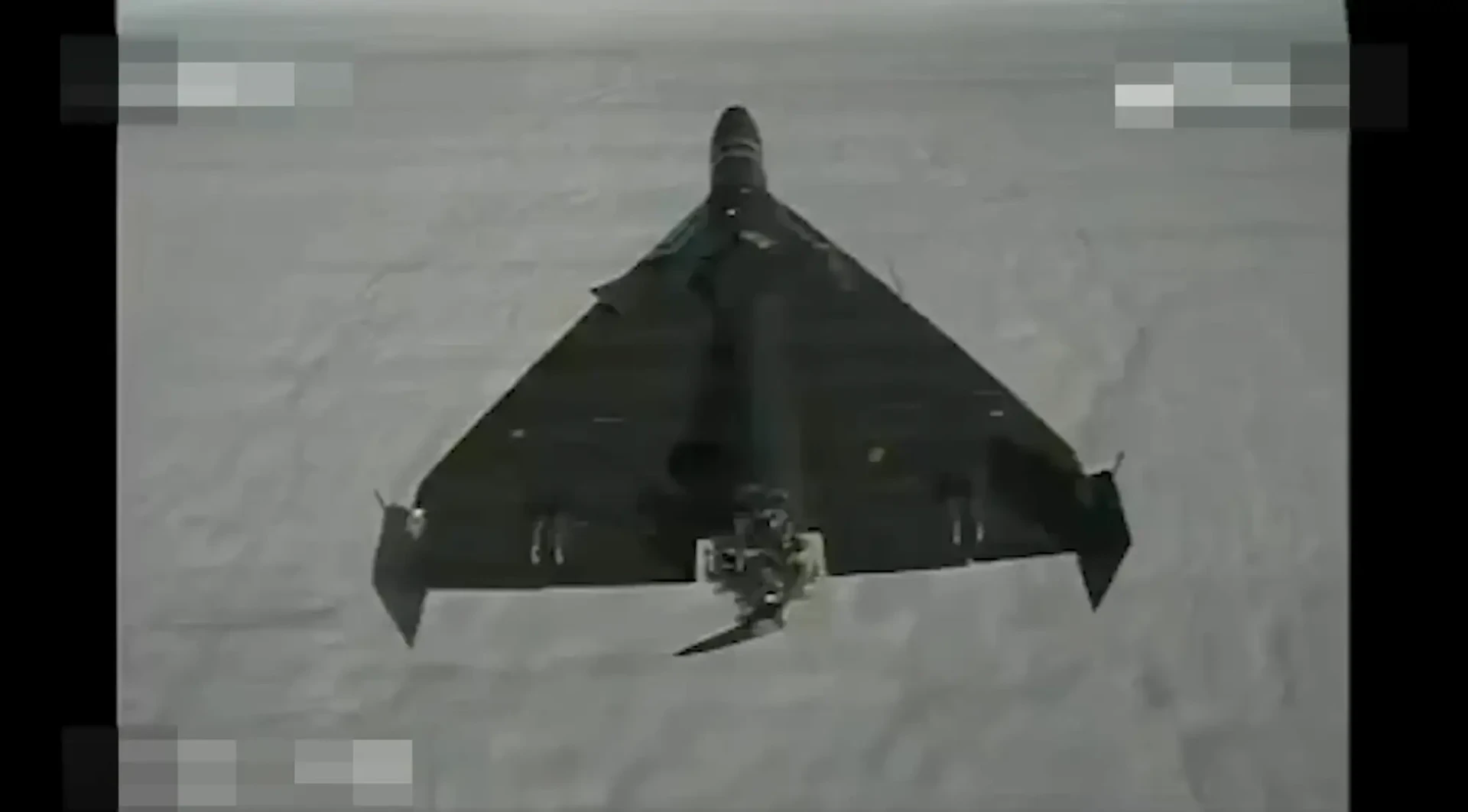
Russia has begun installing rear-facing cameras on some Shahed-type drones to detect Ukrainian interceptor drones approaching from behind and maneuver to avoid them. This information was provided to Insider by Major Yurii Myronenko, Deputy Minister of Defense of Ukraine in charge of innovation and former drone unit commander. A US military officer also noted that Shahed drones have been fitted with a rear thermal sensor.
Overview
According to Yurii Myronenko, Russia is constantly testing long-range attack weapons, improving Shahed-type drones and putting new models into service. The Ukrainian military had previously detected rear-facing cameras on Russian reconnaissance and decoy drones; now this has appeared on some Shahed drones – a series of Iranian-designed cruise missiles (Shahed-136, Shahed-131) widely used by Russia in combat.
The Russian defense industry is reportedly producing thousands of Shahed-style drones each month and often launches hundreds into Ukraine in nighttime attacks. Russia also domestically produces the Geran variant. The Shahed flies slower than cruise or ballistic missiles, but its low cost allows for large-scale deployment.
Technical analysis: rear camera/thermal probe
The addition of a rear-facing camera gives the operator greater situational awareness of approaching threats from behind – a common scenario with interceptor drones. U.S. Army Sergeant Riley Hiner stated that Russia equipped the Shahed with rear thermal sensors, aiding in the infrared detection of interceptor drones as they approach. According to Hiner, the Shahed sometimes maneuvers to evade detection.
This approach doesn't change the "tracking munition" nature of the Shahed, but it increases the chances of survival in the final stages of its flight, especially when being pursued. When the target is maneuvering, the interceptor drone crew is forced to adjust speed and direction to maintain pursuit, according to Riley Hiner.
Tactics: “Hunting Shahed” and the burden of air defense.
Faced with pressure from large-scale airstrikes, Ukraine turned to interceptor drones as a low-cost solution to "hunt" Shahed. These interceptor drones carry explosive warheads, capable of causing significant destruction if they hit their targets, while also reducing the burden on expensive medium-to-long-range air defense systems.
According to sources, Ukraine is producing hundreds of interceptor drones daily. This technology has attracted the interest of NATO forces and several Western companies. Riley Hiner, who trains NATO forces in the use of interceptor drones, said that this type of equipment is being deployed to Poland and Romania following Russian airspace violations in September.
The action-response cycle is rapid.
Yurii Myronenko describes this as a vicious cycle of action and reaction characteristic of technological warfare: each innovation creates an advantage for about 3–4 months before the opponent develops countermeasures. For example, the early Shahed systems were equipped with 4-channel antennas; Ukraine quickly jammed them with electronic warfare, forcing Russia to switch to 16-channel antennas. “This loop is continuous,” Myronenko said.
| Measure | Countermeasures | Results/Impact |
|---|---|---|
| Ukraine uses drones to intercept and pursue Shahed. | Russia fitted a rear camera/thermal sensor to the Shahed. | Enhances the ability to detect threats from behind and maneuver to avoid them. |
| Ukraine jammed Shahed with EW. | Russia upgrades its antenna from 4 channels to 16 channels. | Better noise immunity |
| FPV radio frequency control is being jammed. | Both sides switched to long-distance fiber optic cables for FPV. | Reduce interference effects, increase control reliability. |
| Ukraine uses underwater drones to attack Russian ships in the Black Sea. | Russia increases air patrols. | Ukraine equips underwater drones with surface-to-air missile launchers. |
Electronic warfare and lessons from FPV.
In the early stages, both sides' FPV drones were primarily controlled via radio communication. Both soon exploited electronic warfare (EW) to jam and degrade their effectiveness. Currently, both sides are increasingly using long fiber optic cables to connect the controllers to the FPVs to combat interference, making these drones more dangerous on the battlefield.
In practice, EW includes jamming/disrupting signals, reconnaissance/signal interception, and protecting one's own systems from electromagnetic attacks. Typical applications include disabling drones from their operators or disabling enemy radar for a necessary period of time.
Spreading to other operational areas
The aforementioned "cat and mouse" game has gone beyond the Shahed framework. In the Black Sea, Ukraine developed underwater drones to attack Russian ships; when Russia increased its air patrols, Ukraine responded by equipping underwater drones with surface-to-air missile launchers, according to source data.
Overall, Russia's installation of rear-mounted thermal cameras/detectors on some Shaheds is a link in a chain of rapidly evolving innovations and countermeasures. This forces both the attacking and defending sides to constantly adjust their technology and tactics to maintain combat effectiveness.


