
Russia is carrying out major upgrades to the Tu-160, Tu-95MS, MiG-31I, and Tu-22M3.
The Russian Long-Range Air Force continues to receive modernized Tu-160, Tu-95MS, MiG-31I, and Tu-22M3 aircraft equipped with new digital equipment, increasing weapon accuracy and expanding strategic patrol capabilities.
According to the Russian Ministry of Defense, the Tu-160 and Tu-95MS strategic missile carriers, MiG-31I interceptor fighters, and Tu-22M3 long-range bombers of the Russian Long-Range Air Force are undergoing major upgrades with modern digital equipment to increase weapon accuracy and operational reliability.
Long-range air power in the strategic nuclear force structure
December 23rd marks the 111th anniversary of the founding of the Long-Range Aviation Forces. These are a component of the Strategic Nuclear Forces, an integral part of the Russian Aerospace Forces, and are responsible for missions across all strategic directions.
According to the Russian Ministry of Defense, the Long-Range Aviation Forces continue to receive modernized fighter aircraft. The focus of the upgrade is on integrated equipment, shifting from older configurations to new digital systems.
Upgrading digital equipment for Tu-160, Tu-95MS, MiG-31I, and Tu-22M3
The Russian Ministry of Defense stated: "In 2025, the Long-Range Aviation Command will continue to receive modernized fighter aircraft, which will replace existing equipment with modern digital technology, improving weapon accuracy, aircraft reliability, and expanding the capabilities of the operational monitoring system."
The long-range air force is currently equipped with Tu-160 and Tu-95MS strategic missile carriers, airborne ballistic missile systems with MiG-31I fighters carrying Kh-47M2 Kinzhal missiles, Tu-22M3 long-range bombers, Il-78 refueling aircraft, and various types of training and transport aircraft in different variants.
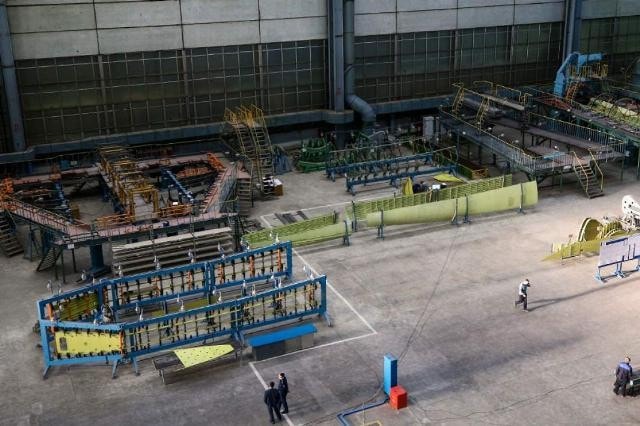
The technical implications of replacing the equipment.
Information from the Russian Ministry of Defense indicates that the focus of the upgrade lies in the integrated equipment and control systems. For platforms such as the Tu-160, Tu-95MS, MiG-31I, or Tu-22M3, the transition to modern digital electronics systems typically aims to improve information processing capabilities, navigation support, and more precise weapon deployment.
According to the Russian side, these modernization packages are aimed at three main elements: improving the accuracy of airborne weapons, enhancing the technical reliability of the airframe and systems, and expanding the ability to monitor aircraft operations during service.
Long-range Air Force combat and training operations
According to an announcement from the Russian Ministry of Defense, in 2025, the Long-Range Aviation participated in special military operations, taking part in command and control training of the Armed Forces under the leadership of the Supreme Commander-in-Chief of the Russian Armed Forces, along with other combat training activities.
The agency emphasized: "All practical training activities this year have been fully completed, demonstrating the high level of training and aircraft control capabilities of the participating flight crews."
Strategic patrol network in multiple directions
According to the Russian Ministry of Defense, during the year, air patrol missions were carried out over several strategic areas, including the Arctic and Pacific Ocean, as well as the Baltic Sea, Barents Sea, Bering Sea, East China Sea, Yellow Sea, Norway, North Sea, Black Sea, Chukchi Sea and Japan.
These flights are described as part of the Air Force's regular long-range operations, combining combat missions with long-term training for aircrews on complex routes with diverse geographical and meteorological conditions.
Joint patrol with Chinese H-6K aircraft.
The press department of the Russian Ministry of Defense stated that the year's air patrols also included joint flights with the crews of H-6K strategic bombers of the People's Liberation Army Air Force of China.
According to TASS, this is part of the cooperation framework between the two sides, integrated into the aforementioned strategic patrols. It is presented as a planned joint operation involving Russian and Chinese strategic bombers in several sea and ocean directions.
Military perspective: combining technological upgrades and strategic practices.
Information released by the Russian Ministry of Defense reveals two parallel trends in the long-range aviation: both the deep modernization of strategic weapons delivery platforms and the maintenance of a high pace of combat operations and training across multiple fronts.
In this context, upgrading the digital equipment of the Tu-160, Tu-95MS, MiG-31I, Tu-22M3, and other refueling, training, and transport aircraft is significant in strengthening their long-range weapon capabilities and supporting their ability to maintain a constant presence during extended patrol flights.
Along with patrols in the Arctic, Pacific, and various seas such as the Baltic, Barents, Bering, East China Sea, Yellow Sea, Norwegian Sea, North Sea, Black Sea, Chukchi Sea, and Japanese Sea, as well as joint patrols with H-6K, the Russian Long-Range Air Force is described as continuing to play a role as one of the pillars of its Strategic Nuclear Forces and Aerospace Forces, according to information released by the Russian side.


