
Russia is significantly upgrading the Tu-160 and Tu-95MS in its long-range aviation fleet.
The Tu-160, Tu-95MS, and other aircraft of the Russian Long-Range Aviation are being fitted with modern digital equipment, increasing the accuracy of weapon use and maintaining patrol frequencies in multiple strategic directions.
The Russian Long-Range Aviation is continuing to receive deeply upgraded fighter jets, including the Tu-160 and Tu-95MS. According to the Russian Ministry of Defense, the modernization package focuses on replacing internal equipment with digital systems, aiming to improve weapon accuracy, increase aircraft reliability, and expand operational surveillance capabilities.
The role of long-range air power in the Strategic Nuclear Force.
December 23rd marks the 111th anniversary of the founding of the Long-Range Air Force. This force is defined as a component of the Strategic Nuclear Force and an integral part of the Aerospace Force. Their mission spans all strategic areas, from deterrence to operational support in key directions.
In that structure, strategic missile-carrying aircraft such as the Tu-160 and Tu-95MS hold a central position. Together with other long-range and support aircraft, they form a strategic air strike capability, capable of operating over long distances and in a variety of combat conditions.
Digital upgrade package for Tu-160, Tu-95MS and long-range formations.
The Russian Ministry of Defense announced that in 2025, the Long-Range Aviation Command will continue to receive modernized fighter aircraft. The focus of the upgrade is replacing existing equipment with modern digital systems. According to published information, this digitalization aims at three main objectives: improving weapon accuracy, increasing overall aircraft reliability, and expanding the capabilities of operational monitoring systems.
In terms of combat operations, improved weapon accuracy allows long-range air forces to better utilize the capabilities of existing missile systems. Higher aircraft reliability helps maintain sortie rates, which is particularly important for forces on long-duration combat duty. Expanded operational monitoring systems also support command, control, and technical support during the operation of large air formations.
Currently, the Long-Range Air Force is equipped with Tu-160 and Tu-95MS strategic missile carriers, an airborne ballistic missile system with MiG-31I fighters and Kh-47M2 Kinzhal missiles, Tu-22M3 long-range bombers, Il-78 refueling aircraft, and various other training and transport aircraft variants.
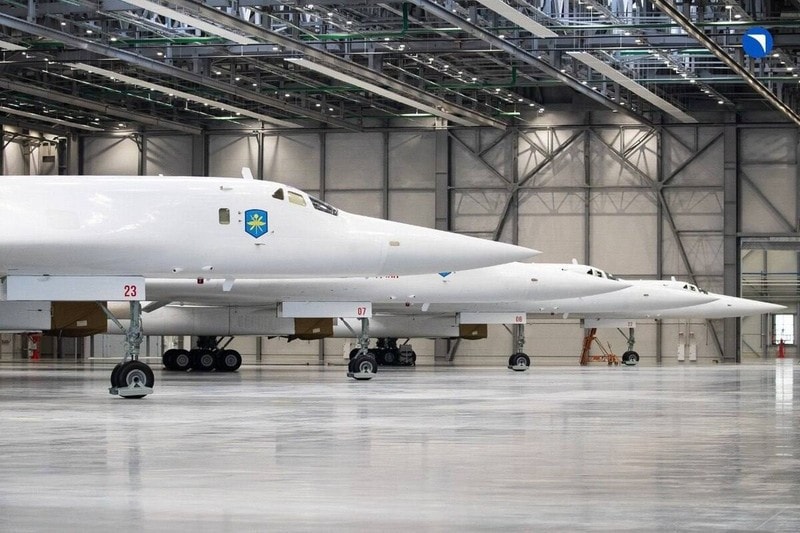
According to the Russian Ministry of Defense, this modernization process is progressing actively, focusing on the strategic bomber group. This indicates a priority on maintaining and enhancing long-range air strike capabilities, while ensuring that older platforms continue to meet mission requirements when equipped with new electronic systems.
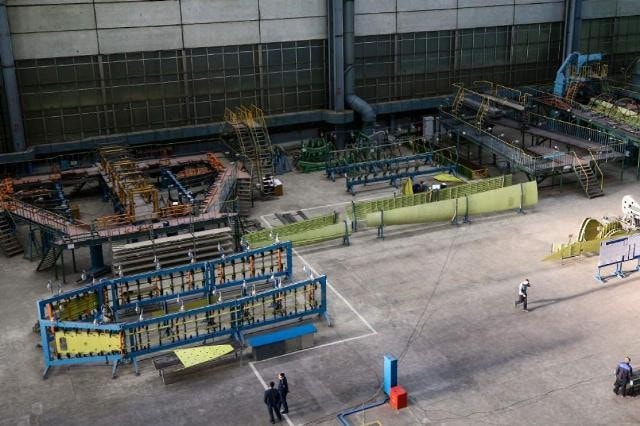
Operational and training activities in 2025
According to information from the Russian Ministry of Defense, in 2025, the Long-Range Aviation participated in special military operations, as well as conducting command and control training for the Armed Forces under the leadership of the Supreme Commander-in-Chief of the Russian Armed Forces, alongside other combat training activities.
The agency emphasized that all training activities for the year had been fully completed. This was described as reflecting the high level of training and aircraft control capabilities of the participating aircrews. From a force organization perspective, maintaining such a series of activities while simultaneously deploying equipment modernization demonstrates that the Long-Range Air Force must balance combat operations with technical upgrades.
A long-range patrol network across multiple strategic directions.
In addition to combat and training missions, the Long-Range Air Force continues to maintain long-range air patrols. According to the statement, during the year, the force conducted patrols over the Arctic and Pacific regions, as well as over the following seas: Baltic, Barents, Bering, East China Sea, Yellow Sea, Norwegian Sea, North Sea, Black Sea, Chukchi Sea, and Japanese Sea.
The regional network, stretching from the northern seas to the eastern and southern seas, demonstrates the wide operational range of long-range air forces. Such flights require coordinated capabilities between bombers, refueling aircraft, and command and control systems to maintain an air presence for extended periods.
The press department of the Russian Ministry of Defense also stated that these patrols included joint operations with the crews of H-6K strategic bombers of the People's Liberation Army Air Force of China. This type of coordinated operation requires participating parties to operate strategic aircraft in a coordinated environment, thus placing high demands on pilot training and communication-command systems.
The significance of modernization in relation to long-range capabilities.
From information released by the Russian Ministry of Defense, it is clear that the focus is on maintaining long-range strike capabilities based on the Tu-160, Tu-95MS, and other bomber, refueling, and missile-carrying fighter aircraft in service. The replacement of equipment with modern digital systems is being considered in the context of this force simultaneously participating in military operations, conducting large-scale training, and carrying out continuous patrols in multiple strategic directions.
From a technical and tactical standpoint, the upgrade extends the operational lifespan of existing airframes while increasing the effectiveness of weaponry and the ability to conduct strategic-level operations. Within the overall Strategic Nuclear Force, this strengthens the role of the long-range air component, which is responsible for carrying and deploying airborne missile systems, as well as ensuring a presence in areas far from bases.
Data released by the Russian Ministry of Defense and TASS indicates a continued trend towards deep modernization of the long-range air force, while maintaining a high level of operational activity in the field. These factors combined have further shaped the structure and operation of the air force component within the Russian Strategic Nuclear Forces.


