
Russia suspected of withdrawing Pantsir-S1M from Crimean Bridge: analysis
OSINT reports that Pantsir-S1M missiles have left their mission protecting the Kerch Bridge, possibly shifting towards Yevpatoria/Saky; images reveal both 57E6-E and 57E6M-E launchers, with a range of 30 km and Mach 5.
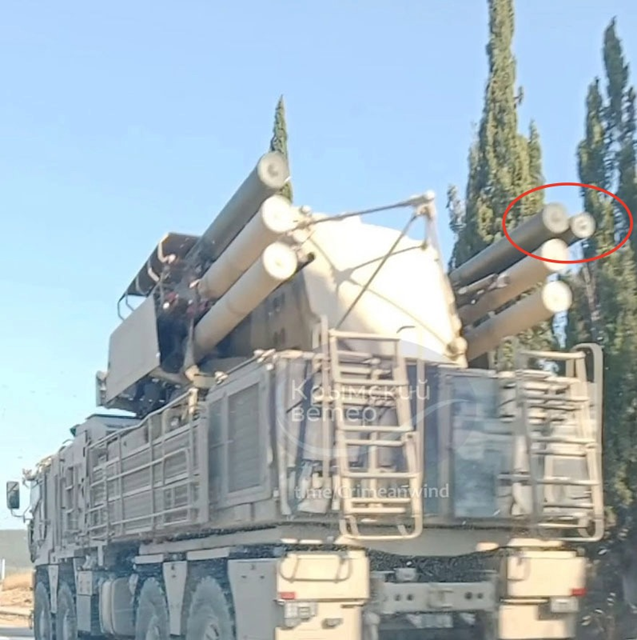
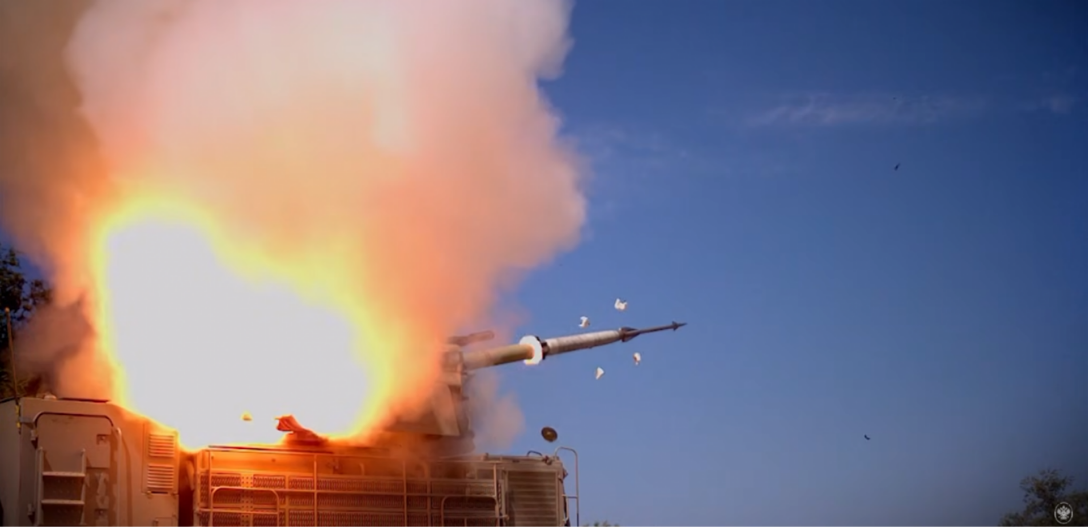
Open-source evidence suggests a Pantsir-S1M system appeared on a highway in Crimea, away from the Kerch Bridge area. Its movement was recorded towards Yevpatoria or Saky, where major military airfields have been repeatedly targeted by UAVs and missiles. Accompanying images show a launcher carrying a combination of missile tubes of different diameters, suggesting the simultaneous use of both the standard 57E6-E and the newer 57E6M-E missiles.
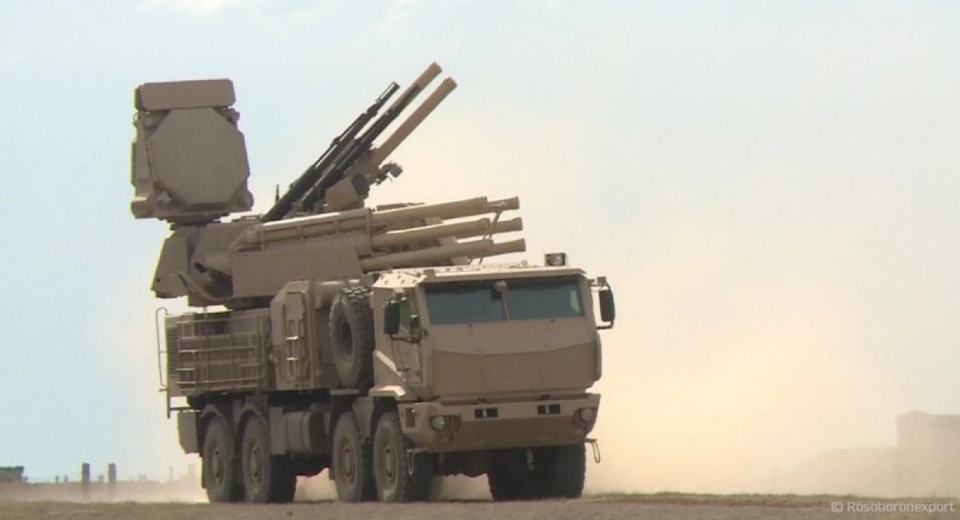
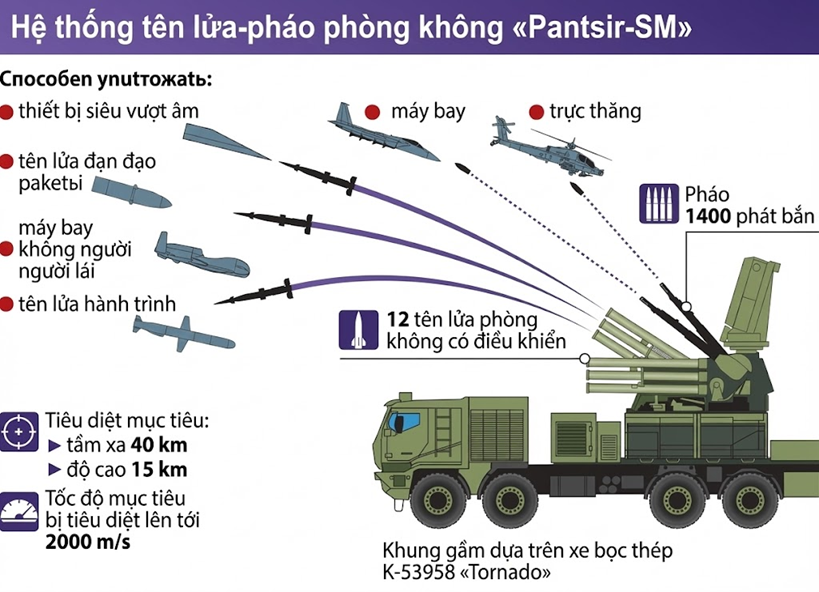
- Identifying features: KamAZ-53958 Tornado armored chassis, square-shaped tracking radar.
- Firepower indicators: launch tubes of varying diameters, capability to load 57E6-E and 57E6M-E.
- Key specifications for the 57E6M-E (according to the Russian side, caution is advised): range 30 km, speed approximately 1,700 m/s (Mach 5).
- Context: Increased attacks on airports and depots in Crimea; limited supply of modern military equipment.
Pantsir-S1M identification features
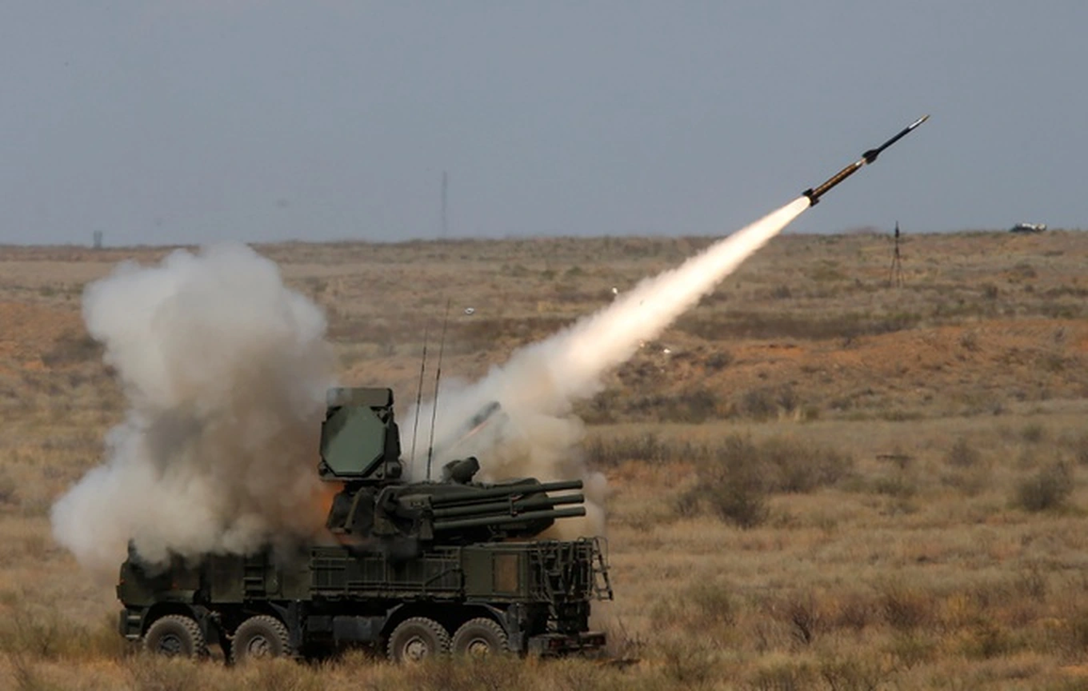
Compared to the Pantsir-S1, the Pantsir-S1M variant is easily recognizable by its armored KamAZ-53958 Tornado chassis, optimized for maneuverability and crew protection. Its target tracking radar has a distinctive square cross-section; this radar is believed to be an active electronically scanned array (AESA), supporting the detection of small RCS targets at longer distances and improving resistance to jamming in dense electronic warfare environments.
Movement direction and threat context
According to the recorded route, the complex is heading towards Yevpatoria or Saky – areas with large military airfields in Crimea. These locations have been repeatedly attacked by UAVs and missiles such as ATACMS, Storm Shadow/SCALP in recent times, putting pressure on the air defense network. The redeployment of a mobile and multi-purpose complex like the Pantsir-S1M is in line with the need to fill defense gaps at this time.
The designation for "combined launch tube": 57E6-E and 57E6M-E
The image shows launch tubes of varying diameters appearing on the same platform. This arrangement suggests the capability to load two types of ammunition simultaneously:
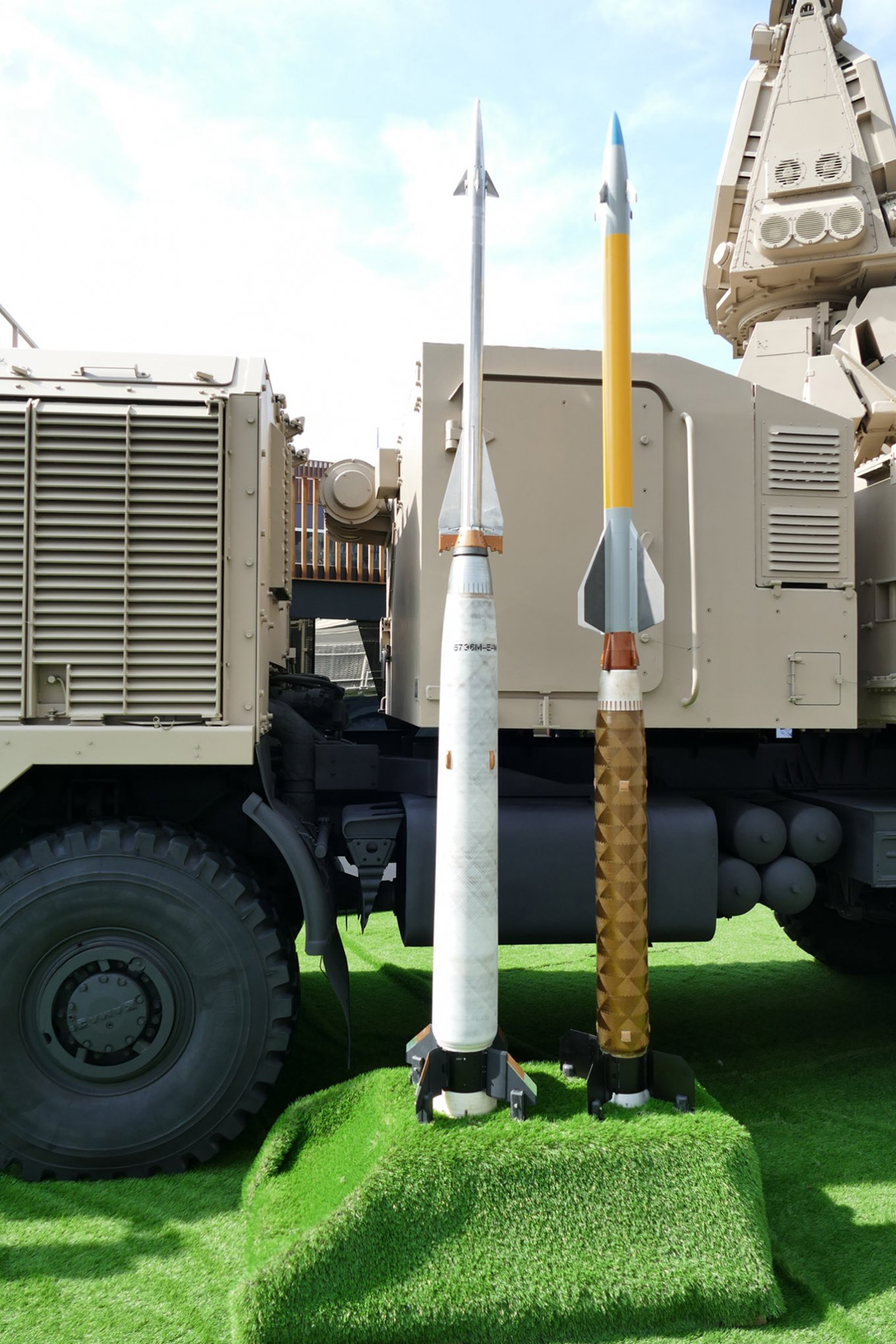
- 57E6-E (standard): effective range approximately 20 km, maximum speed approximately 1,300 m/s (Mach 3.8).
- 57E6M-E (new generation): according to specifications released by the Russian side (caution is needed when comparing), velocity is approximately 1,700 m/s (Mach 5), range up to 30 km.
| Parameter | 57E6-E | 57E6M-E |
|---|---|---|
| Shooting range | ~20 km | 30 km |
| Maximum speed | ~1,300 m/s (Mach 3.8) | ~1,700 m/s (Mach 5) |
| Engine structure | Not mentioned in the source. | Larger booster, more solid fuel |
| Warhead/killing mechanism | Not mentioned in the source. | Allegedly a hit-to-kill or directed fragmentation warhead; miniaturized warhead. |
Note: The possibility of different launch tube diameters may be affected by the angle of view; however, the hypothesis that the 57E6M-E is being deployed in the field is plausible given the pressure from long-range attacks.
Operational significance of the 57E6M-E
High speed shortens interception time, narrowing the target's opportunities for maneuver and evasion. Simultaneously, the high kinetic energy in the final phase increases the effectiveness of destruction. Increasing the range to 30 km expands the protection zone for targets shielded by Pantsir, bringing the system closer to medium-range defense capabilities within a multi-layered air defense system.
Why withdraw from the Kerch Bridge area?
If the redeployment information is accurate, this is most likely a risk-based priority adjustment. The Kerch Bridge is described as having multiple layers of air defense, while airfields and depots deeper in Crimea are constantly under attack. Given the limited number of Pantsir-S1M systems, the rotation of high-value equipment to more critical hotspots reflects how Russia allocates resources to bolster vulnerable links.
From a technical and tactical perspective, the Pantsir-S1M retains its role as a mobile point defense system, capable of protecting critical targets against UAVs, cruise missiles, and close-range attack projectiles. The addition of the 57E6M-E missile, if confirmed, would expand the "safety dome" around bases, while increasing the probability of interception in the context of increased intensity and complexity of coordinated attacks by the enemy.


