Russia is developing an upgraded variant of the Oreshnik hypersonic missile with 48 warheads.
The improved version of the Oreshnik missile is said to possess 8 warheads with 48 kinetic energy warheads, using new fuel and a state-of-the-art control system.
Russia is accelerating the development of an upgraded version of the Oreshnik hypersonic missile, a weapon that has garnered significant attention on the battlefield. According to military sources, this new variant focuses on optimizing destructive power and accuracy, aiming for zero error.
Comprehensive upgrades in firepower and control technology.
Retired Colonel Viktor Baranets, a Russian military expert, said that engineers are finalizing a design that is even more advanced than the current Oreshnik prototype. The core change lies in increasing the number of warheads from 6 to 8. With each warhead carrying 6 small warheads, the new version will possess a total of 48 kinetic warheads, creating an unprecedented firepower density on a single missile.
In addition, this type of missile is expected to use a new type of fuel and, more importantly, a control system that is fundamentally different from the original in terms of technology. Military media currently refer to this weapon by designations such as Oreshnik-2 or Granit.
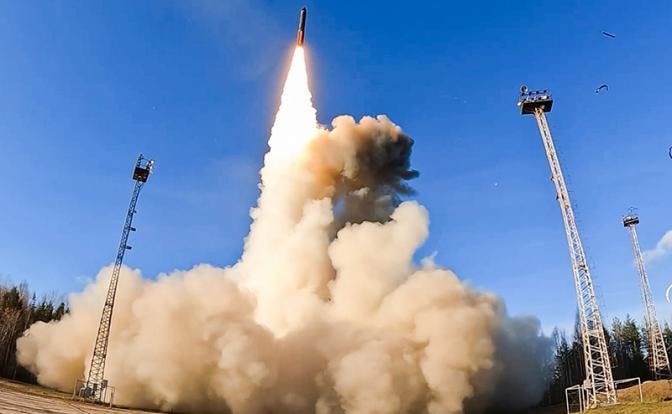
Building upon the foundation of the RS-26 Rubezh
The strategic strength of the Oreshnik lies in its ability to be mass-produced based on the airframe of the RS-26 Rubezh missile – a variant developed from the RS-24 Yars intercontinental ballistic missile. This modular structure allows Russia flexibility in installing different types of warheads, from conventional warheads to hypersonic glide vehicles (HGVs).
Data from actual attacks in Dnepropetrovsk and Lviv showed that the missile has a range exceeding 5,000 km, sufficient to cover most targets in Europe. Its ability to maneuver along complex trajectories during flight makes it difficult for current NATO missile defense systems to intercept.
Penetration capability and strategic messaging
One of Oreshnik's most formidable characteristics is its immense kinetic energy from hypersonic speeds (estimated to reach Mach 10 or higher). Its kinetic energy penetrating warheads can destroy deep underground bases without the need for nuclear warheads. Battlefield evidence shows that prolonged explosions lasting for hours in underground structures after being hit by Oreshnik demonstrate its effective bunker-penetrating capabilities.
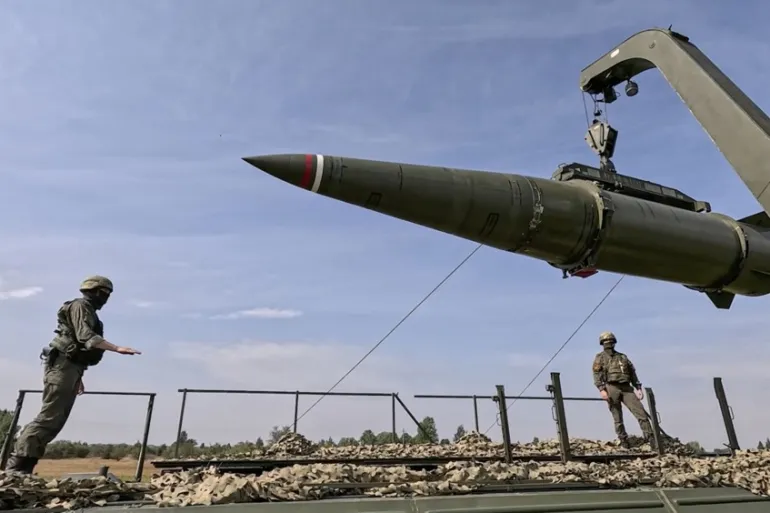
Analysts view Russia's display and upgrade of the Oreshnik missile as a powerful strategic deterrent. When combined with the RS-26 Rubezh platform, which can reach a maximum speed of Mach 20-25, the "descendant" variant of the Oreshnik will create significant military pressure thanks to its rapid strike capability and precise destructive power.