
Russia is developing a fifth-generation nuclear submarine to counter NATO.
Russia is advancing its fifth-generation strategic nuclear submarine program, developed by the Rubin Design Bureau, focusing on noise reduction, increased automation, and the integration of new underwater weapons to maintain deterrence against NATO.
Russia is accelerating its fifth-generation strategic nuclear submarine program to maintain its maritime deterrence capabilities in the face of NATO's rapid naval modernization, amid sanctions and defense industry difficulties.
Overview of the 5th Generation Nuclear Submarine Program
Nikolai Patrushev, Assistant to the President and Chairman of the Russian Navy Council, announced that Russia is launching a fifth-generation strategic nuclear submarine program at the celebration of the 125th anniversary of the Rubin Design Bureau, a leading unit in submarine engineering. According to Interfax, Rubin is responsible for researching the new strategic ballistic missile submarine (SSBN) design and advanced underwater systems.
Currently, Russia's SSBN forces rely primarily on Borei and Borei-A class submarines, which are classified as fourth-generation and equipped with Bulava ballistic missiles. The fifth-generation model is expected to inherit the strategic deterrence role of these classes while overcoming limitations in the face of rapidly developing Western anti-submarine technology.
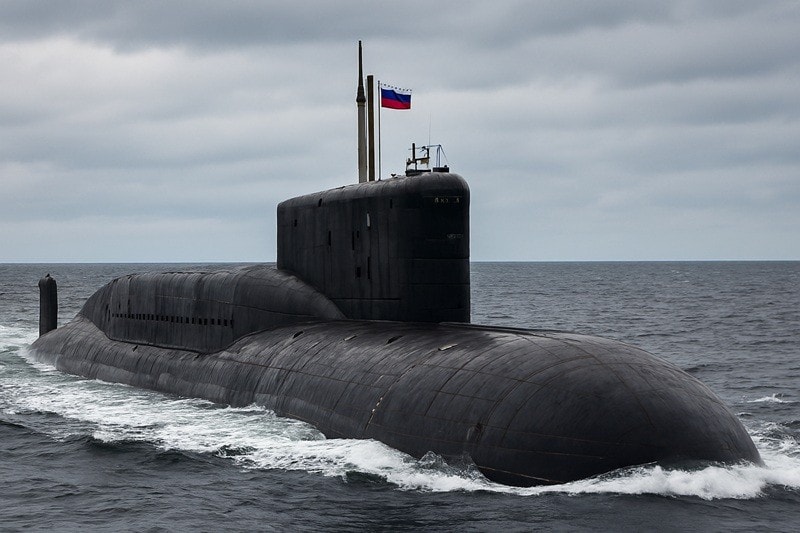
Technological development trends: automation and underwater weapons.
Mr. Patrushev stated that the fifth-generation project will focus on developing autonomous underwater vehicles and weapons described as unique, with no counterparts in any other country. This indicates that the technical focus lies not only in the submarine hull itself but also in the accompanying ecosystem of vehicles and weapons.
Experts quoted in the article believe the new design will prioritize noise reduction, increased automation, extended continuous operation time at sea, and improved integration with command and control networks. Low noise levels make the vessel harder to detect against modern sonar and anti-submarine sensors, while high levels of automation can reduce crew workload, increase reliability, and enhance the ability to operate for extended periods.
Integration with command and control systems is considered crucial in the context of modern warfare, which demands fast and secure data sharing. Fifth-generation submarines will likely need to be compatible with underwater and airborne sensor networks, as well as onshore command centers, to optimize their deterrence and response capabilities.
According to the analyses presented, Russia's future submarines could carry a variety of payloads, including underwater drones specializing in reconnaissance, electronic warfare, or anti-submarine warfare. Carrying these unmanned vehicles expands the observation area, provides an additional layer of protection for the mother ship, and increases flexibility in approaching targets.
Previously, President Vladimir Putin had announced the success of advanced underwater weapons tests, sparking speculation about a link between this program and the Poseidon nuclear drone system. However, to date, there has been no official confirmation of a direct connection between the 5th generation SSBN and Poseidon.
Comparison in the context of global SSBN modernization.
Strategically, NATO views Russia's fifth-generation nuclear submarine program as a counterweight to the U.S. Columbia-class submarines. The Columbia-class, currently in early production, is designed to successively replace the Ohio-class submarine fleet, which has been the backbone of the U.S. sea-based nuclear deterrence force for decades.
Both programs aim to maintain an underwater nuclear deterrent component for decades to come, amidst increasingly sophisticated global surveillance, reconnaissance, and anti-submarine warfare systems. Technological competition focuses on underwater stealth capabilities, ballistic missile system reliability, and the level of automation and information integration.
Industrial challenges and uncertain timelines
Mr. Patrushev emphasized that the fifth-generation submarine project is part of Russia's efforts to gain "technological sovereignty," after the country faced restrictions on accessing components and technology from the West. This means that the Russian shipbuilding and defense industries must develop or localize many key components.
Russian media reported that the program is part of a secret plan involving the Ministry of Defense, the United Shipbuilding Corporation, and research institutes in St. Petersburg and Severodvinsk. Information is being released to the public in a limited manner, so specific details have not yet been widely publicized.
If fully approved, the construction of the next-generation strategic nuclear submarine (SSBN) is estimated to take many years due to the extremely high complexity of the SSBN, from hull design and nuclear reactors to control systems, sonar, and weapons. The general difficulties faced by the Russian shipbuilding industry under sanctions pressure are believed to be a factor that could impact the actual progress of the program.
The role of the Rubin Design Bureau in the Russian submarine force.
The Rubin Design Bureau, established in 1900, is the leading entity in the design of many famous classes of Russian and earlier Soviet submarines, from the Typhoon class to the current Borei class. The selection of this agency to lead the fifth-generation project reflects Rubin's central role in the development of strategic submarine forces.
At the 125th anniversary celebration, Rubin was awarded the Alexander Nevsky Order. Engineers involved in recent projects were also honored, demonstrating that the naval nuclear program continues to be a priority in Moscow's defense strategy.
Strategic impact and NATO response
NATO strategists are reportedly considering enhancing underwater surveillance and anti-submarine capabilities, particularly in key areas such as the Arctic, North Atlantic, and Pacific. Sensor networks, submarines, surface vessels, and anti-submarine patrol aircraft will likely be adapted to suit this new landscape.
In this context, submarine technology competition is increasingly becoming a key element in the deterrence strategies of major powers. New-generation SSBN programs, including the Russian project and the US Columbia-class, are being developed to maintain survivability, stealth, and deterrent offensive capabilities in an increasingly scrutinized underwater combat environment.
From a military-technical perspective, these steps indicate that the current focus lies in combining low-noise submarine design and high levels of automation with a network of autonomous underwater vehicles and new weapons, to ensure that sea-based nuclear deterrence continues to play a key role in the global strategic balance.


