
Russia launched 27 Kinzhal missiles in November: UAV and missile data.
Ukrainian Air Force: In November, Russia launched 27 Kh-47M2 Kinzhal missiles, totaling 203 missiles; 5 combined attack waves and 5,456 UAVs/decoys, with ballistic missiles accounting for approximately half of the total.
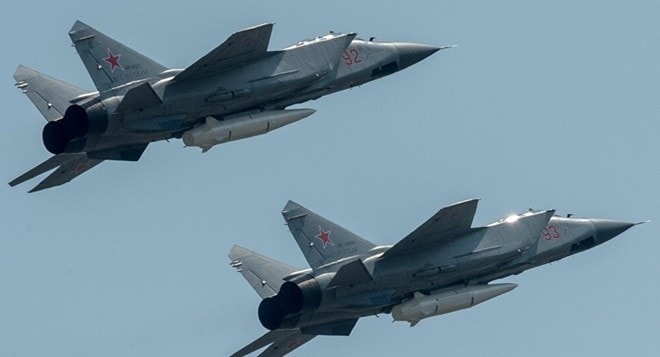
According to a summary released by the Ukrainian Air Force, in November, Russia launched 27 Kh-47M2 Kinzhal air-launched hypersonic missiles at targets in Ukraine, the highest recorded use of this type of missile. In the same month, Ukraine reported a total of 203 missiles of various types and 5 combined attack sorties; the number of Geran-2 kamikaze drones and simulators/drones used reached 5,456. The proportion of ballistic missiles and air-launched ballistic missiles increased to approximately half of the total, compared to about one-third in October.
Key figures and trends
Ukrainian statistics show that the intensity of UAV/decoy use remains very high: 5,456 units in November, lower than the July peak of 6,394 but still among the highest of the year. For three consecutive months (September to November), monthly usage exceeded 5,000 units. Predictions of a rate of 1,000 units per day in the autumn have not been confirmed.
Regarding missiles, November saw 203 missiles of various types and 5 combined attacks. The deployment structure shifted towards an increased proportion of ballistic missiles and air-launched ballistic missiles, now accounting for approximately half of the total, compared to about one-third in October. Kinzhal alone recorded 27 launches that month, a record number according to Ukrainian sources.
| November Index | Value |
|---|---|
| kamikaze and decoy UAVs | 5,456 |
| Missiles of all types | 203 |
| Combined attack | 5 |
| Kh-47M2 Kinzhal (launch count) | 27 |
| Ballistic density + ALBM | Approximately half of the total |
| UAV reference point (July) | 6,394 |
Technical analysis
The data shows that Russia is using two groups of air attack vehicles in parallel: Geran-2 kamikaze UAVs and decoy drones, along with ballistic missiles, air-launched ballistic missiles, and other missiles. According to Ukrainian descriptions, the decoy UAVs are used to distract air defenses, creating conditions for the main attack. The use of over 5,000 UAVs/decoys per month in recent times clearly demonstrates a numerically and stratified approach to air defense targeting.
Within the missile group, the increasing proportion of ballistic and air-launched ballistic missiles indicates a trend toward munitions with trajectories that are more difficult to intercept compared to some low-flying, slow-moving vehicles. The 27 launches of the Kinzhal in November, according to the Ukrainian Air Force, highlight this trend.
Combined attack tactics
The combined attacks in November were recorded by the Ukrainian side as totaling five, involving the coordination of multiple means (kamikaze UAVs, decoy/simulator UAVs, ballistic missiles, air-launched ballistic missiles, and other types of missiles). This coordination aimed to deplete air defense resources and create a window of time and space for more effective attacks.
Ukrainian air defense: current status and needs
The Ukrainian Air Force report acknowledges a decline in interception effectiveness, citing a lack of modern, long-range air defense missile systems like Patriot and SAMP-T to counter increasingly complex airborne threats. Given the increasing proportion of ballistic missiles, the need for high-altitude, long-range interceptors is particularly noteworthy.
Short-term outlook
According to Russian media, expectations of increased missile strikes against Ukraine – including ballistic and cruise missiles – have been confirmed. However, the record number of Kinzhal launches in November may reflect a prior accumulation of ammunition; therefore, the level of use of this type of munition is not necessarily expected to continue to increase significantly in the coming months.
Notes on sources and methods
The figures in this article are taken from the Ukrainian Air Force's summary of Russia's use of air-to-air weapons in November and related aggregated data for the year. The explanation for the record Kinzhal missile usage is based on information provided by Russian media. This article focuses solely on the technical and tactical aspects of the published data, without inferring anything outside the scope of the source.


