
Russia unveils Mnogotochie ammunition, increasing the effectiveness of infantry weapons in destroying UAVs.
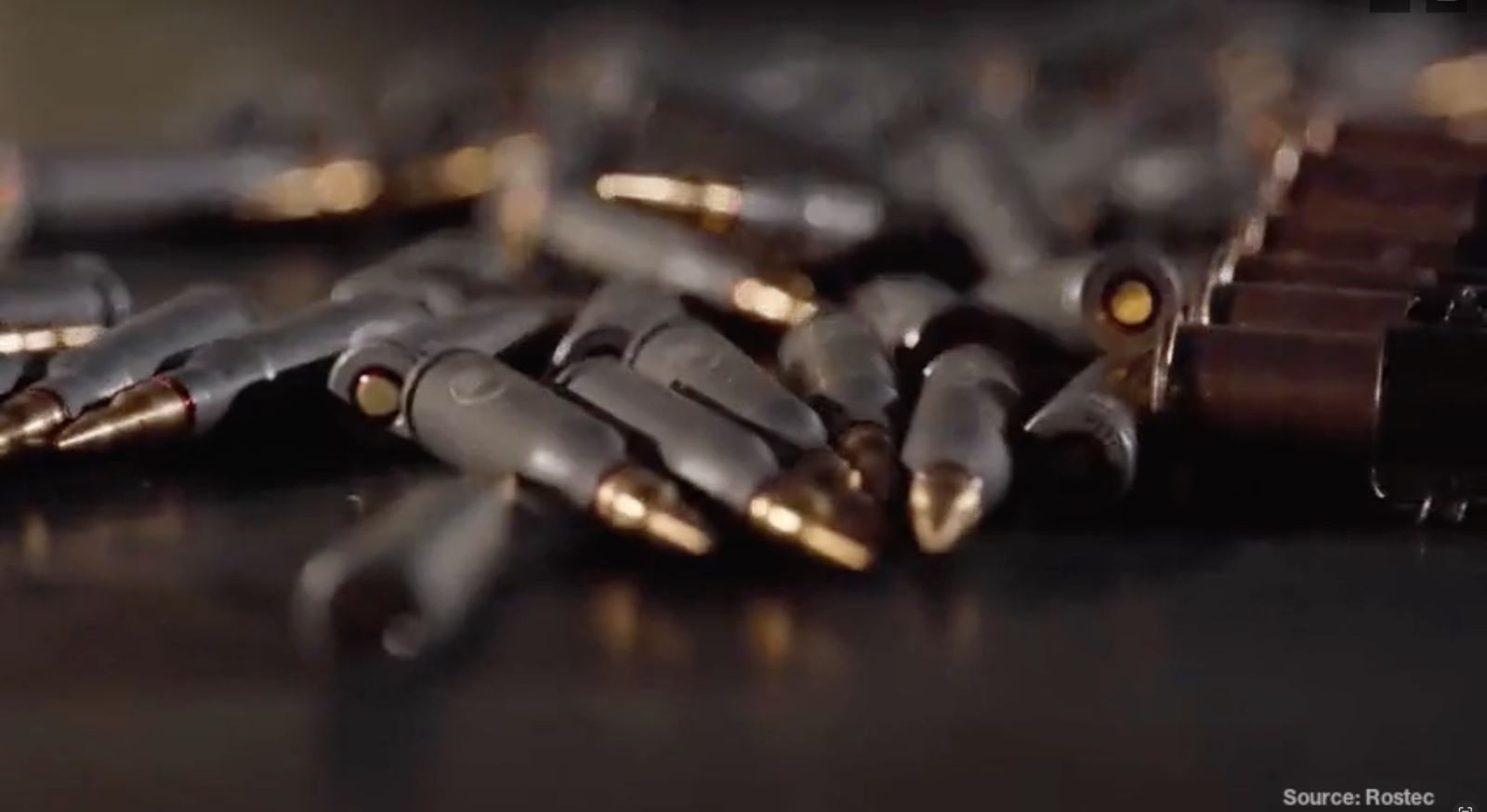
Rostec Corporation introduced the Mnogotochie projectile, featuring a triple-warhead design, enabling Russian soldiers to neutralize small UAVs with standard firearms without the need for specialized weapons.
Russia's Rostec defense industry group has just announced the Mnogotochie project (meaning "Three Dots"), a new generation of anti-drone ammunition. This ammunition is designed to enhance the combat capabilities of infantry against the increasing threat from small first-person view (FPV) drones on the battlefield.
The operating mechanism of the Mnogotochie multiple warhead projectile.
Mnogotochie is a special variant of the multi-warhead ammunition designed for standard rifled-barreled firearms. The core difference lies in its internal structure: each bullet contains three warhead elements arranged in series. These elements are made from a special alloy with physical properties similar to copper.
As the bullet leaves the barrel, the swirling motion created by the rifling in the barrel helps the elements maintain aerodynamic stability. This mechanism allows the Mnogotochie bullet to be fully compatible with existing muzzle brakes on infantry rifles, a significant advantage over conventional hunting rifle bullets which can easily damage these devices.
During flight, the three warhead elements will gradually disperse along a pre-calculated trajectory. This dispersion expands the kill zone, creating a small "bullet net" to maximize the probability of hitting and neutralizing fast-moving targets such as FPV UAVs.
Technical specifications and penetration capabilities
The Mnogotochie project was developed by a specialized Russian manufacturer of precision firearms. Currently, this type of ammunition is deployed in the two most common calibers of the Russian army, with the following specific combat parameters:
| Ammunition caliber version | Effective range | Combat characteristics |
|---|---|---|
| 5.45 x 39 mm | 150 m | For standard assault rifles |
| 7.62 x 54 mm | 300 m | Suitable for machine guns and sniper rifles. |
Field test results showed that the Mnogotochie projectile maintained stable penetration capabilities even after the warhead was fragmented. At a distance of 100 m, the projectile could penetrate a 25 mm thick wooden board reinforced with a 0.8 mm thick steel plate. This capability ensures the destruction of electronic components and the airframe structure of the UAV upon impact.
Alternatives to specialized weapons
The core idea behind Mnogotochie is to transform any infantry rifle into an effective anti-UAV tool without the need for additional electronic warfare systems or bulky specialized interceptor weapons. Soldiers simply carry ammunition boxes containing Mnogotochie to use when they detect an airborne threat.
Furthermore, this type of ammunition is designed to be manufactured directly on existing ammunition production lines, optimizing costs and supply time. Although it has entered mass production, the developer states that the Mnogotochie is still being refined based on real-world test data to improve its performance in the future.


