
Russia will demand guarantees for lasting peace in Ukraine.
The Russian Deputy Foreign Minister stated that Russia would urge Ukraine to maintain neutrality to ensure lasting peace.
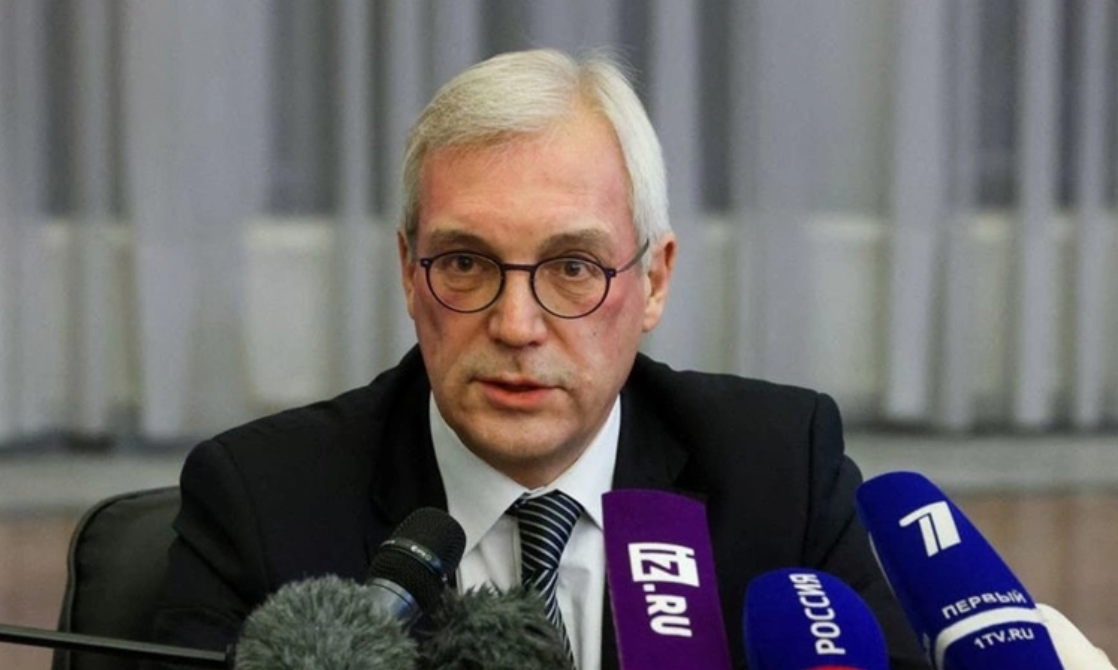
According to RIA Novosti on March 17, Russian Deputy Foreign Minister Alexander Grushko stated in an interview with Izvestia that, as part of a comprehensive solution to the conflict in Ukraine, Russia would demand a future agreement that includes strong security guarantees, including Ukraine's neutrality and NATO countries refusing to accept Ukraine as a member of the alliance.
"If we talk about a peaceful solution to the conflict in Ukraine, then of course, it will have an outline. We will demand that ironclad security guarantees be part of this agreement. Because only through the formation of these guarantees can we achieve lasting peace in Ukraine and, in general, strengthen regional security. Part of these guarantees must be Ukraine's neutrality and NATO countries' refusal to accept Ukraine as a member of the alliance," the Russian Deputy Foreign Minister said.
Alexander Grushko explained that, in fact, this is precisely the clause included in the draft agreements mentioned above. "Regarding discussions, of course, they haven't taken place yet, as there are currently no negotiations," Grushko said.
The Russian diplomat also addressed the topic of the possibility of reducing the US military presence in the Baltic region.
“The network of airports and ports is being strengthened and expanded. NATO is establishing new rapid reaction units and increasing mobility. We are witnessing an increase in the density and scale of military exercises. They are becoming more aggressive, targeting military operations against a comparable adversary – Russia. This is a reality we must take into account. And until there are real changes in the policies and military development of NATO countries, we will proceed from the existence of significant threats to Russia from the West,” Grushko emphasized.
On February 18, a meeting between the Russian and American delegations took place in Saudi Arabia. On March 11, talks were held between the Ukrainian and American delegations, also in Saudi Arabia, after which the US administration called for an immediate ceasefire.
Russian President Putin said he generally supports the idea of a ceasefire proposed by the US, but there are some important nuances to consider. In particular, he questioned the Ukrainian units in the Kursk region: Will they leave without fighting? If Russia releases them after they committed a series of crimes against civilians, will Kyiv order them to lay down their arms? Furthermore, President Putin added, it remains unclear who will give the order to stop the fighting and what the cost will be.


