
Russia attacks targets in Lviv with Oreshnik missiles: Technical analysis and range.
For the second time, Russia has deployed the Oreshnik medium-range ballistic missile, traveling at Mach 10. This weapon is capable of carrying multiple warheads and threatens strategic targets in Europe.
Russia has just launched its second Oreshnik intermediate-range ballistic missile (IRBM) into Ukrainian territory since the conflict erupted in 2022. This military move took place in western Ukraine, directly targeting the city of Lviv – an area just over 60km from the border with Poland, a NATO member. Observers see this attack as a strategic warning to the Western military alliance.
Details of the attack and strategic objectives
According to a statement from the Russian Ministry of Defense, the attack targeted energy infrastructure and drone manufacturing facilities. These are crucial links in Ukraine's current defense and counter-offensive capabilities. Meanwhile, the Lviv authorities confirmed that critical infrastructure was damaged after several large explosions, but reported no casualties.
Lviv's location holds sensitive geopolitical significance. With a distance of only an hour's drive to the Polish border, the Oreshnik missile launch sends a message that Russia's arsenal is capable of accurately reaching NATO members in Europe.
Technical specifications: Oreshnik and its connection to RS-26 Rubezh
The Oreshnik missile (meaning "Hawthorn") is considered by international military experts, including the Pentagon, to be a modified version of the RS-26 Rubezh intercontinental ballistic missile (ICBM). The RS-26 was developed by Russia starting in 2008, but the Oreshnik has been refined to serve medium-range targets.
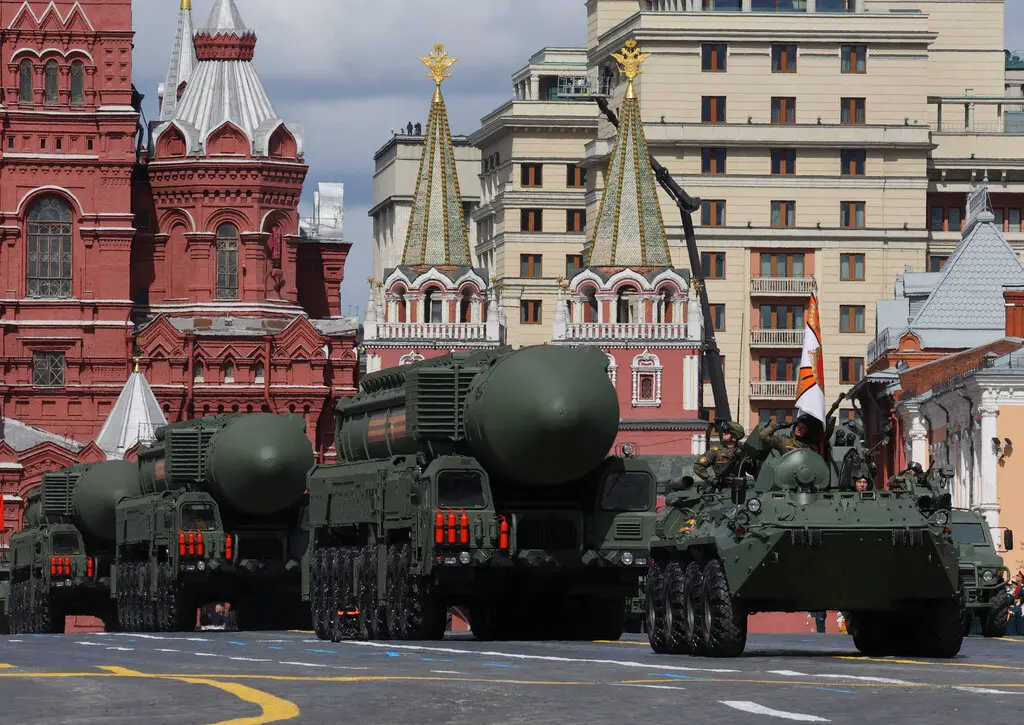
In terms of size, the Oreshnik has a circumference of approximately 1.06 meters (3.5 feet), significantly smaller than the 1.8 meters of the Rubezh. Although classified as a medium-range missile, US officials estimate the Oreshnik's actual range could reach 5,500 km, enough to cover much of the European continent. In the attack on Lviv, the missile traveled approximately 1,600 km from the Kapustin Yar base.
Notably, analysis from the Kyiv Institute of Forensic Science based on the fragments revealed that the Oreshnik did not utilize highly advanced microchips. Instead, the weapon relied on reliable designs and components from the Cold War era, but optimized for modern combat environments.
Hypersonic power and MIRV (Multiple Re-entry Vehicle) technology.
The most terrifying aspect of the Oreshnik lies in its speed and flight trajectory. This missile reaches hypersonic speeds of approximately 13,000 km/h (about 10 times the speed of sound). After leaving the launch pad, the missile bursts out of the atmosphere before plunging vertically towards its target at extremely high speed under the influence of gravity.

The Oreshnik is equipped with MIRV (Multiple Re-entry Vehicle) technology. A main missile can carry six separate warheads. Each warhead then releases four to six submunitions, creating a dense burst of fire upon approaching the target. This characteristic makes it nearly impossible for Ukraine's current air defense systems to intercept all the warheads simultaneously.
The geopolitical context and the breakdown of nuclear treaties.
The missile launch took place against the backdrop of the Intermediate-Range Nuclear Forces (INF) Treaty – which banned missiles like the Oreshnik – having expired after the US withdrawal in 2019. Moscow stated that this was a response to threats from Ukraine and the West, and asserted that it was stepping up production of this type of weapon.
Although the Oreshnik is capable of carrying nuclear warheads, Russia has only used conventional warheads in attacks on Ukraine. The deployment of an expensive strategic weapon like the Oreshnik is seen as an attempt by the Kremlin to demonstrate its self-reliance in defense technology despite economic sanctions from the West.


