
Russia successfully tests RS-28 Sarmat missile, replacing the Satanic missile.
General Sergey Karakayev reported to President Vladimir Putin on the successful test of the RS-28 Sarmat heavy ICBM, a new primary nuclear deterrent weapon with a payload of 10 tons.
The commander of Russia's Strategic Missile Forces (SMF), General Sergey Karakayev, has just reported to President Vladimir Putin on the successful testing of the RS-28 Sarmat heavy intercontinental ballistic missile (ICBM). This is a strategic nuclear weapon developed to replace the R-36M2 Voevoda system (NATO designation SS-18 Satan), which the West calls "Satan" due to its immense destructive power.
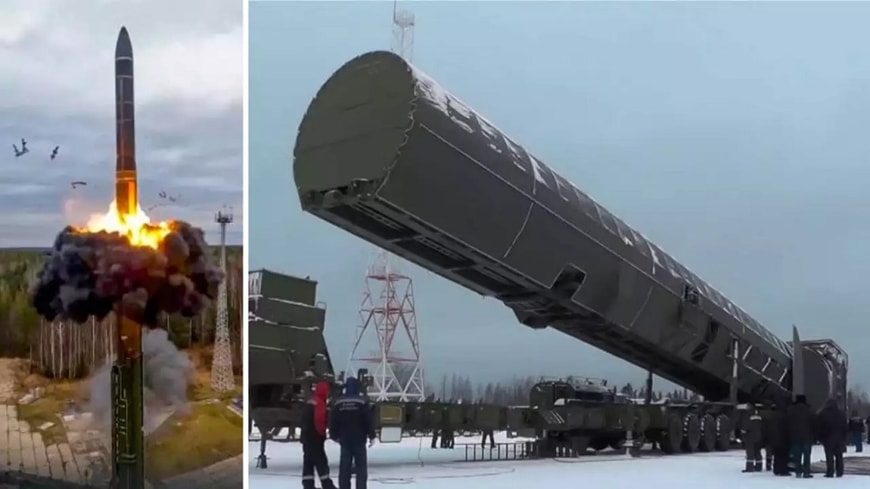
Nuclear fist with record-breaking payload capacity.
According to Chief Engineer Vladimir Degtyar from the VP Makeyev National Missile Center, the RS-28 Sarmat continues to use liquid-fuel engines to optimize payload capacity. Unlike solid-fuel ICBMs which have advantages in maneuverability and rapid response, the Sarmat serves as a decisive nuclear strike weapon with immense destructive power.
The key technical specifications of the RS-28 Sarmat include:
- Launch weight:208.1 tons (currently the world's heaviest ICBM).
- Warhead payload:Weighing 10 tons, it can carry 14-16 independently targetable re-entry vehicles (MIRVs).
- Speed:It reaches speeds of Mach 20 to Mach 25 upon re-entry.
- Range:Ranging from 18,000km to 35,000km, it is capable of orbiting the Earth.
Launch technology and the ability to penetrate defenses.
Due to its enormous weight, the RS-28 Sarmat is deployed in fixed launch silos that have been repurposed from older systems. The missile uses a "cold launch" mechanism, employing gas pressure to propel the missile out of the silo before activating the main engine, thus protecting ground infrastructure from intense heat.
Sarmat's guidance system combines inertial navigation, star mapping, and GLONASS satellite positioning, allowing for high accuracy with an error margin of only a few tens of meters. The missile body is constructed from aluminum-magnesium alloy and composite materials, reducing its detectability by enemy radar in space.
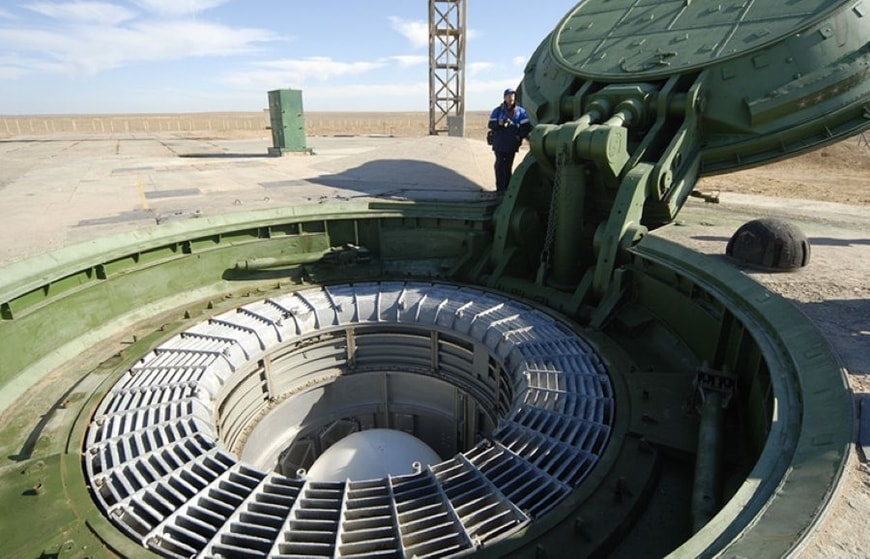
Strategic impact on international security
Colonel Vasily Dandykin, a Russian military expert, noted that the Sarmat missile can approach enemy territory from both the Arctic and Antarctic, making it difficult for current missile defense systems to intercept. In particular, the integration of the Avangard hypersonic glide vehicle allows the weapon to continuously change its flight path in the outer atmosphere.
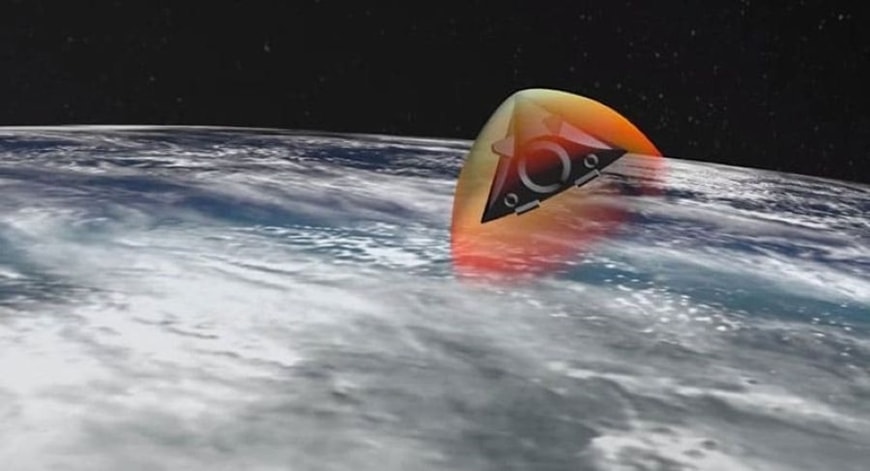
Military expert Igor Korotchenko emphasized that deploying the RS-28 Sarmat into the SMF (Special Missile Forces) is the ultimate measure to prevent the risks of all-out nuclear war. According to the roadmap, the first regiment equipped with this missile is expected to enter active service by the end of 2026, strengthening Russia's strategic position in the context of complex global security.


