
Russia integrates Verba anti-aircraft missiles onto Shahed UAVs: Technical and tactical analysis.
Ukrainian forces have detected a Shahed UAV carrying the new generation Verba missile, designed to counter helicopters and interceptor aircraft, marking a new advance in unmanned warfare.
Russia has upgraded the Shahed UAV from a ground-attack weapon to an air combat vehicle by integrating the Verba man-portable air defense system (MANPADS). This modification aims to create a direct threat to Ukrainian helicopters and interceptor aircraft, which are the primary means of destroying UAVs at night.
A Shahed variant carrying next-generation MANPADS missiles has been discovered.
Information about the downing of a Shahed drone carrying anti-aircraft weapons was first released by Ukrainian military expert Serhiy “Flash” Beskrestnov. Subsequently, the Ukrainian UAV Systems Forces posted a video showing the wreckage of the Shahed being intercepted by soldiers of the Darknode Battalion, 412th Nemesis Brigade, thus reinforcing the credibility of the incident.
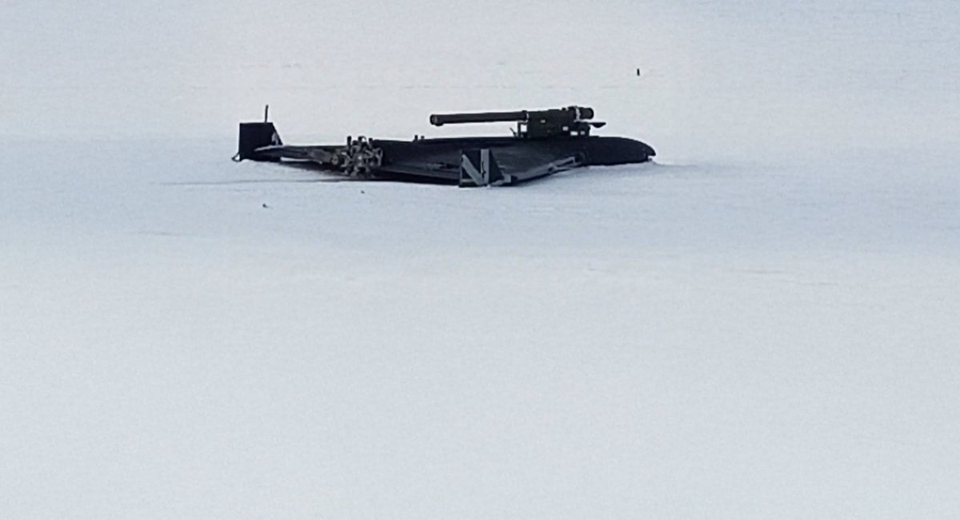
Images from the scene confirm that the weapon mounted on the UAV is the Verba system, the most modern MANPADS currently in service with Russia. Based on the technical designations 9P333 and the 2025 production date, experts believe these are the latest batches of weapons, indicating Russia's high priority for this integration project.
Technical specifications and adaptive installation methods
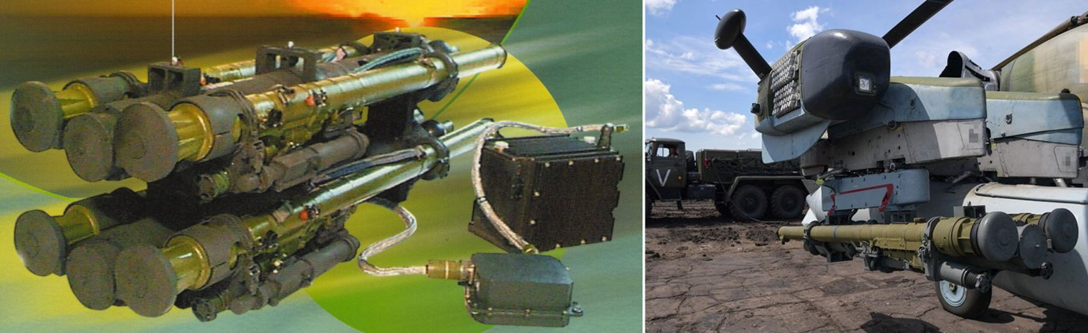
Despite using modern missiles, the way Verba was integrated onto the Shahed UAV reveals signs of an improvised solution. This system requires complex auxiliary mechanisms to replace human operation, including a power supply, compressed nitrogen tanks to cool the infrared seeker, and a remote launch command mechanism.
The overall structure lacks uniformity, with components secured by conventional metal clamps and exposed cables. Notably, Russia already has standard solutions such as the Strelets kit or the Igla-V variant for helicopters, but these were not used for this project. This suggests that this may have been a rushed deployment under limited resources for the standard system.
Challenges in control and operation processes
Unlike conventional Shahed suicide drones that fly along a pre-programmed GPS route, the Verba missile variant requires real-time human control. The operator must observe via camera, control the UAV to approach the target, and activate the missile's thermal seeker within an extremely short period of time.
This entire combat sequence relies entirely on low-latency data transmission, similar to how FPV drones operate. If the signal is interrupted, the operator will lose the ability to track the target, rendering even the most advanced Verba missiles useless in the air.
Countermeasures using electronic warfare
The core weakness of this system lies in the mesh modems used to maintain connectivity. Military experts believe that the confrontation with Shahed, armed with Verba missiles, was essentially a war on the radio spectrum rather than a battle of pure firepower.
By focusing on electronic warfare (EW), Ukraine can effectively jam mesh modem channels. When control connectivity is lost, UAVs will be unable to detect or lock onto targets, turning an "airborne killer" into a passive target. Disabling remote control systems is considered a top priority to mitigate the risks to the Ukrainian air force against this new threat.


