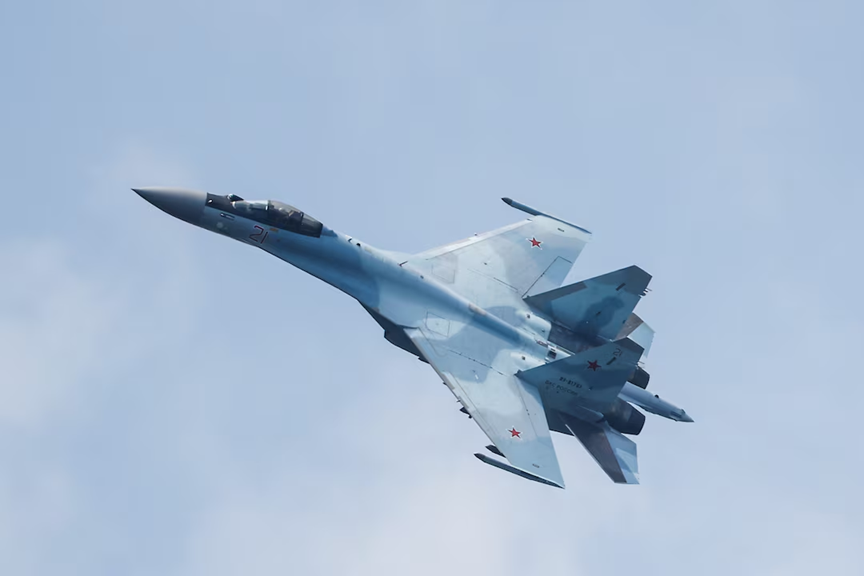
Russia will continue producing the GSh-301 cannon for the Su-35 until 2026.
On December 12, Kalashnikov confirmed the completion of the GSh-301 cannon order in 2025 and the launch of the 2026 plan; the 30mm cannon still ensures immediate firepower for the Su-35 and many other Russian fighter jets.
Kalashnikov announced on December 12th that it has completed all orders for GSh-301 air-to-air cannons in 2025 on schedule and has begun production plans for 2026. This move is not intended to introduce new weapons, but rather to ensure the combat readiness of existing squadrons, including the Su-35, in the context of prolonged high-intensity operations.
Specifications and design
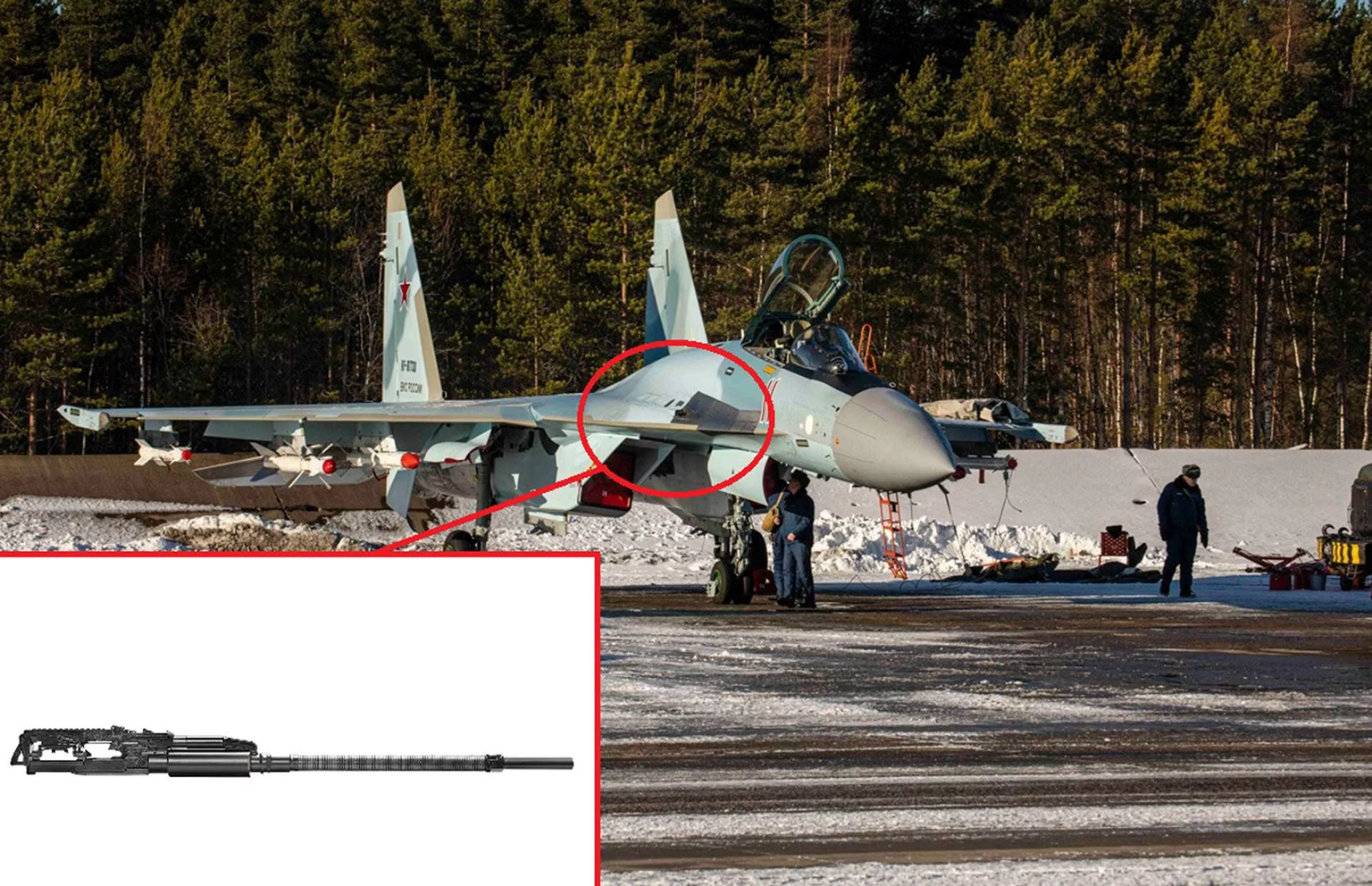
The GSh-301 (Gryazev–Shipunov GSh-30-1) is a 30mm air-launched gun using 30×165mm ammunition. It is a single-barreled gun with a short recoil mechanism, achieving a firing rate of approximately 1,500–1,800 rounds per minute depending on the configuration. The GSh-301's strength lies in its balance between relatively light weight and high rate of fire, allowing for compact integration within the aircraft fuselage without significantly impacting aerodynamics or other weapon payloads.
| Ingredient | Parameter |
|---|---|
| caliber | 30 mm |
| Type of ammunition | 30×165 mm |
| Structure | Single barrel, short recoil mechanism |
| Rate of fire | 1,500 – 1,800 tablets/minute |
Operational role
In modern warfare, artillery is no longer the primary weapon for long-range air combat, but it still provides an immediate fire option at close range. When integrated with fire control systems, HUDs, and onboard sensors, pilots can quickly fire short, accurate bursts of fire immediately after a test.
In air combat, the GSh-301 is a last resort or finishing weapon when distance is short. In ground attack missions, it is effective against light armored vehicles, artillery positions, radar, or exposed targets within very short time windows. High-explosive, incendiary, and tracer rounds, along with high muzzle velocity, help maintain a relatively straight trajectory at short range, generating significant kinetic energy and contributing to reduced unintended damage.
Production and logistics support
Kalashnikov did not disclose specific customers, but the production of the GSh-301 was stated to be aimed at maintaining the operation of existing squadrons. Given the high intensity of operations, the lifespan of the gun barrel, spare parts inventory, and maintenance capacity directly affect the number of sorties; ensuring the supply of guns and replacement parts is therefore of strategic importance.
The company emphasizes that it is currently Russia's sole manufacturer of aircraft artillery. According to Kalashnikov, the application of modern production equipment, high-quality alloy steel, and improved processes has helped increase production in recent years. Maintaining a stable production line not only ensures the air force's needs are met but also reduces pressure on the maintenance and repair system.
Integrated platform
The GSh-301 is standard equipment on many Russian platforms, including the Su-35, MiG-29, MiG-29K/KUB, Su-27 and Su-30 variants, and the Su-34 frontline bomber. On these aircraft, the internal gun mount serves as supplementary to guided weapons, providing a low-cost and flexible firepower option when visual confirmation or proportional fire is required.
Su-35: A prime example
The Su-35 is a 4++ generation multirole fighter, considered the most advanced version of the Su-27 series. The aircraft is designed to maintain air superiority during the transitional period, before Russia widely deploys its next-generation fighters. Instead of focusing on stealth, the Su-35 prioritizes engine power, maneuverability, and firepower.
The Su-35's standout feature is its exceptional maneuverability, thanks to its pair of AL-41F1S engines with three-dimensional thrust vector control, providing an advantage in close-range air combat. Its top speed is estimated at Mach 2.25 (approximately 2,778 km/h), comparable to the F-22 and faster than the F-35, with the ability to fly supersonic speeds without afterburners. The powerful Irbis-E phased-array radar allows for long-range detection, tracking, and locking onto multiple targets, compensating for the lack of stealth capabilities.
With a weapons payload of approximately 8 tons, the Su-35 carries a diverse range of air-to-air and air-to-ground missiles and guided bombs, enabling it to perform a variety of missions. The combination of its engines, electronics, and firepower ensures that the Su-35 continues to be a vital pillar of the Russian Air Force.