
Russia conducts strategic nuclear triad exercises involving 64,000 troops.
The Russian Ministry of Defense has mobilized its entire strategic deterrence force, including missiles, air force, and navy, to conduct joint exercises with Belarus to protect its sovereignty.
The Russian Ministry of Defense has just announced the deployment of a large-scale nuclear exercise involving the coordinated participation of the entire "strategic deterrence triad," including missile forces, air force, and navy. This operation aims to demonstrate Moscow's ability to respond to preemptive attack scenarios and protect national sovereignty in a complex geopolitical context.
Scale of mobilization of forces and combat equipment
According to official statistics, the exercise involved 64,000 Russian soldiers and a massive amount of military equipment. The units mobilized included 7,800 specialized military vehicles, 200 missile launchers of various types, and 140 fighter jets and strategic bombers. The navy also contributed 73 warships and 13 submarines, notably including 8 nuclear submarines carrying strategic missiles.
This activity coincided with President Vladimir Putin's state visit to China. Although both events were pre-planned, military observers interpreted it as a strategic message about maintaining the highest level of nuclear deterrence capabilities, even while high-ranking leaders engage in international diplomatic activities.
Deploy the Iskander-M system and coordinate with Belarus.
A key part of the exercise involved operating mobile missile launchers in challenging mountainous and forested terrain. Footage showed military convoys heavily protected by attack helicopters before test-firing cruise missiles from the Iskander-M system. This is a key weapon system included in the nuclear sharing agreement established by Russia and Belarus in 2023.
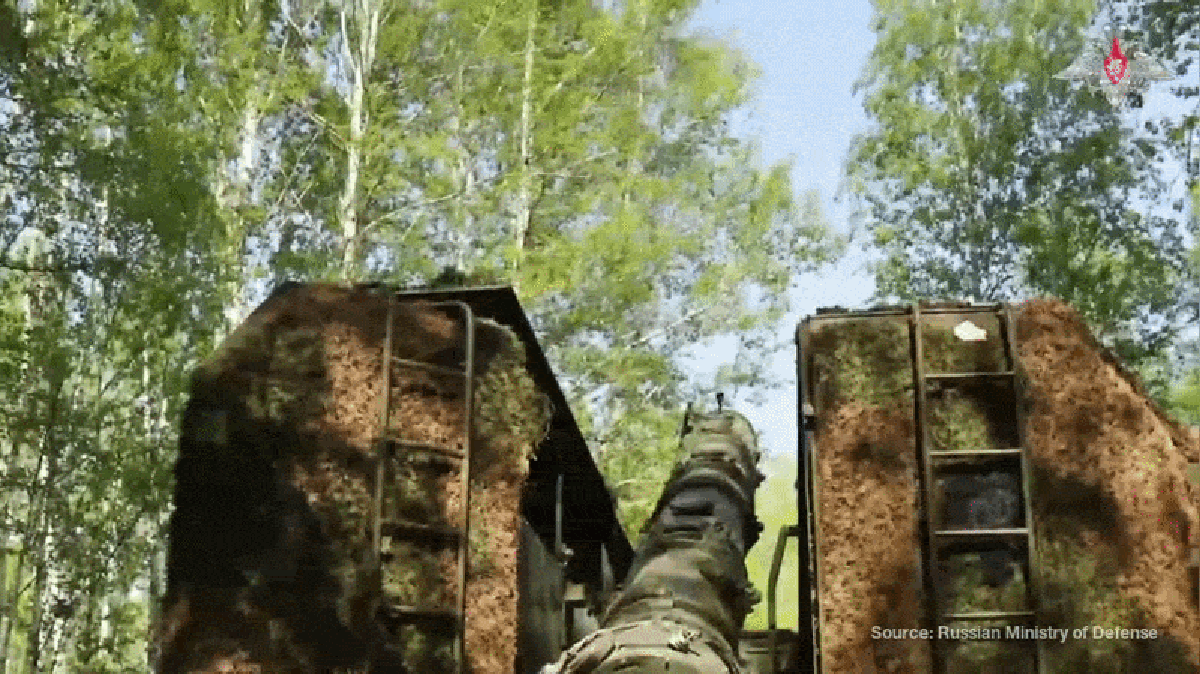
Close cooperation with the Belarusian armed forces demonstrates the cohesion in the common defense strategy of the Union State. The Iskander-M system, with its high mobility and difficulty in interception, is considered an effective deterrent against the increasing NATO presence in the western border region.
Perimeter system and Russian military doctrine
During the exercises, Russia also emphasized the effectiveness of its national military doctrine. According to this doctrine, nuclear weapons should only be used as a last resort to protect the country's survival. To ensure the ability to respond in any situation, Moscow maintains an automated communication system called the Perimeter, also known as the "Dead Hand."
This system is designed to automatically trigger a full-scale nuclear retaliation if command centers are neutralized in a surprise attack. It is a legacy of Soviet-era military technology but has been continuously upgraded to meet modern operational standards.
Technical highlights and combat performance
The exercise also demonstrated significant advancements in the operation of heavy weaponry by Russia. Particularly noteworthy was the demonstration of lifting a 95-ton object to a height of 35 meters and performing precise rotational maneuvers. This was considered a feat of military engineering, proving the stability and power of the new generation of strategic missile launch systems.
In summary, the Russian nuclear forces successfully achieved their objectives regarding multi-branch combat coordination, affirming their position as one of the world's most powerful nuclear shields today.


