
Russia and Ukraine: An uncertain future?
(Baonghean) - Nearly 2.5 years after the annexation of Crimea by Russia in early 2014, relations between Russia and Ukraine have recently been rocked by new tensions. Observers even suggest that this latest conflict could push the two countries to the brink of war. What is the source of these new tensions? Where will relations between Russia and Ukraine go from here?
Accusations against each other
Tensions began on August 10th when the Russian Federal Security Service (FSB) announced that it had thwarted a series of terrorist attacks in Crimea. Russia accused Ukrainian military intelligence of planning the attacks.
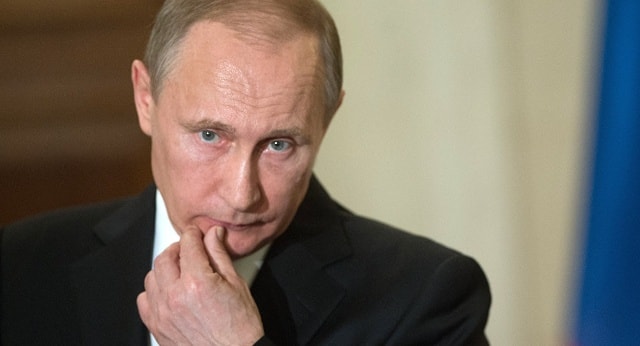 |
| The administration of Russian President Vladimir Putin is considering the possibility of severing diplomatic relations with Ukraine. Photo: Sputnik. |
According to reports, one officer was killed on the night of August 6th in clashes with rioters. On August 8th, another soldier was killed while repelling two attacks by a special unit that Russia also accuses of being sent by the Ukrainian Ministry of Defense to infiltrate Crimea. Russia alleges that the attacks were aimed at destabilizing the political and social situation in Crimea ahead of the upcoming local and federal elections in Russia.
The Russian statement also said that authorities had arrested a Ukrainian military intelligence officer and a group of civilians suspected of being Ukrainian spies planning terrorist attacks in Crimea.
Of course, Ukraine immediately rejected Russia's accusations. The Ukrainian National Security and Defense Council asserted that Russia's allegations were "fabricated and untrue."
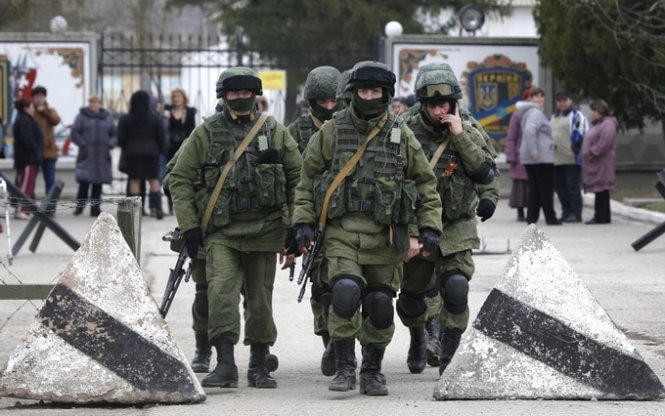 |
| Russian soldiers at a military base near the Ukrainian border. |
Meanwhile, the Ukrainian Ministry of Defense argues that this is merely a pretext for Russia to redeploy its military operations and threaten Kyiv. Not only Ukraine, but the US State Department also questioned Russia's accusations against Ukraine, while reiterating Washington's opposition to Russia's annexation of Crimea.
Furthermore, on August 11, Ukrainian President Poroshenko placed the military on the highest alert, preparing for combat along the border with Crimea and the Donbass region. President Poroshenko also announced that planned military exercises would proceed in the south of the country.
In response to Ukraine's actions, the Kremlin also issued a statement on the same day saying that President Vladimir Putin had held an emergency meeting to discuss additional measures to ensure the security of the population and essential infrastructure in the Crimean Peninsula.
In addition, the Russian Ministry of Defense announced that the Russian Black Sea Fleet, currently stationed in Crimea, is also conducting exercises in the region to prepare for sabotage attempts. The three-day exercise involved more than 19 warships and helicopters, and included counter-terrorism operations, mine clearing, and search and rescue at sea. Explaining these actions, Russian President Vladimir Putin stated that Ukraine is choosing terrorism over peace.
Old cracks - new tensions
Looking back more than two years, relations between Russia and Ukraine began to strain when the Crimean Peninsula was annexed by Russia in 2014. The fact that the people of Crimea – a territory formerly belonging to Ukraine – voted to join Russia prompted the Kiev government to take action. Since the Crimean incident, relations between Russia and Ukraine, as well as between Russia and the West, have become increasingly strained, marked by a series of sanctions between the two sides.
Furthermore, the reciprocal accusations between the two sides regarding involvement with separatist forces in eastern Ukraine and Ukraine's role as a stepping stone for NATO's eastward shift towards Europe have further strained the relationship.
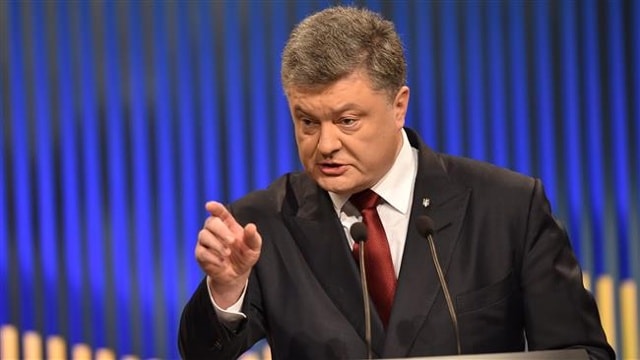 |
| In response to Russia's accusations, Ukrainian President Petro Poroshenko ordered the military near Crimea and Donbass to be on the highest alert. Photo: AFP. |
Ukraine is gradually becoming a battleground between Russia and NATO as both sides conduct military maneuvers, transporting heavy weapons and military equipment along each other's borders. Diplomatically, most recently in early August, Ukraine rejected Mikhail Babich – Russia's new ambassadorial candidate in Kyiv – without giving a reason.
Given the already strained relationship, Ukrainian President Poroshenko's order on August 11th to put the military on high alert triggered a long-standing conflict.
Commenting on Poroshenko's move, analysts suggest that it may also be a way to send a message to the Russian and Turkish presidents following their recent reciprocal visits. While Putin is uncompromising with Ukraine, he is also willing to accept an apology from Turkish President Erdogan for the Turkish air force shooting down a Russian Su-24 bomber near the Syrian border last November.
It should also be recalled that Türkiye is part of the Ukraine-Türkiye-Georgia-Azerbaijan alliance, which was formed to challenge Russia. This "deliberate favoritism" by Russia further angered Ukraine.
Another factor that has angered the Ukrainian government is President Putin's determination to proceed with the construction of the historic bridge across the Kerch Strait, connecting the Crimean Peninsula to mainland Russia.
According to Ukraine, this move aims to sever Crimea's dependence on Ukraine. The bridge is expected to open by the end of 2019, and upon completion will be the longest sea bridge in the Russian Federation.
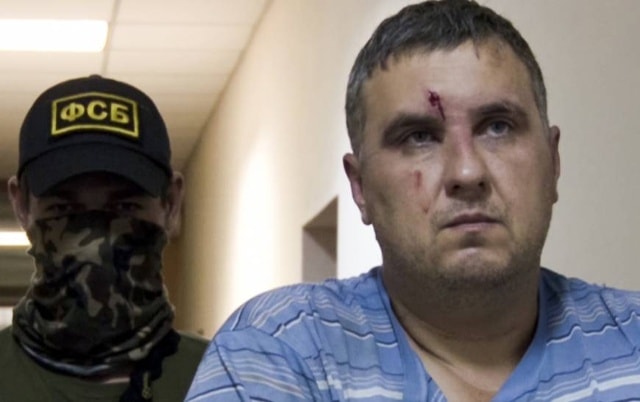 |
| The attack on Crimea, which Russia accuses Ukraine of being behind, has sparked new tensions between the two countries. Photo: AP |
Meanwhile, joint dialogue mechanisms involving both Ukraine and Russia remain deadlocked. For example, the Contact Group on Ukraine (comprising representatives of Ukrainian separatists, Russia, and the OSCE) and the "Normandy Four" group (Ukraine, Germany, France, and Russia), which aimed to achieve a political process for the conflict in eastern Ukraine, have made no significant progress.
Given the current developments, the prospect of a swift de-escalation of relations between Russia and Ukraine is unlikely. In the latest developments, Russia is considering severing diplomatic ties with Ukraine. Simultaneously, Russia is also considering closing its embassy in Kyiv and recalling all diplomatic staff. If this happens, the gap between Russia and Ukraine will widen even further. Some experts even predict that gunfire could erupt within the next few days. Of course, if this worst-case scenario occurs, its dangerous consequences will undoubtedly be immeasurable, both for bilateral relations and for the security of the entire region.
Phuong Hoa
| RELATED NEWS |
|---|


