
Banks compete to attract remittances as Tet approaches.
Remittances to Vietnam typically surge around the Lunar New Year, prompting banks to scramble to attract these funds.
Receiving a set of cookware as a gift from a bank for participating in remittance transactions, Ms. Mai, a retired official in Tan Binh District, Ho Chi Minh City, was quite happy, considering it a "lucky start to 2017". Ms. Mai said that her son works at a company in the US, so every year near the Lunar New Year, he sends her several thousand USD for shopping expenses.
Although the gifts are not of great value, they are considered one of the strategies banks use to attract customers to send and receive remittances during the year-end period. Accordingly, from December 19, 2016 to February 20, 2017, BIDV offered a gift worth 30,000 VND per transaction for each money transfer transaction received via Western Union (WU) with a value greater than or equal to 200 USD (or equivalent in other currencies).
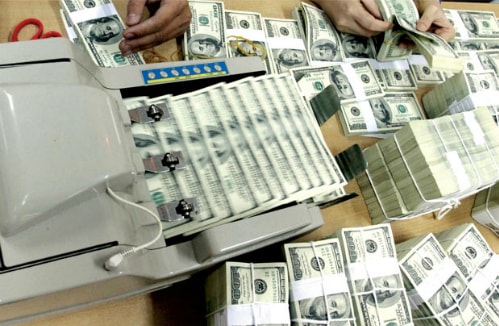 |
Remittances are expected to increase significantly as the Lunar New Year approaches. |
Dong A Remittance Company (part of Dong A Bank) announced gold prizes for lucky draw winners. SCB gave out cash directly along with lucky money envelopes. Meanwhile, Sacombank advertised overseas travel packages as prizes.
Speaking to VnExpress, a representative from Dong A Remittance Company stated that the total amount of remittances received through their company has reached approximately US$1.43 billion to date, exceeding the 2015 figure by about 5%. Sales remain concentrated in the key market of the US (42%), followed by Asia (34%). "We anticipate a 20-25% increase in remittances during the Lunar New Year season," the representative said.
At Sacombank's Remittance Company, remittance payouts this year are also quite promising, fluctuating around 1.5 billion USD. "As Tet approaches, the amount of remittances will increase significantly, so the bank also has many policies to attract customers to send and receive money," a Sacombank representative said.
Mr. Nguyen Hoang Minh, Deputy Director of the State Bank of Vietnam's Ho Chi Minh City Branch, stated that the current mechanism for receiving and transferring remittances is very flexible, creating favorable conditions for the people. Accordingly, those receiving and sending remittances do not have to pay personal income tax or any fees, and can flexibly receive and deposit them into accounts or convert them into cash,...
According to the Deputy Director of the State Bank of Vietnam in Ho Chi Minh City, by the end of December 2016, remittances transferred to the city were estimated at over 5 billion USD, accounting for 58% of the total remittance volume of the whole country (last year, remittances to the city only accounted for 47% of the whole country).
In particular, in the last month of 2016 alone, remittances flowed strongly into Vietnam, increasing by more than 700 million USD, due to overseas Vietnamese and workers needing to send money back to their relatives in the country to spend during the upcoming New Year and Lunar New Year holidays.
According to Mr. Minh, since 2013, with the stability of the exchange rate, a fairly high percentage of remittances, ranging from 20 to 35%, have been resold to banks. In 2016 alone, this percentage reached over 35%, and this trend continues to this day.
According to statistics from the State Bank of Vietnam's Ho Chi Minh City branch, last year, remittances flowed into production and business activities accounting for over 70%; into real estate accounted for about 20%, and the remainder went to other activities such as spending by relatives and family... Mr. Minh added that currently, the key markets remain Europe and the US, accounting for over 82% of remittances transferred to Vietnam.
Regarding the situation in 2017, some opinions suggest that remittances will stagnate or not grow strongly due to several reasons. Firstly, changes and adjustments to economic policies in the US – a key market accounting for the largest amount of remittances to Vietnam. In addition, stricter labor management policies in some Asian countries – markets that attract a large number of Vietnamese workers – and the sharp decline in the value of the local currency against the USD in some countries around the world are also contributing factors.
According to VNE


