
The Indian coffee industry risks losing 80% of its West Asian market share due to tensions in the Strait of Hormuz.
India's coffee exports are facing major challenges as freight costs have doubled and shipping routes through the Middle East have been disrupted due to geopolitical conflicts.
India, the world's seventh-largest coffee producer, risks losing key export markets in the Middle East. According to the Indian Coffee Exporters Association, tensions in the Strait of Hormuz could cause businesses to lose up to 80% of their market share in West Asia in the coming months.
Pressure from transportation and logistics costs.
Currently, about 70% of India's coffee production is destined for export, with West Asia accounting for 16.1% of total exports in 2024. However, shipping routes through the Strait of Hormuz and the Red Sea are experiencing serious disruptions, forcing goods to be diverted or held up at transit points.
Notably, shipping costs have nearly doubled since the conflict erupted. Export businesses, particularly small and medium-sized enterprises, are struggling to pass these increased costs on to buyers, significantly eroding profit margins. Delays during the recent peak season disrupted trade flows to major markets such as the UAE, Kuwait, Jordan, and Saudi Arabia.
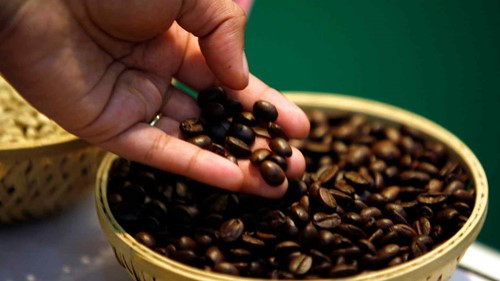
Market position and supply shift trends
The Indian coffee industry has experienced strong growth in recent years. Data from the Indian Coffee Board shows that export revenue increased from $1.14 billion in the crop year ending March 2023 to a record $2.13 billion in the most recent crop year. The country currently supplies approximately 350,000-370,000 tonnes annually, accounting for 3%-4% of global production.
| Target | Value / Proportion |
|---|---|
| Annual output | 350,000 - 370,000 tons |
| Export ratio | ~70% of production |
| Export turnover in 2024 | $2.13 billion |
| West Asia regional market share | 16.1% of total turnover |
Besides popular product lines, India is also known for high-value segments such as premium Robusta and specialty Monsooned Malabar coffee, serving markets in West Asia, Japan, and Europe (Italy, Germany, Russia). However, supply uncertainties are making buyers more cautious.
Reports from UN trade data note signs of a supply shift as some European importers begin increasing purchases from alternative countries such as Uganda. If congestion in the Strait of Hormuz continues, the structure of global coffee trade flows could be restructured, negatively impacting India's position on the world coffee map in the long term.


