
The US arms industry found a life raft from a samarium depot in France.
China's ban on rare earth exports is putting pressure on the US defense supply chain, forcing Washington to tap into its old 200-ton samarium stockpile in France.
The U.S. defense industry is facing a major supply chain challenge after China imposed restrictions on the export of the rare earth element samarium. To maintain precision weapons production, Washington is now relying on a long-forgotten stockpile of 200 tons of samarium nitrate in France.
The essential role of SmCo magnets in guided weapons.
Samarium is the primary material for producing samarium-cobalt (SmCo) permanent magnets, an indispensable component in the defense sector. These magnets possess exceptional heat resistance, operating stably at temperatures above 300°C, far surpassing the capabilities of conventional neodymium magnets.
Thanks to its corrosion resistance and magnetic stability in harsh environments, SmCo is widely used in measuring instruments, sensors, and control systems for fighter jets and guided missiles.
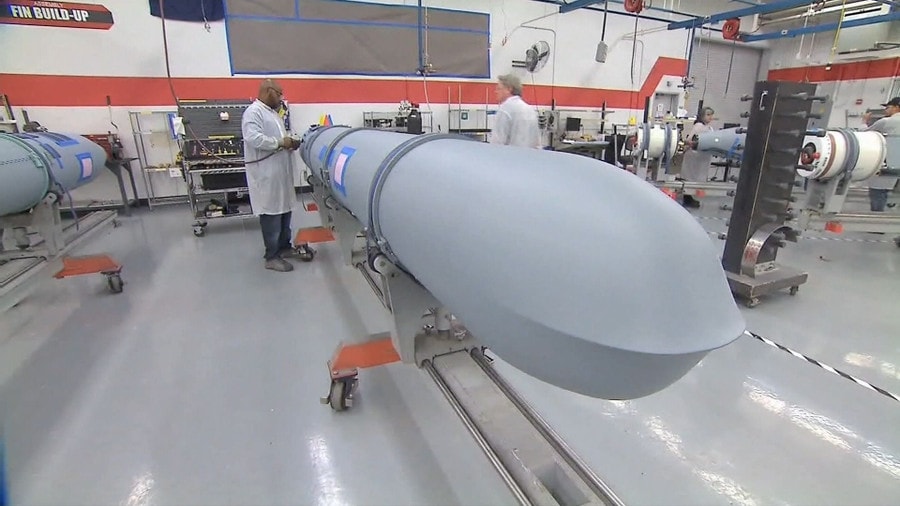
Notably, the Tomahawk cruise missile—one of the most powerful weapons in the U.S. military—is equipped with control fins that utilize SmCo magnets. A shortage of this material directly threatens the accuracy and operational capability of critical defense systems.
China's dominance in the rare earth supply chain.
Although the United States was a pioneer in the development of SmCo magnets, the industry gradually shifted to China starting in the 1980s. Factors such as abundant reserves, less stringent environmental regulations, and state subsidies helped China dominate the market.
Currently, Beijing controls about 60% of global rare earth production and has a near-monopoly on the supply of SmCo magnets. In April, the Chinese government restricted samarium exports in retaliation for US tariffs, putting Western defense companies in a difficult position.
Aisha Haynes, a former Pentagon supply chain official, acknowledged that new weapons development projects, including hypersonic missiles, have been negatively impacted by this measure.
200 tons in storage in France and a solution to salvage the situation.
Amid dwindling reserves, the British company Less Common Metals (LCM) discovered a 200-ton stockpile of samarium nitrate in France. This material, produced decades ago, was owned by Solvay—a Belgian chemical company that was once a leader in rare earth oxides.
This refining line has been out of operation for over 20 years due to its inability to compete economically with China. However, Solvay still retains the equipment and expertise to process this raw material stock.
Defense production process
The samarium from France was transported by LCM to the UK to be converted into metal and melted into alloys. These alloys were then sent to Arnold Magnetic Technologies (AMT) in the US to be processed into complete magnets for military use.
Despite costing 5-8 times more to produce than products from China, this 200-ton stockpile has become a "lifeline" helping the US defense industry maintain production for about another year. Washington is currently still working to find more sustainable alternative sources of supply to reduce its dependence on the Chinese market.


