
European electric truck industry under pressure from China: A race for price and speed.
Chinese electric truck manufacturers are aggressively penetrating the European market with the advantage of being 30% cheaper and having record-short product development cycles, threatening the position of Western giants.
The European electric truck industry is facing intense competition from Chinese manufacturers, who possess a significant advantage in production costs and speed of product delivery. No longer limited to passenger cars, brands like BYD, Geely, and startups like Windrose are turning the heavy-duty commercial vehicle segment into a new global competitive battleground.
Competitive advantages in terms of cost and economies of scale.
One of the biggest hurdles for European automakers today is the price. Electric trucks from China are currently priced about 30% lower than the average in the European market. Specifically, an electric truck that costs around $380,000 in Europe could be reduced to $266,000 if offered by Chinese competitors.
| Type of vehicle | Estimated price (USD) |
|---|---|
| Traditional Diesel Trucks | 115,000 |
| Chinese electric trucks | 266,000 |
| European electric trucks | 380,000 |
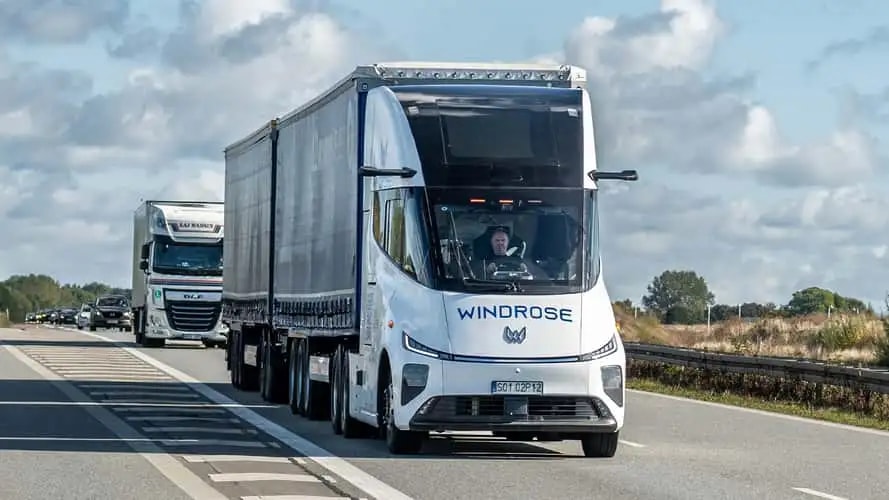
The disparity in production scale is also significant. Currently, electric trucks account for 29% of heavy commercial vehicle sales in China, while in Europe, this figure is only a modest 4.2%. This popularity in the domestic market allows Chinese automakers to optimize their supply chains and reduce component costs, especially for batteries.
Exceptional product development speed
Besides price, Chinese automakers also exert pressure thanks to their record-short product development cycles. While traditional European manufacturers typically take around 7 years to perfect a new model, startups like Windrose only need about 3 years to bring a product from design to market.
This agility allows Chinese businesses to continuously improve their technology, adopting the latest advancements in software and powertrain systems. According to E-Mobility Europe, European manufacturers have only about 1–2 years to maintain their competitive advantage before risking losing market share to their Eastern rivals.
Challenges for European truck manufacturers
Even leading corporations like Volvo Group have acknowledged the assertiveness of new competitors. With transportation businesses increasingly focused on optimizing total cost of goods sold (TCO), the combination of low initial purchase prices and long-term economic benefits of electric vehicles is making Chinese products more attractive.
Overall, the global race in commercial transport is entering a critical phase. Without timely adaptation strategies in both cost and production processes, Europe's long-established trucking industry will face significant challenges in maintaining its leading position in the electrification era.


