
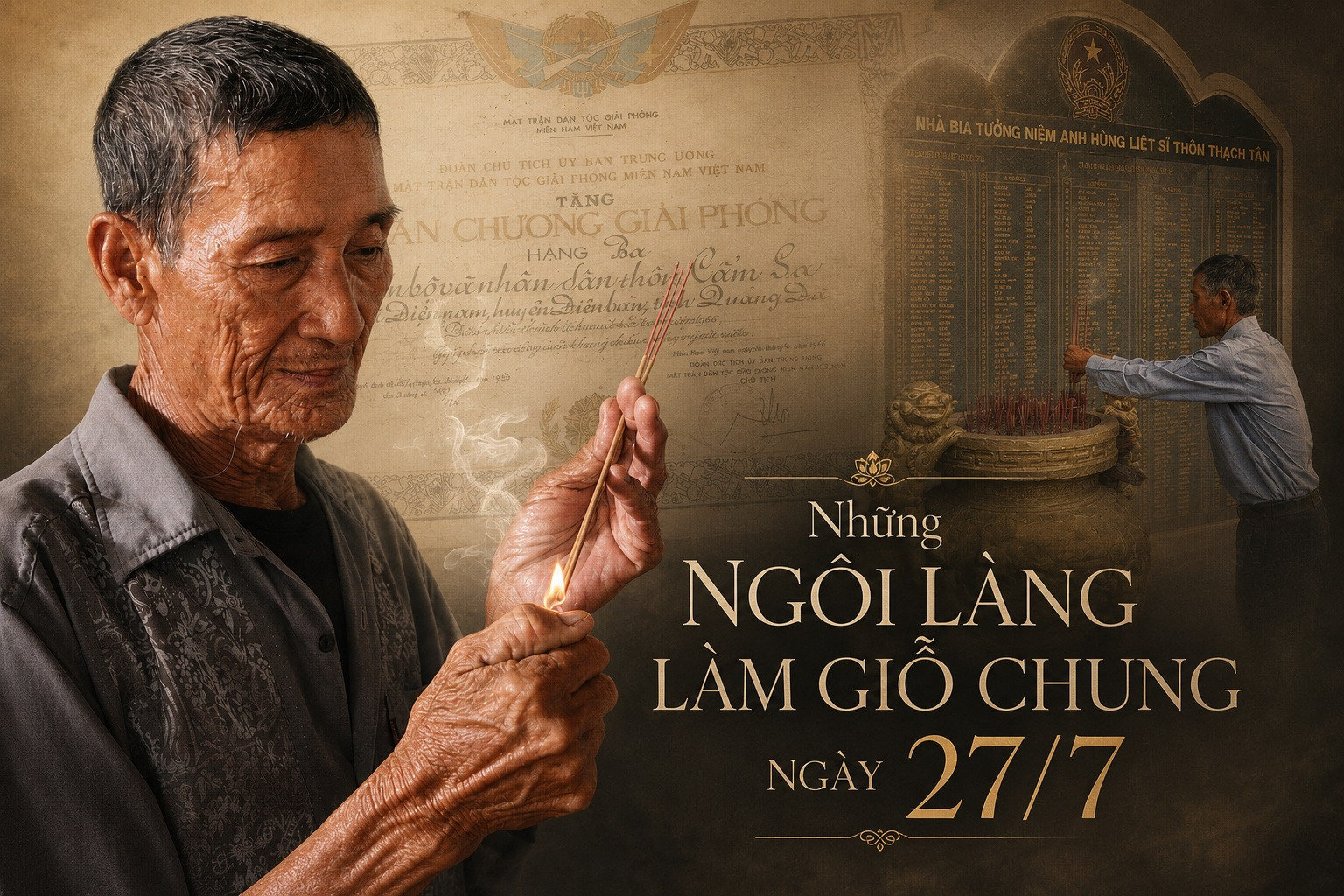
A joint memorial day in villages with hundreds of fallen soldiers.
Every year, on July 27th, the people of Cam Sa and Thach Tan villages in Da Nang prepare a feast and light incense to commemorate hundreds of martyrs. Some have unknown dates of death, others have yet to be found, but on this shared memorial day, no one is forgotten.
In July, the sun blazes down on the white sands south of Da Nang.
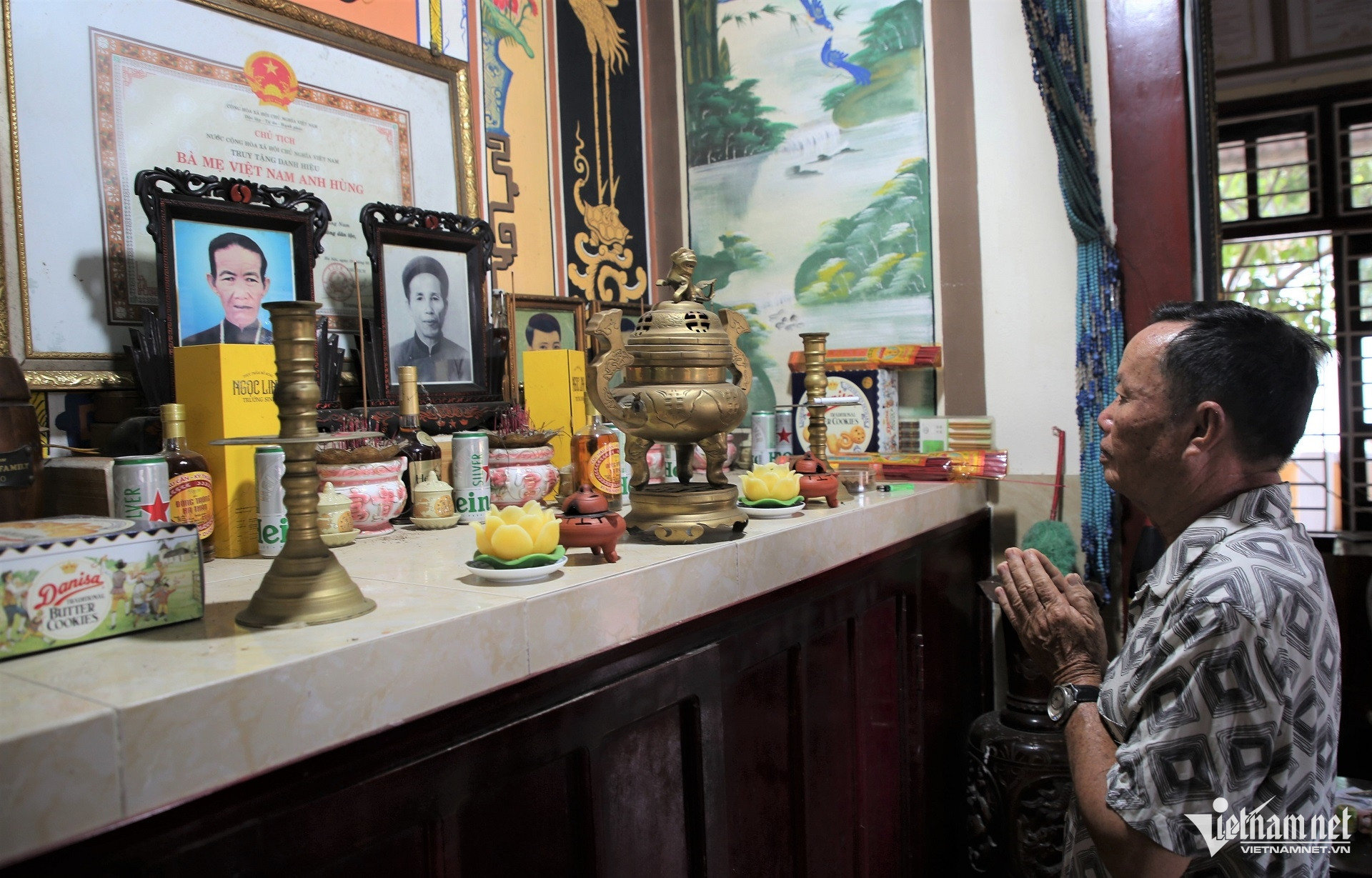
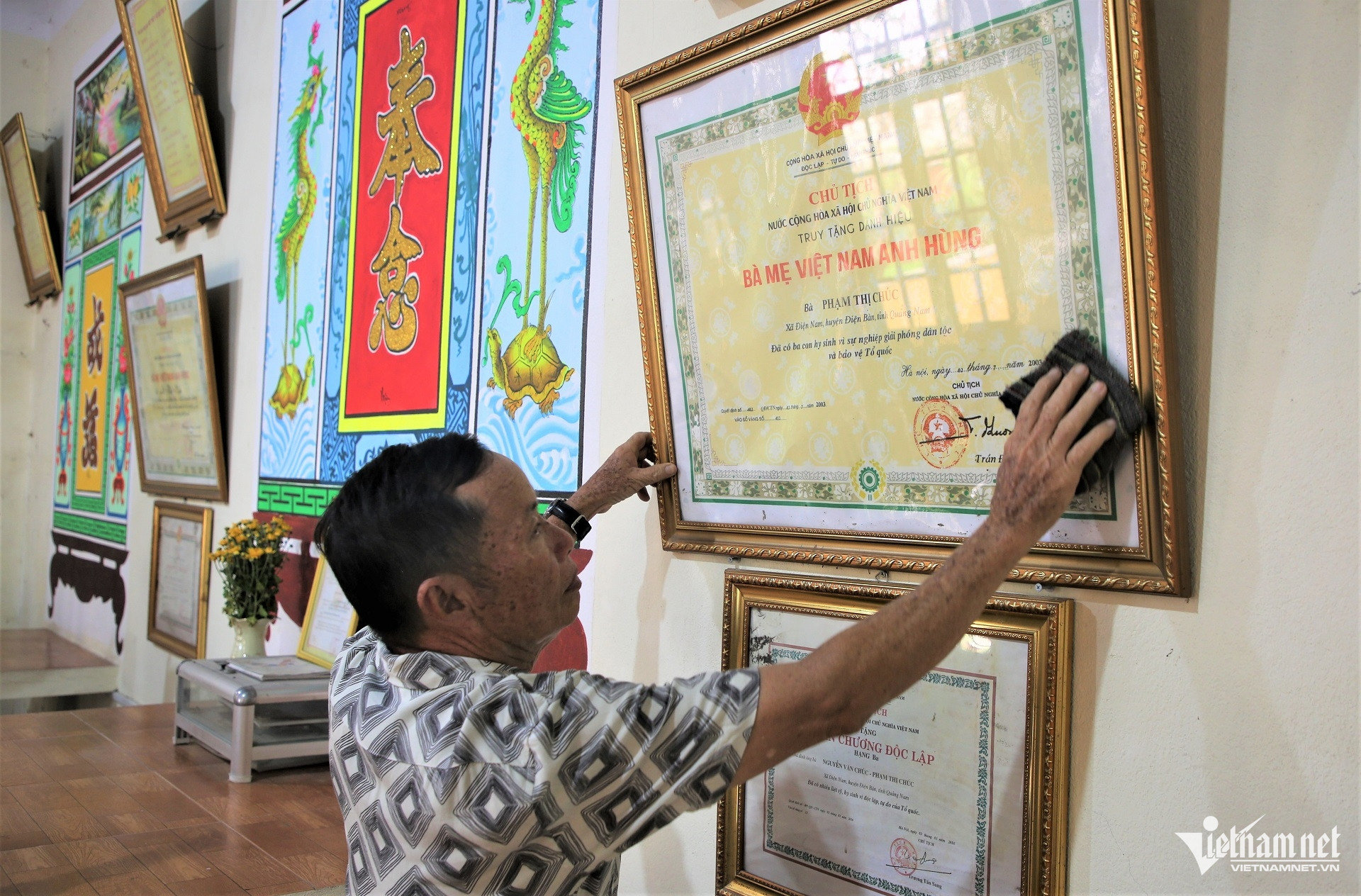
In the church in Cam Sa neighborhood, Dien Ban Dong ward, 68-year-old Nguyen Van Phuoc replaces the flowers on the altar with new ones and slowly wipes the faded certificates of recognition from the nation.
On July 27th, when descendants who work far away return home, the ancestral temples are lit up again, and incense smoke wafts through every alleyway.
Each year, the village holds a memorial day – not for one person, but for hundreds of people who have fallen.
Village of Heroes
Cam Sa, a small coastal fishing village, has 503 martyrs, 111 Heroic Vietnamese Mothers, and is the birthplace of 5 generals. Mr. Phuoc's family alone has 14 martyrs and 4 Heroic Vietnamese Mothers.
“My grandmother, my mother, my aunt, and my maternal aunt are all Heroic Vietnamese Mothers. My three older brothers, one of whom later became a lieutenant general, and two of whom sacrificed their lives. But in this village, families suffering such losses are not uncommon,” he recounted.
During the war, Cam Sa was situated in the midst of fierce fighting. By day, the villagers worked in the fields; at night, many served as messengers, guerrillas, digging tunnels, and sheltering cadres. In 1967-1968, the village was repeatedly raided and burned, only to be rebuilt from the ruins.
Many generals rose through the ranks from this land, including Major General Pham Ban, Hero of the People's Armed Forces; and Lieutenant General Nguyen Van Thang, former Political Commissar of Military Region 5, who is also Mr. Phuoc's older brother.
"In my village, wherever you go, you meet people who have suffered losses due to the war. Anyone you meet could be a descendant of a fallen soldier. Here, 'you'll meet a hero as soon as you step out the door' - it sounds like a joke, but it's true," Mr. Phuoc said.
Many sons of Cam Sa sacrificed their lives in their homeland, while others perished on distant battlefields, their exact dates unknown. Therefore, July 27th has gradually become an occasion for families to commemorate their ancestors.
"If we held separate memorial services for each person, some families would have a memorial service almost every month. Therefore, people choose July 27th to light incense, prepare a meal, and remember those who have passed away," Mr. Phuoc explained.
Leading us to the memorial monument for the 7 martyrs and heroes of Dien Nam, Mr. Phuoc paused for a long time in front of the plaque commemorating the battle of January 19, 1972.
That day, an enemy battalion, supported by tanks, artillery, helicopters, and boats, unexpectedly stormed the village. Surrounded on all sides, seven local cadres and guerrillas fought to the end, killing 47 enemy soldiers, destroying a tank, shooting down a HU1A helicopter, and then sacrificing their lives.
One of them was martyr Nguyen Thang, the older brother of Mr. Phuoc and the younger brother of Lieutenant General Nguyen Van Thang.
"He is laid to rest right on the land where he was born. Now only his name, carved in stone, remains," Mr. Phuoc said.
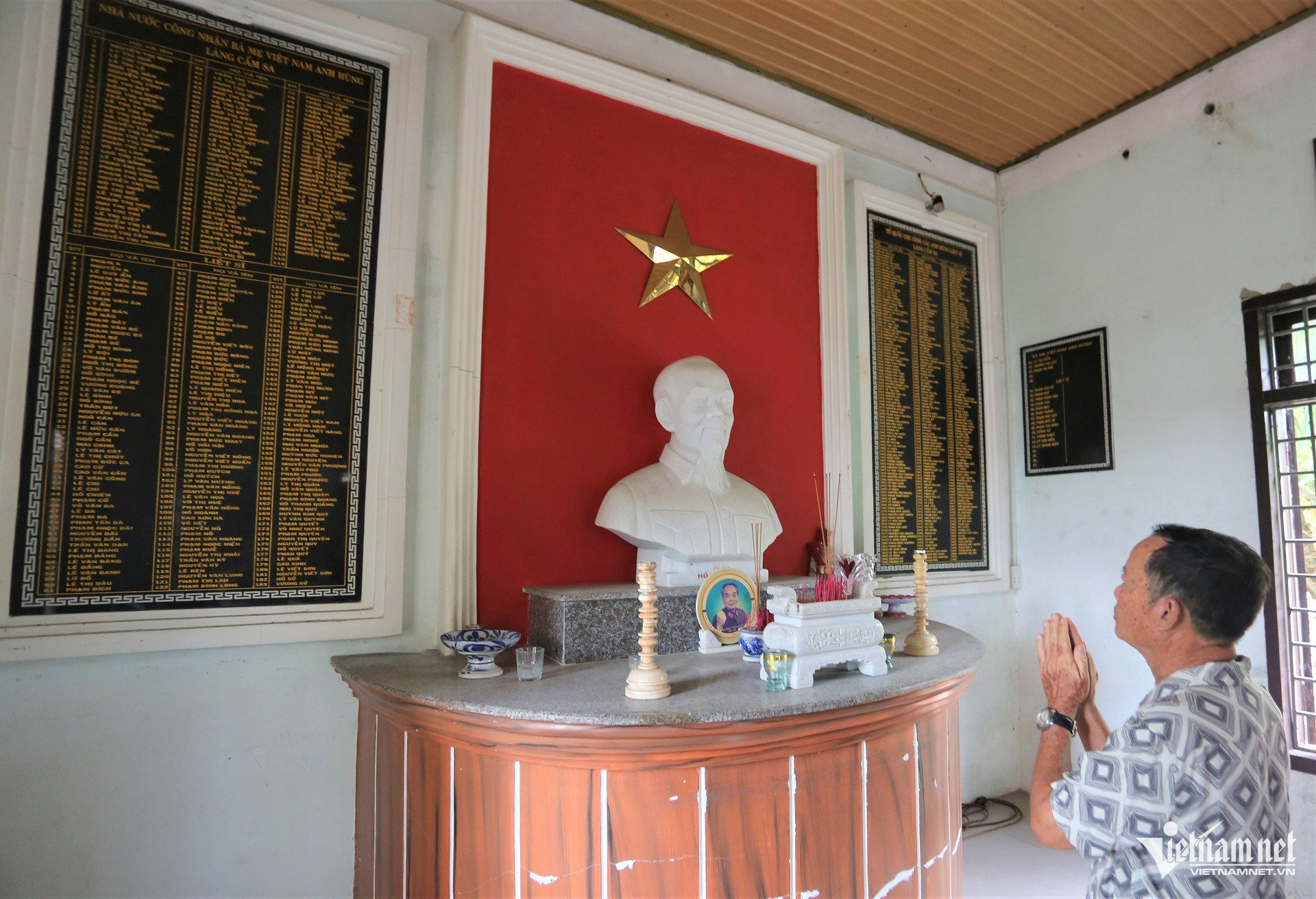
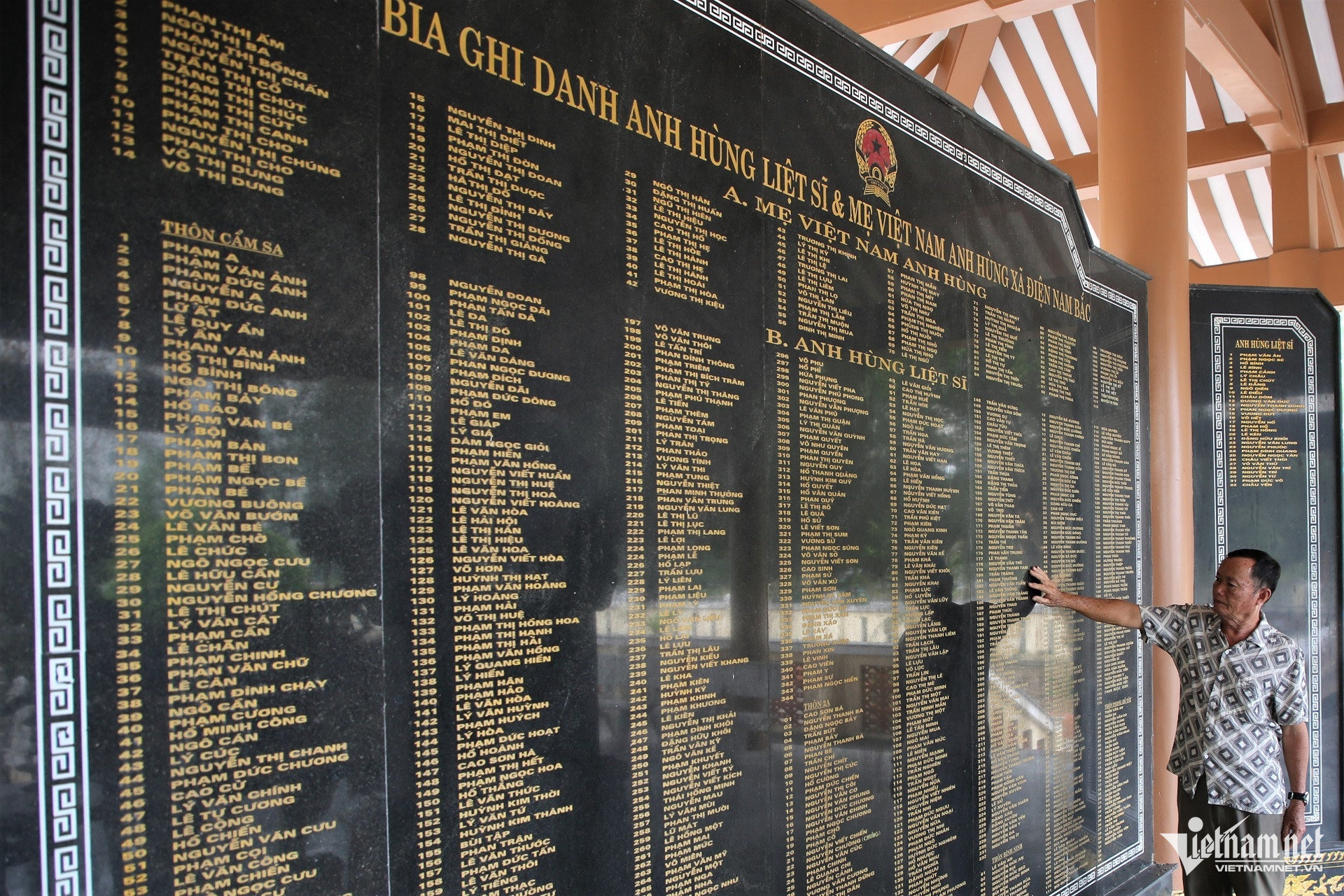
The traditional house of Cam Sa village was built by the people working together. In the main worship hall, a memorial plaque listing the names of martyrs and Heroic Vietnamese Mothers is placed respectfully alongside the national flag and a statue of President Ho Chi Minh.
The upper section lists the names of the Heroic Vietnamese Mothers, while below are hundreds of names of martyrs listed consecutively, like a unique family tree of the village.
"Every year, new names are added to the memorial plaque. Some people are posthumously honored late, but no one is forgotten," said Mr. Tran Quoc Dung (71 years old), Head of Cam Sa neighborhood.
Mr. Dung's family has 15 martyrs, his grandmother is a Heroic Vietnamese Mother; and he himself is a disabled veteran of the third class.
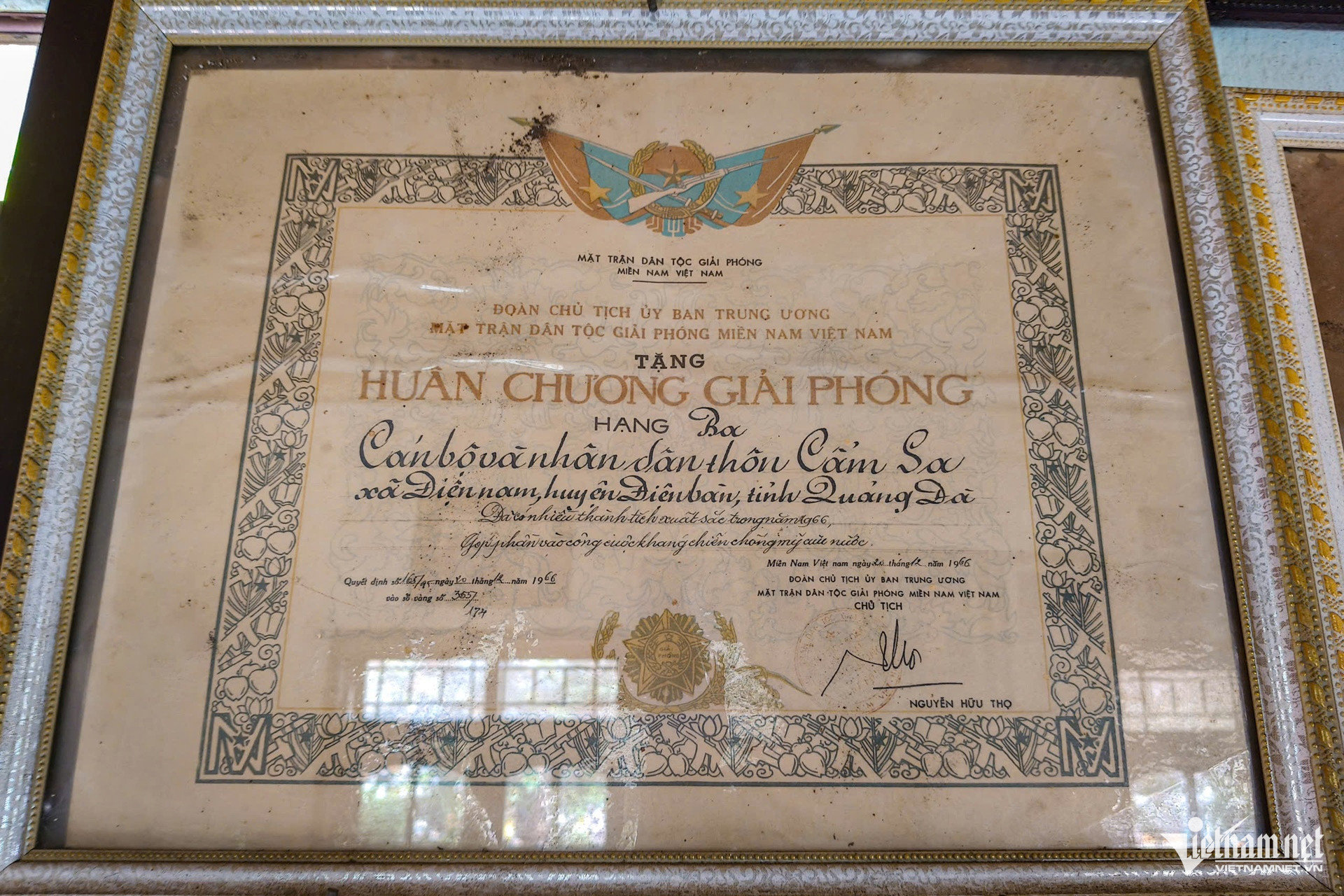
No one is forgotten.
Leaving Cam Sa, we made our way to Thach Tan, Ban Thach ward - a village located in the Ky Anh tunnel system. The tunnel system, approximately 32km long, was dug from 1965 to 1967 to provide shelter, hide cadres, and support for combat operations.
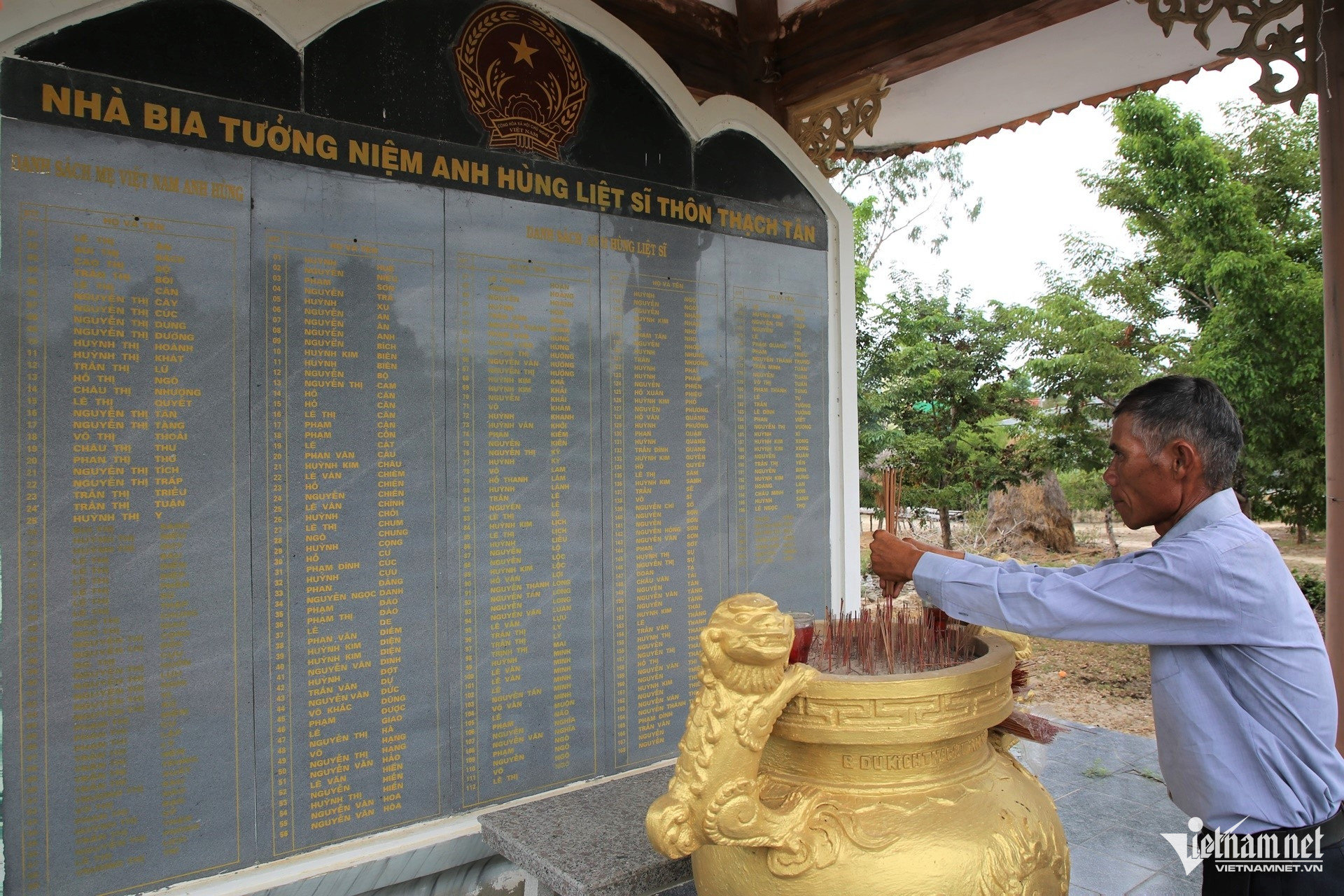
Thach Tan has 203 martyrs and 59 Vietnamese Heroic Mothers.
Above ground today are peaceful houses and lush green gardens. Beneath the surface lie tunnels that once sheltered entire villages from bombs and bullets.
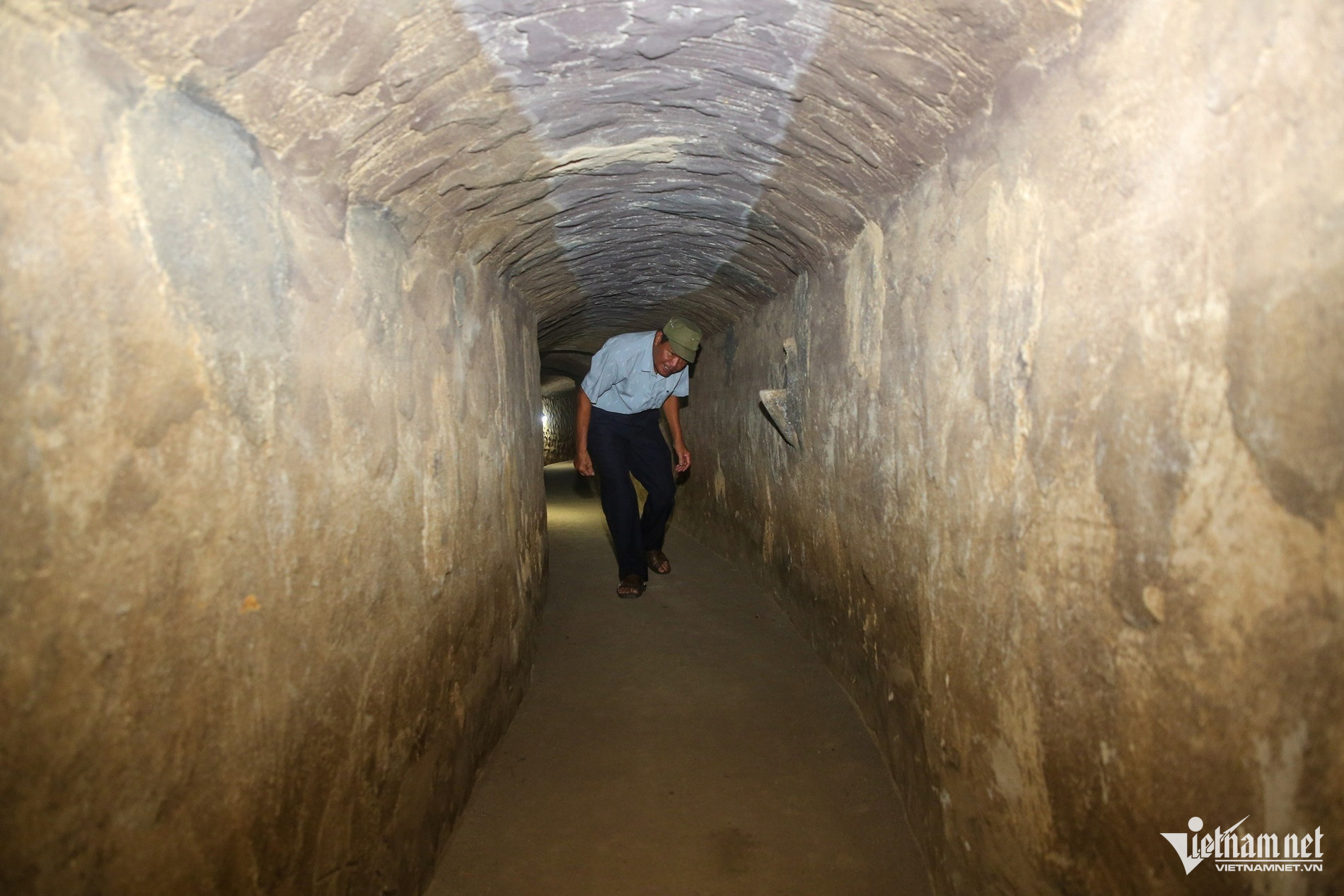
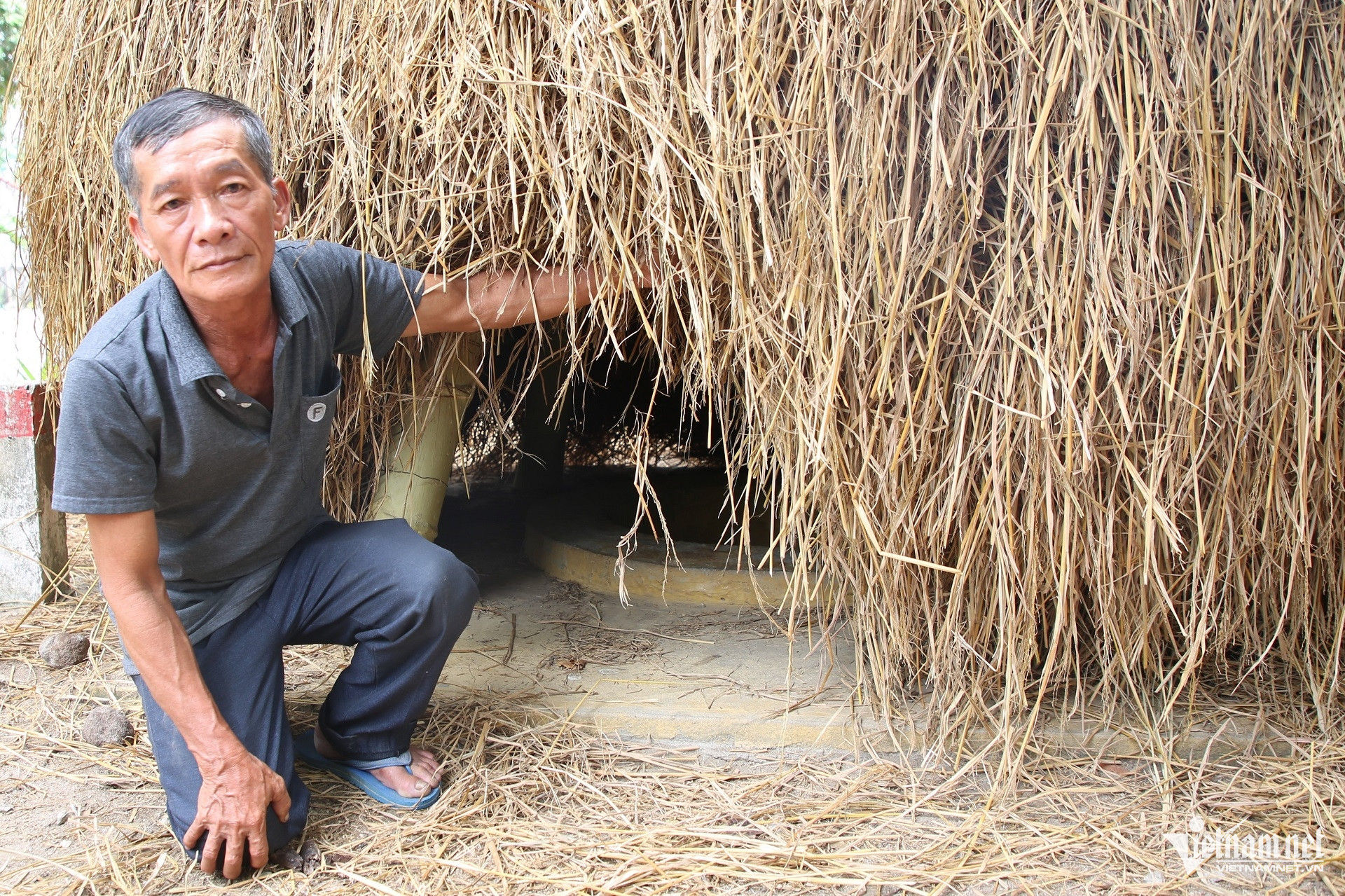
At 76 years old, Mrs. Tran Thi Loan still sits by her mat weaving loom in her house next to the historical site. Underneath her family's garden, there are still three bunker openings from the war years.
As a young woman, Ms. Loan participated in the revolutionary movement, was arrested and tortured, but resolutely refused to reveal any information about the underground tunnels.
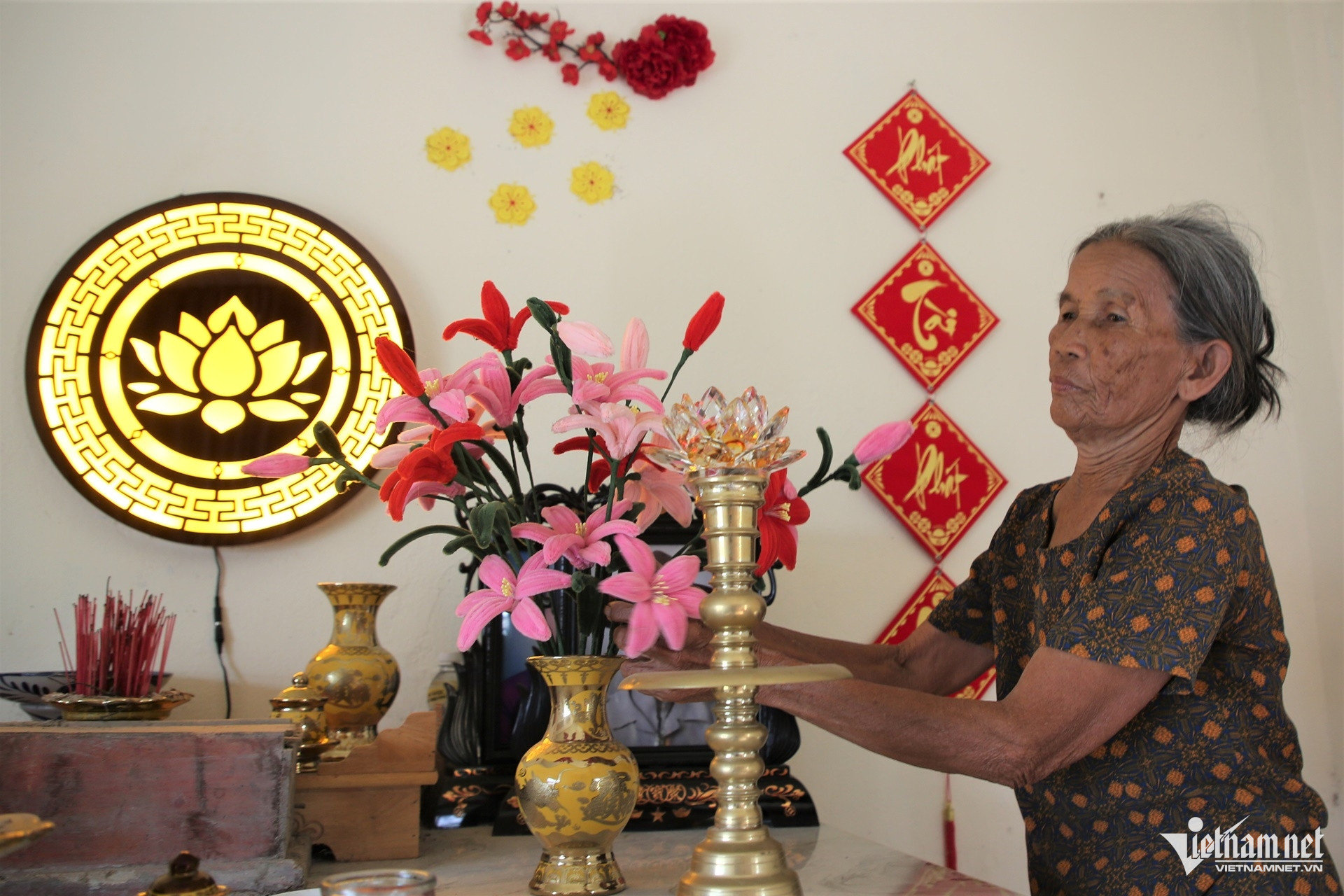
Her family has two martyrs and one Heroic Vietnamese Mother. For over 40 years, every July 27th, she prepares a meal and calls her children and grandchildren to come home to light incense.
"No matter where my children and grandchildren live, they try to come home in large numbers. When I get old and weak and can no longer do it myself, they must continue," Mrs. Loan said.
Not far from there, the family of Mrs. Le Thi Thu, 70 years old, has seven martyrs and three Heroic Vietnamese Mothers. Her husband was a war invalid who passed away five years ago.
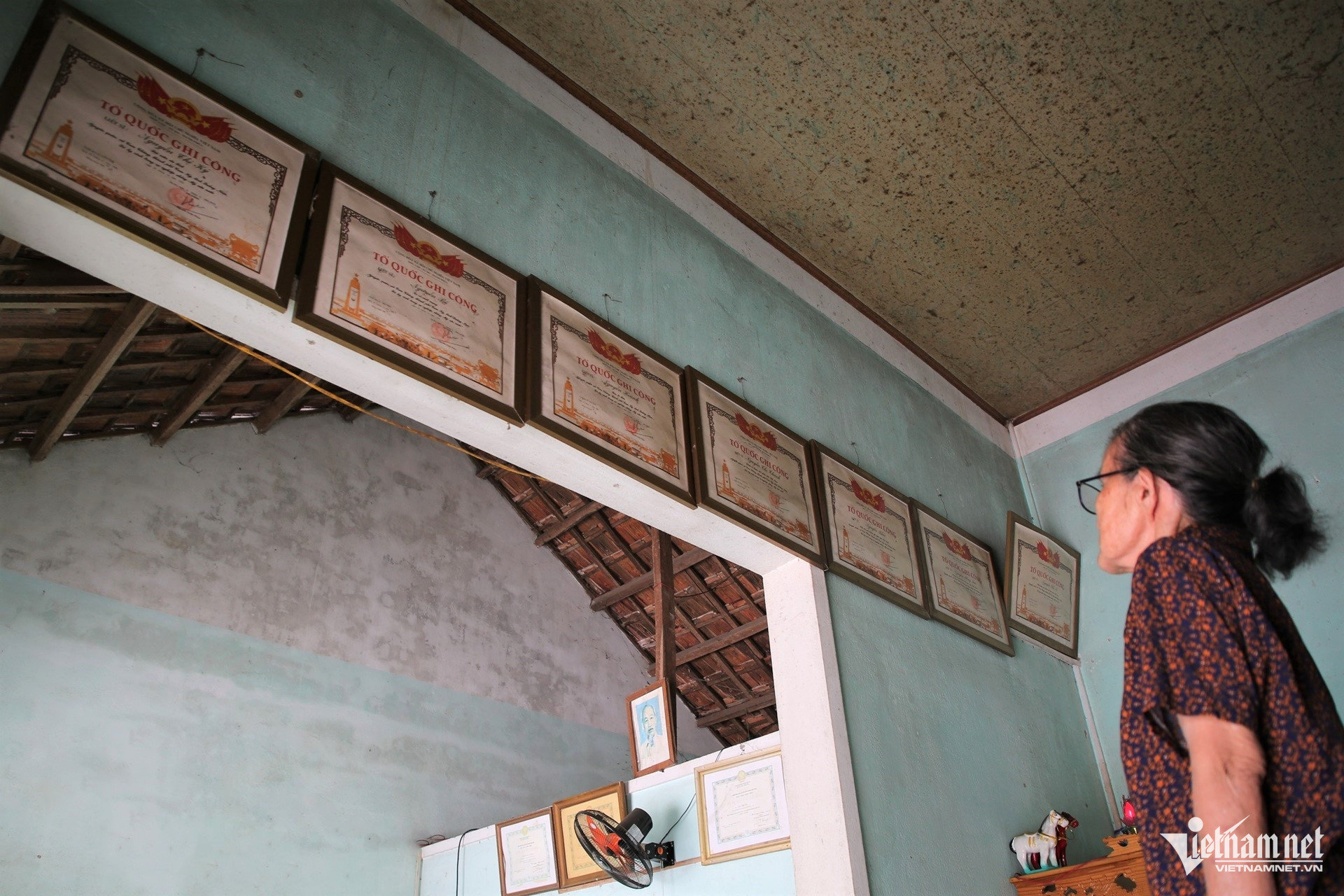
According to Ms. Thu, the remains of five martyrs from her family have yet to be found. The exact date of their sacrifice is unknown, and there are no photographs or mementos left. The family displays certificates of recognition from the nation around the ancestral altar and observes the annual War Invalids and Martyrs Day as a "memorial service."
The meal consists only of familiar dishes. Before offering them to the altar, family members call out the names of each deceased person, as if inviting them to return and share a meal with their descendants.
Next to Mrs. Thu's house, 72-year-old Mr. Nguyen Dinh Khuong still hopes that one day he will find the remains of his two older brothers and sister so he can bring them back to their hometown.
His family has seven martyrs; his grandmother and mother are both Heroic Vietnamese Mothers. On his wife's side, his mother-in-law is also a Heroic Vietnamese Mother, and his wife's brother and sister are both martyrs.
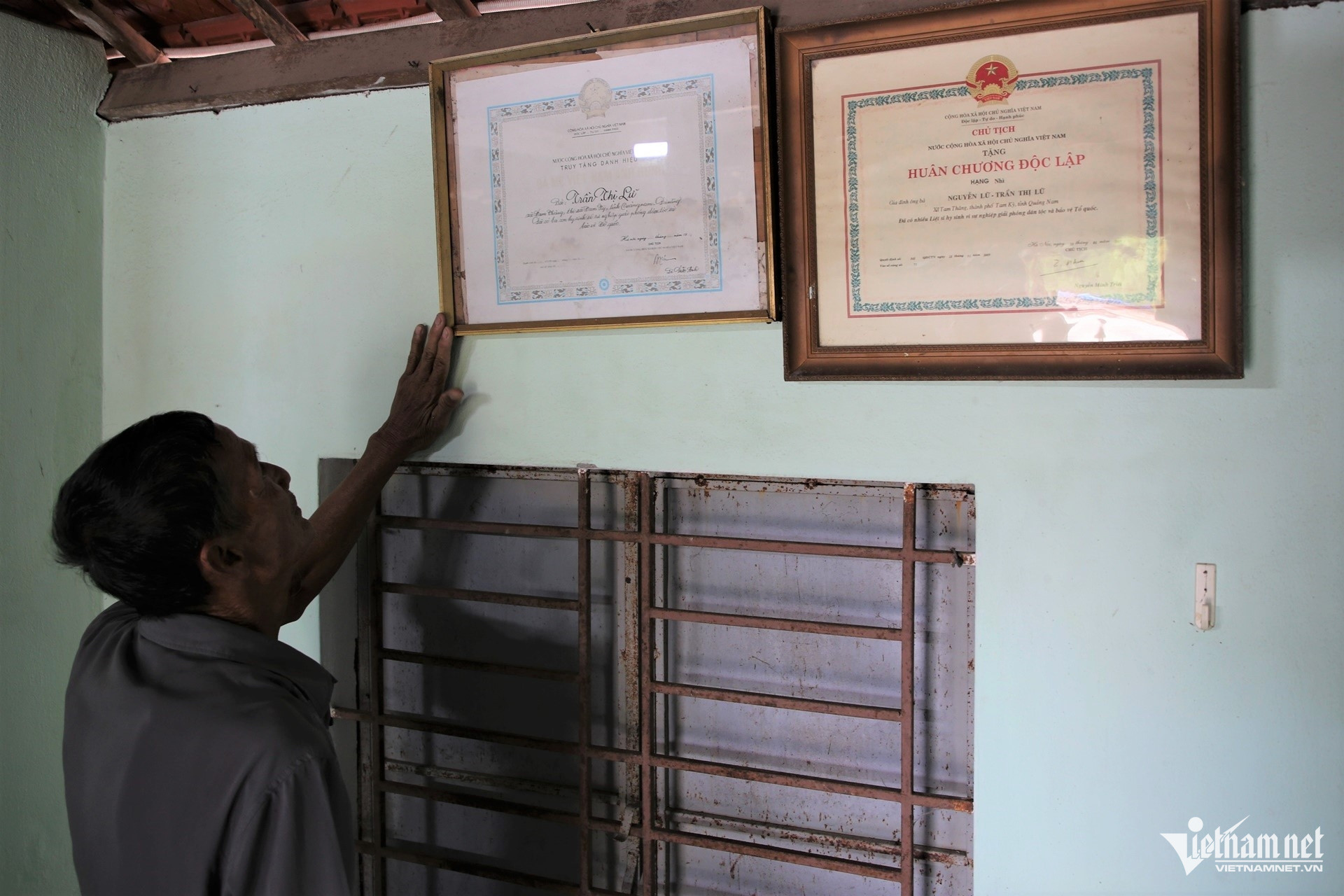
"My father, two older brothers, and one older sister were all martyrs. The exact dates of their deaths are unknown, and their remains have yet to be found. Therefore, in addition to the individual death anniversaries of those whose dates are known, the family has chosen July 27th as a joint memorial day for those who could not be brought home," Mr. Khuong shared.
For decades, his family has maintained the tradition of offering a meal to war invalids and martyrs on the Day of War Invalids and Martyrs. He said that he will instruct his children and grandchildren to continue preserving this family tradition.
When the State launched the "500-Day Campaign" to intensify the search, collection, and identification of the remains of fallen soldiers, Ms. Thu and Mr. Khuong had renewed hope.
After more than half a century of waiting, their greatest wish remains to find a clue that will lead them back to their loved ones in their hometown.
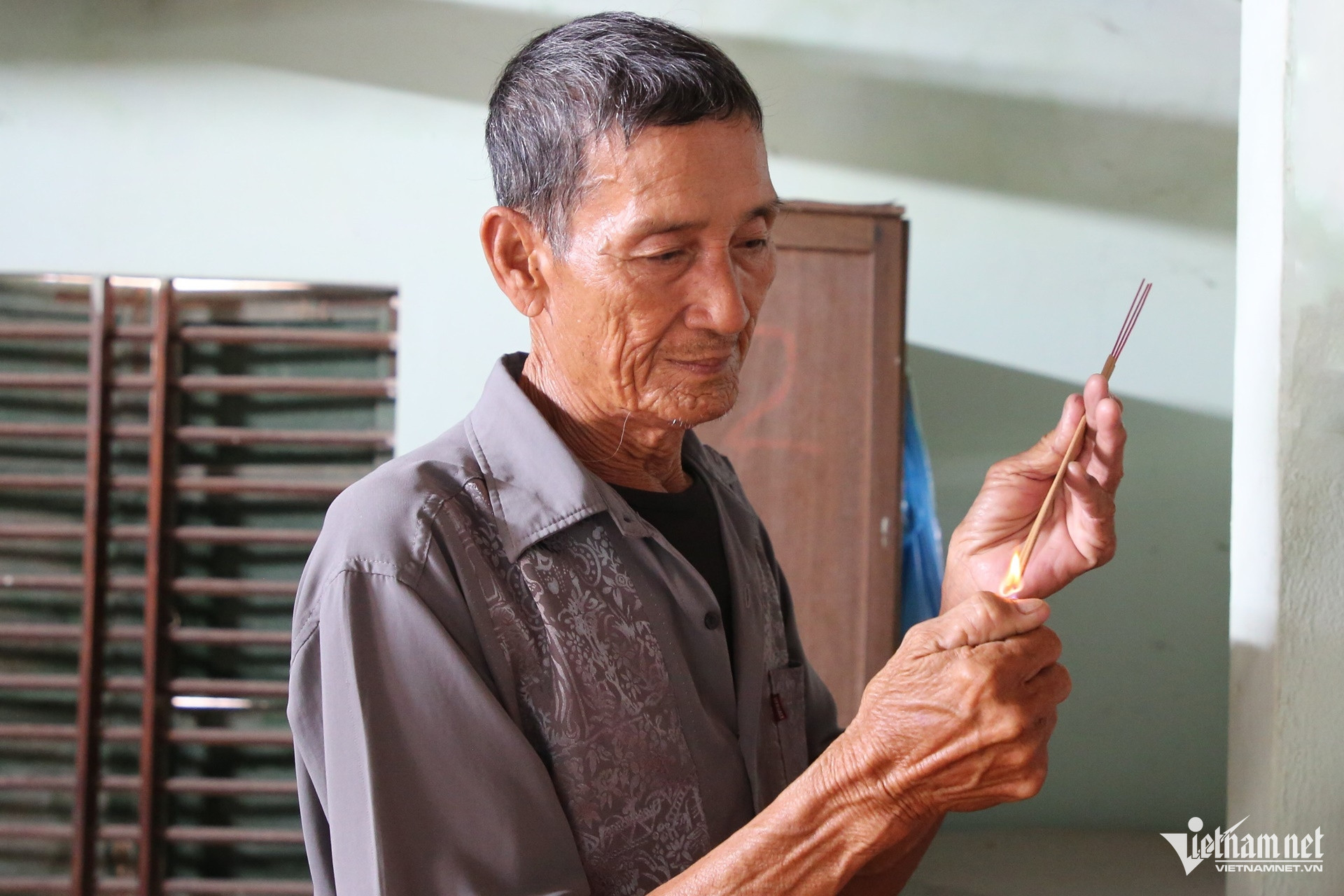
Mr. Huynh Kim Ta, head of the Thach Tan neighborhood group, also grew up in a family that suffered many losses due to the war. His grandmother and mother were both Heroic Vietnamese Mothers; his father, older brother, and older sister were all martyrs.
According to Mr. Ta, almost every family in the village had someone who participated in the revolution or sacrificed their life. Many martyrs' dates of death are unknown, and some have yet to be found.
Therefore, without any formal agreement, July 27th gradually became the communal memorial day for the entire village. Families who no longer had relatives were also honored by their neighbors who lit incense and held memorial services on their behalf.
"Without anyone telling them to, every household prepares a feast on that day, and even those who live far away arrange to return home. First, it's to light incense for the deceased, and second, it's to let the children and grandchildren understand that the peace we enjoy today was bought with the blood and bones of our ancestors. By remembering those who have passed away, the village preserves its roots," Mr. Ta said.
The war ended more than half a century ago. The dilapidated thatched roofs of the past have been replaced by sturdy brick houses; the village roads are clean and beautiful, children happily go to school, and the fields and gardens are once again lush and green.
Many descendants of martyrs and wounded soldiers have grown up to become military and police officers, continuing the tradition and contributing to building and protecting the Fatherland.
People often use the saying "you'll meet a hero as soon as you step out the door" as a metaphor. But in villages like Cam Sa and Thach Tan, it's actually true.
On this land once steeped in the smoke of bombs, the houses still burn brightly during the annual memorial service. No one speaks of the past with grandiose words; they simply live in a way that is worthy of the names that have become immortal, the very breath of their village.


