
Nghe An province has 4 craft villages that were recognized in 2021.
(Baonghean.vn) - According to information from the Department of Agriculture and Rural Development, based on inspections, on the morning of November 2nd, the Provincial Craft Village Appraisal Council met, voted, and agreed on a minutes to submit to the Provincial People's Committee for recognition of 4 out of 5 craft villages registered according to the 2021 plan.
Specifically, according to the Nghe An Rural Development Sub-Department, there are 4recognized craft villageIn 2021, the following villages were included: the salt production village in An Hoa commune; the incense root and incense stick production and processing village in Quynh Thang commune (Quynh Luu district); the brocade weaving village in Na Loi commune, Ky Son district; and the traditional leaf-fermented rice wine production village in Don Phuc commune (Con Cuong).
Compared to the registration and submission plan from the beginning of the year, the traditional rice wine production village in Mau Duc commune has to stop because it does not yet meet the conditions for a conditional business sector.
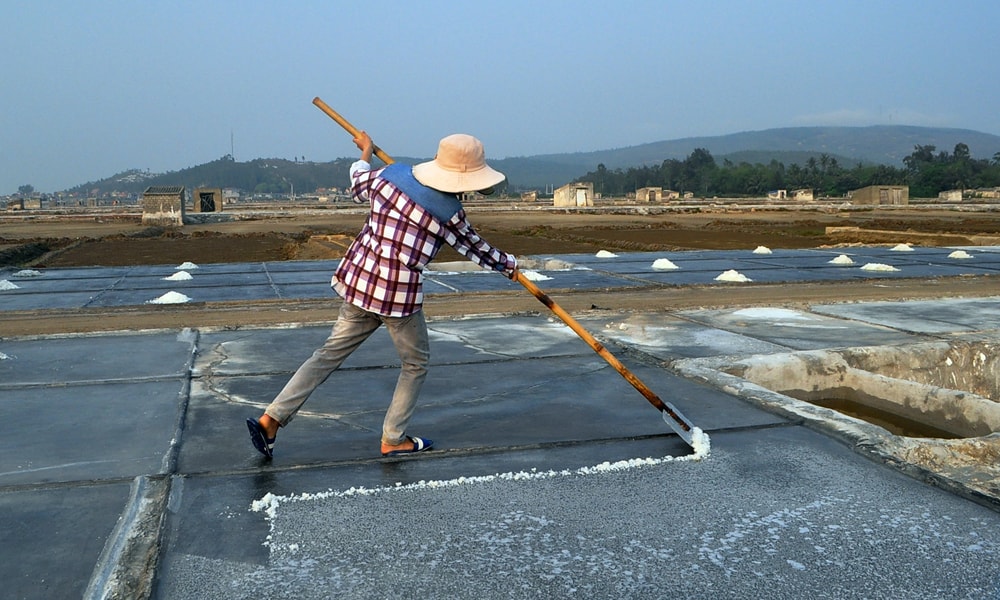 |
| Following the Quỳnh Thuận salt-producing village, the An Hòa salt-producing village (Quỳnh Lưu district) was also recognized as a traditional craft village in 2021. Photo: Nguyễn Hải |
Thus, to date, the province has 177 craft villages recognized by the Provincial People's Committee in 19 out of 21 districts, cities, and towns; the two districts of Tuong Duong and Quy Hop still have no recognized craft villages.
According to the 2021 survey conducted by the Provincial People's Committee, among the 173 craft villages recognized by the province to date (excluding the 4 craft villages in 2021), 62 villages are operating well, accounting for 36.8%; 52 villages are operating fairly well, accounting for 30.1%; 37 villages are operating intermittently, accounting for 30.1%; 22 villages have ceased operations, accounting for 12.9%; and there are 31 cooperatives and 28 cooperative groups operating within these craft villages.
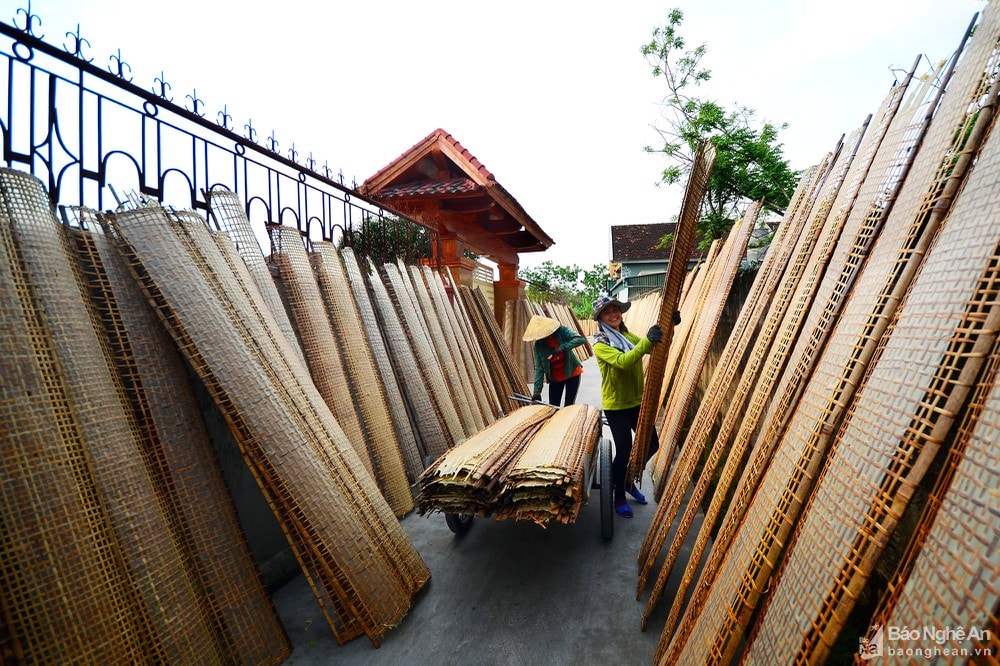 |
| The traditional rice paper-making villages in Dien Ngoc and Dien Hong communes, Dien Chau district, provide employment for many rural workers. (Photo courtesy of Nghe An Newspaper) |
Most of the well-performing or fairly successful craft villages are in the processing and preservation of agricultural, forestry, and aquatic products.relatively large demand and output such asfish sauce makingProcessing dried fish and frozen seafood. In addition, there are handicraft production, processing of raw materials for rural industries, and woodworking.incense sticks, incense cones, consumer or fine art wood products, textiles, yarn, small-scale machinery; ornamental plant cultivation and salt production.
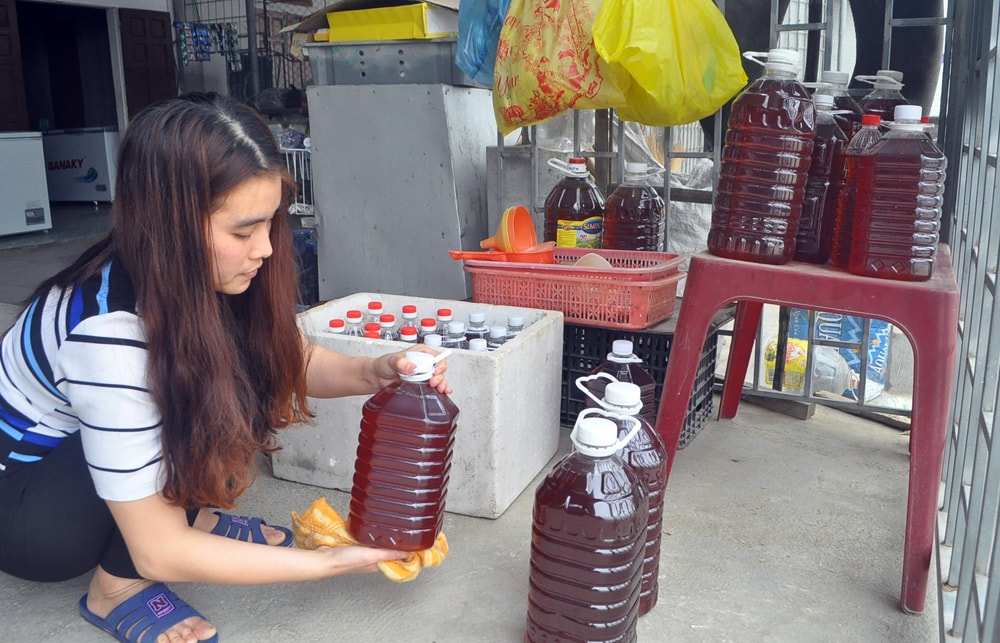 |
| The traditional craft of producing and processing fish sauce is one of the thriving traditional occupations due to stable demand and high quality. In the photo: Fish sauce products at a facility in Tan An fish sauce village, An Hoa commune, Quynh Luu district. Photo: Nguyen Hai |
Mr. Tran Duc Dat, Head of the Rural Development and Mechanization Department of the Rural Development Sub-Department, stated: Previously, craft villages had two levels of recognition: villages and villages with crafts. However, according to Government Decree No. 52/CP on the development of rural industries, only the title remains.craft villagesRecognized by the Provincial People's Committee. Due to limited support resources, the recognition process is also more rigorous. Although the contribution of craft villages is still modest compared to other sectors, with 114 craft villages operating well or fairly well in the province, they still generate a production value of 2,266 billion VND annually, contributing 2.67% to the total GRDP of the province and creating jobs for many rural workers.
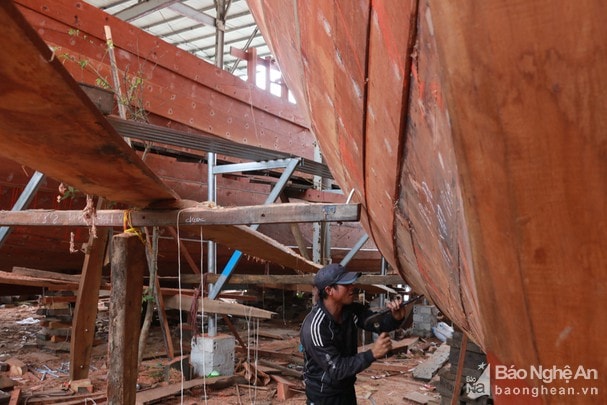 |
| The shipbuilding villages of Trung Kien, Nghi Thiet, Nghi Loc, once renowned throughout Northern Vietnam, are now facing numerous difficulties due to a lack of orders. (Photo: Nguyen Hai) |
In recent years, preliminary statistics show that nearly 45% of craft villages are operating at a reduced capacity or have ceased operations altogether, prompting the People's Committees of some districts to request the province to review and revoke their licenses. Therefore, since the beginning of 2021, the province has organized a survey team to reassess the current situation. Based on the preferential mechanisms and policies outlined in Decree 52/CP, and continuing to support the procedures for upgrading rural craft village products to OCOP standards, the Department of Agriculture and Rural Development is proposing amendments to Resolution 06/NQ of the Provincial People's Council of 2019 to increase support levels, while simultaneously unlocking investment resources and finding markets for the recovery and development of craft villages.


