
Nghe An province has 7 more traditional craft villages recognized.
(Baonghean.vn) - The People's Committee of Nghe An province has just issued a decision recognizing 7 villages with traditional crafts as achieving the title of Traditional Craft Village in 2016, bringing the total number of traditional craft villages in the province to 146.
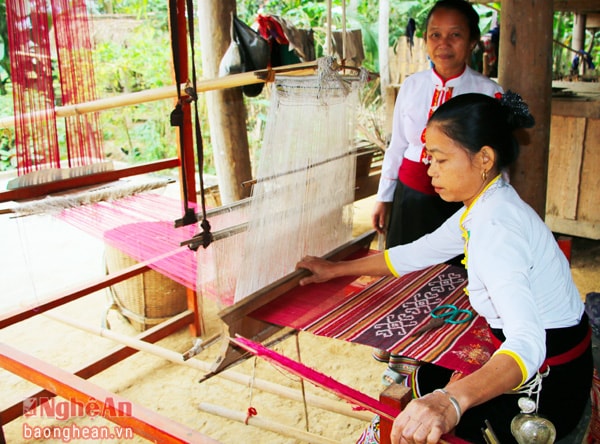 |
| Developing the traditional brocade weaving craft at Ban Dan Brocade Weaving Village, Tien Phong commune (Que Phong). |
Seven new craft villages were recognized by the Provincial People's Committee (according to Decision No. 6567/QD-UBND dated December 22, 2016 on the recognition of craft villages in 2016), including: Hung Xuan peanut oil pressing village, Hung Tan commune (Hung Nguyen); Xuan Trung rice wine making village, Nghi Duc commune (Vinh City); Xieng brocade weaving village, Mon Son commune (Con Cuong); Xop Thap brocade weaving village, Huu Lap commune (Ky Son); Yen Phu flower and ornamental plant growing village, Minh Thanh commune (Yen Thanh); Thuong non-fired brick production village, Quynh Van commune (Quynh Luu); Hoa Chin non-fired brick production village, Quynh Van commune (Quynh Luu).
The province currently has 146 craft villages, providing employment for 20,000 workers with an average income of 38 million VND per person per year. The products of these craft villages are diverse and abundant, ranging from processed rice vermicelli, rice noodles, peanut candy, fish sauce, mulberry silk, rattan and bamboo weaving, incense, brocade, civil and fine art woodworking, brick and tile production, etc., meeting both domestic and export market demands.
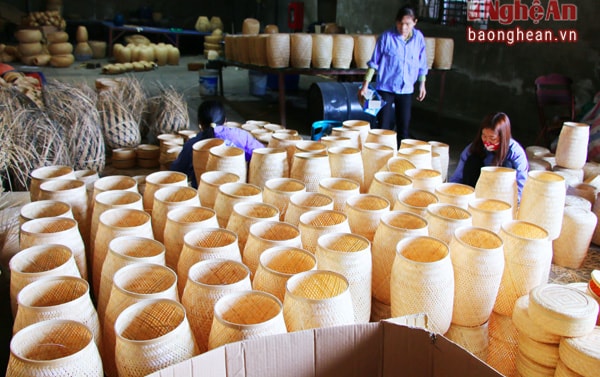 |
| Rattan and bamboo products from craft villages in the province are exported to many countries around the world. |
The development of small-scale industries and the establishment of craft villages have generated an average economic value of 2,000-2,500 billion VND per year for localities. Through production activities and industry development, significant changes have been made in rural economic development, contributing to the goals of economic restructuring, poverty reduction, rural infrastructure development, and the national objectives of building new rural areas and ensuring social security.
Quynh Lan


