
Nghe An province announces list of 23 urban areas of type II and III starting from 2026.
The People's Committee of Nghe An province has just issued a decision announcing the list of Type II and Type III urban areas and wards that have achieved urban development levels for administrative units within urban areas in the province.
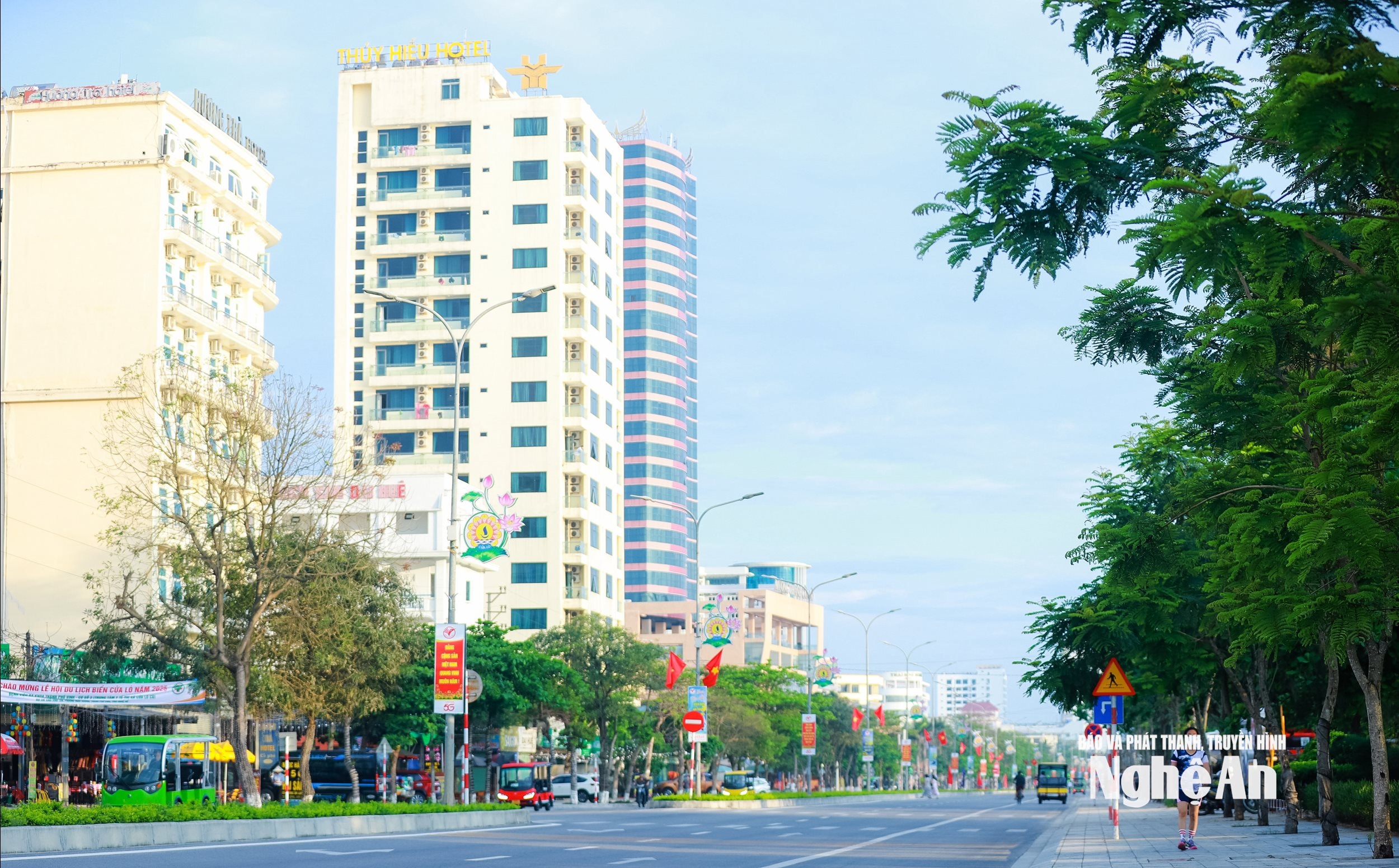
Accordingly, the entire province has one type II urban area, Vinh City, which includes the following wards: Thanh Vinh, Truong Vinh, Vinh Hung, Vinh Loc, Vinh Phu, and Cua Lo.
Regarding urban areas of type III, after reviewing the published list, the entire province has 22 urban areas, including:
Thai Hoa urban area (including Thai Hoa, Tay Hieu wards and Dong Hieu commune); Hoang Mai urban area (including Hoang Mai, Tan Mai, and Quynh Mai wards); Quan Hanh urban area (including Nghi Loc commune); Hung Nguyen urban area (including Hung Nguyen commune); Tra Lan urban area (including Con Cuong commune).
Nam Dan town (belonging to Van An commune); Dung town (belonging to Dai Dong commune); Do Luong town (belonging to Do Luong commune); Tan Ky town (belonging to Tan Ky commune); Hoa Thanh town (belonging to Yen Thanh commune); Dien Thanh town (belonging to Dien Chau commune); Cau Giat town (belonging to Quynh Luu commune); Quy Hop town (belonging to Quy Hop commune).
Kim Son town (belonging to Que Phong commune); Tan Lac town (belonging to Quy Chau commune); Kim Nhan town (belonging to Anh Son commune); Nghia Dan town (belonging to Nghia Dan commune); Thach Giam town (belonging to Tuong Duong commune); Muong Xen town (belonging to Muong Xen commune); Son Hai town (belonging to Quynh Phu commune); Song Dinh town (belonging to Tam Hop and Chau Loc communes); Cay Chanh town (belonging to Nhan Hoa commune).
In addition, the province announced that 11 wards have achieved urban development status for administrative units within urban areas; specifically, Cua Lo ward has achieved urban development level type II; and the wards of Truong Vinh, Thanh Vinh, Vinh Hung, Vinh Phu, Vinh Loc, Thai Hoa, Tay Hieu, Hoang Mai, Tan Mai, and Quynh Mai have achieved urban development level type III.
The classification is carried out in accordance with Resolution No. 111/2025/UBTVQH15 of the Standing Committee of the National Assembly on urban classification, effective from January 1, 2026.
The resolution simplifies the urban classification system from six categories to four: special cities, category I, category II, and category III; and also streamlines the criteria groups from five to three main groups: role, position, and socio-economic development conditions; level of urbanization; and level of infrastructure development and spatial organization.
Regarding authority, the Ministry of Construction recognizes Type I urban areas, while provincial People's Committees are responsible for recognizing Type II and III urban areas and commune-level administrative units within urban areas. This regulation aims to promote decentralization, reduce administrative procedures, and increase local autonomy in urban development.
Accordingly, urban areas are defined based on their development space, characteristics, functions, and roles within the national urban system, no longer confined to the boundaries of a single administrative unit.
It should be noted that the publication of the urban classification list does not equate to the establishment or re-establishment of administrative units such as cities or towns... This is a classification activity aimed at assessing the level of urban development according to socio-economic criteria, urbanization levels, and infrastructure, serving as a basis for planning, resource allocation, and development investment.
In the new model, an urban area can be located within the boundaries of one or more communes or wards and is not an independent administrative level; therefore, being classified as a type II or type III urban area does not entail changes in the administrative structure.


