
Nghe An - an effective destination for Korean businesses.
For a long time, South Korea has been among the countries with the largest foreign direct investment (FDI) in Vietnam. In recent years, Nghe An has emerged as an effective destination for South Korean investors.
100% of the project is operational.
Nghe An's investment attraction landscape in recent years shows a clear transformation. The province currently has 173 FDI projects from 15 countries and territories, with a total registered capital of over US$7.62 billion. Of these, South Korean investors have 27 projects, with a total registered capital of approximately US$959.7 million, ranking second in the number of projects and fourth in total investment capital, accounting for over 15.6% of the projects and about 12.5% of the total FDI capital in the province. This is one of the investor groups with a rapid expansion rate and relatively consistent project quality.
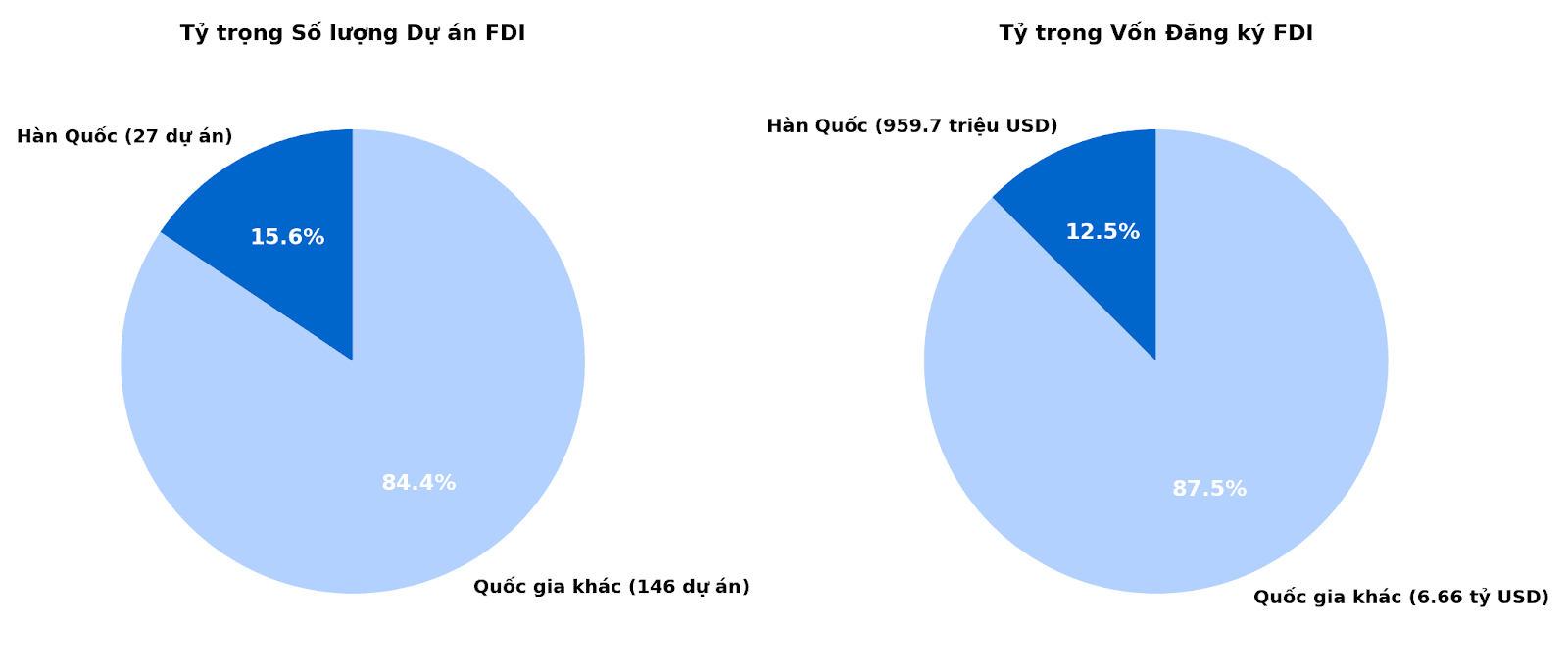
Over the past few years, Nghe An has consistently ranked among the top 10 localities attracting the most FDI in the country. In the first four months of 2026 alone, Nghe An continued to make its mark by attracting over $2.2 billion in FDI, ranking second nationwide and accounting for nearly 15% of the total newly registered capital nationwide. This result is significantly contributed by the joint venture of SK Innovation Group (South Korea) in the Quynh Lap LNG Thermal Power Plant Project.
It is noteworthy that when looking at the structure of ongoing South Korean projects, a rather clear trend can be observed: Businesses are no longer solely seeking advantages in labor costs, but are investing in sectors with increasingly high technological content and added value.

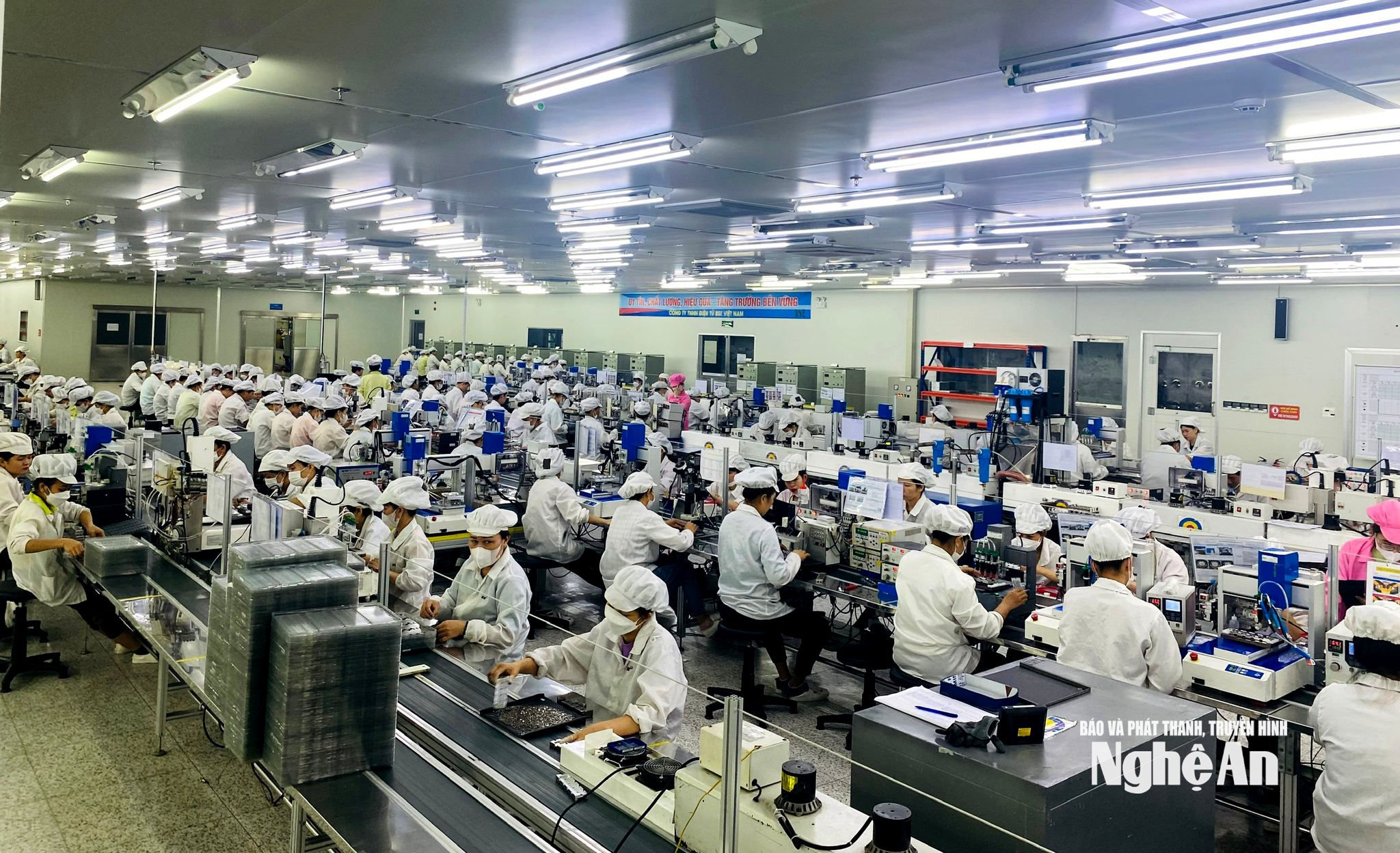
One of the projects that laid the foundation for the wave of South Korean investment in Nghe An is the BSE Vietnam Electronics Factory of BSE Vietnam Electronics Co., Ltd. in Zone C, Nam Cam Industrial Park, with a total investment of approximately VND 699.6 billion, equivalent to USD 33 million. The factory currently employs around 3,000 workers and has become one of the province's large-scale electronic component manufacturing facilities. The choice to invest here demonstrates the company's high regard for the advantages of local transportation infrastructure, port connectivity, and human resources.
While BSE contributed to laying the foundation for the electronics industry, Innovative Manufacturing Solutions Vietnam Co., Ltd. represents a higher level of development in the manufacturing industry. With a total investment of over 864 billion VND, equivalent to approximately 37.23 million USD, this is one of the largest capital-scale projects of a Korean enterprise in Nghe An province. In the first six months of the year, the company paid over 3 billion VND in taxes. The project focuses on modern manufacturing and production solutions with a higher level of technology and automation.
In the automotive supporting industry sector, Kyungshin Corporation has chosen to invest in a factory producing automotive parts and accessories in WHA Industrial Zone 1, Nghe An province, with a total capital of approximately VND 479.5 billion, equivalent to USD 21 million. As one of the major component suppliers for global automotive manufacturers, Kyungshin's presence is not just a single project but also opens up opportunities for Nghe An to participate more deeply in the international automotive industry supply chain.
In the textile and garment sector, Korean businesses in Nghe An are also shifting towards modernization. Sangwoo Vietnam Co., Ltd. invested approximately VND 112.5 billion in a factory in the VSIP Nghe An Industrial Park, currently employing around 1,500 workers. The factory has a capacity of approximately 8 million products per year and is expected to recruit more than 500 additional workers in 2026. According to Mr. Jun Huyn Soo, General Director of Sangwoo Vietnam Co., Ltd., the company is expanding production to meet increasing export orders.
Haivina Kim Lien is not only a successful FDI project but also plays a pivotal role in the network of Korean businesses in Nghe An. With its production of sports gloves, clothing, and accessories for export, the company creates significant demand for suppliers of raw materials, packaging, logistics, and various other support services. The stable development of Haivina Kim Lien has contributed to attracting more Korean satellite businesses to Nghe An.
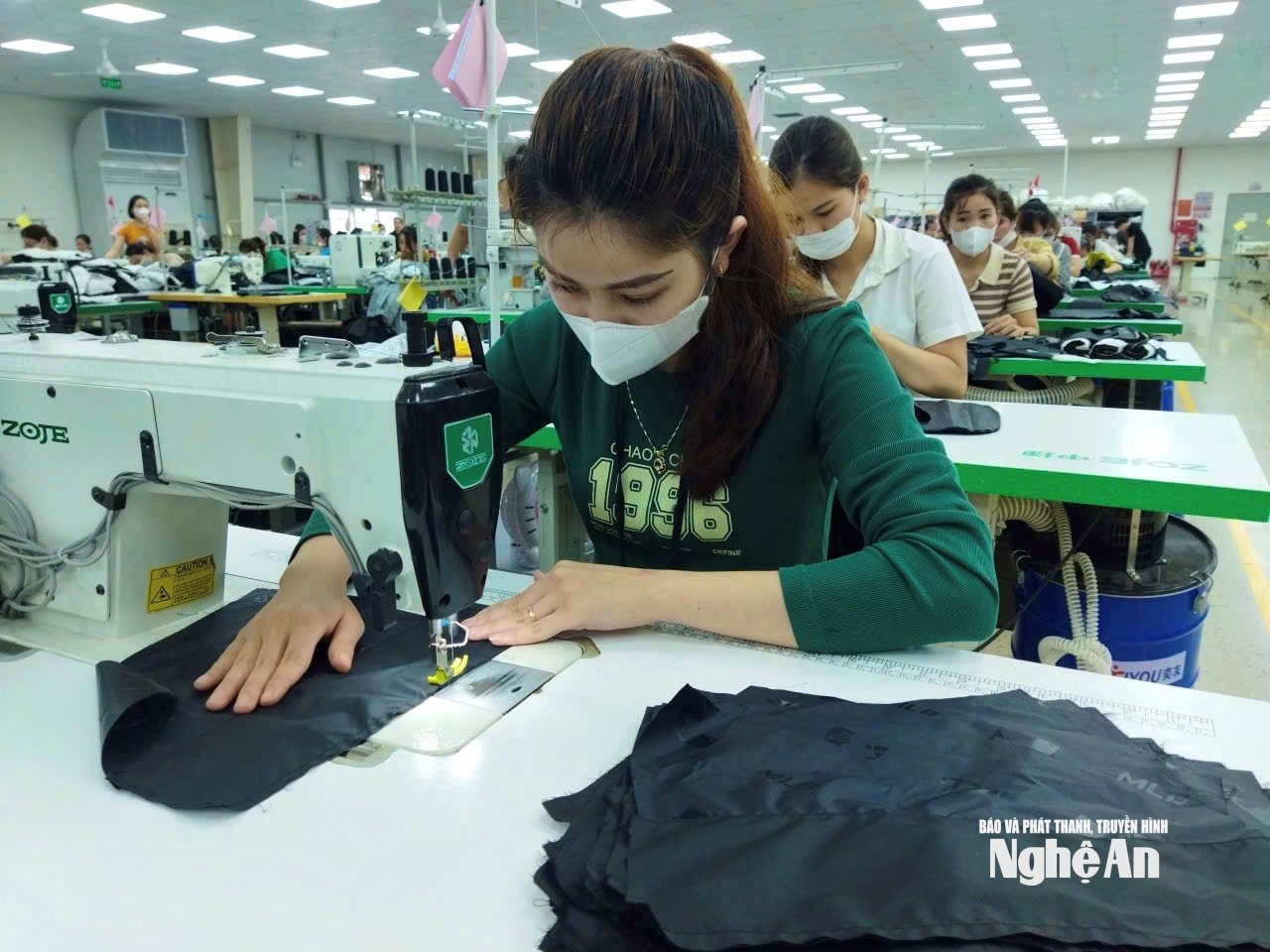
Mareep Co., Ltd., located in Tho Loc Industrial Park, operates in the garment industry with a total investment of over 433 billion VND (18.63 million USD). Ms. Cao Thi Thuy, the company's human resources manager, stated that the company currently employs 1,400 workers, a decrease of 100 compared to 2025, and is currently short 700 workers to complete its production lines. Current salaries range from 7-18 million VND per person per month. Due to stable and high-quality orders, the company has more work than it can handle. This is one of the first projects to operate in this industrial park, contributing to attracting secondary investors.
Step-by-step creation of a support network.
Not only limited to pioneering projects, the wave of investment by South Korean businesses in Nghe An is trending towards expansion in both scale and scope. While the initial phase mainly focused on textiles and consumer electronics, in recent years, new projects have concentrated more on the production of electronic components, high-tech equipment, precision mechanics, and supporting industries. These are all high value-added sectors that require more stringent technical expertise, management, and production standards.
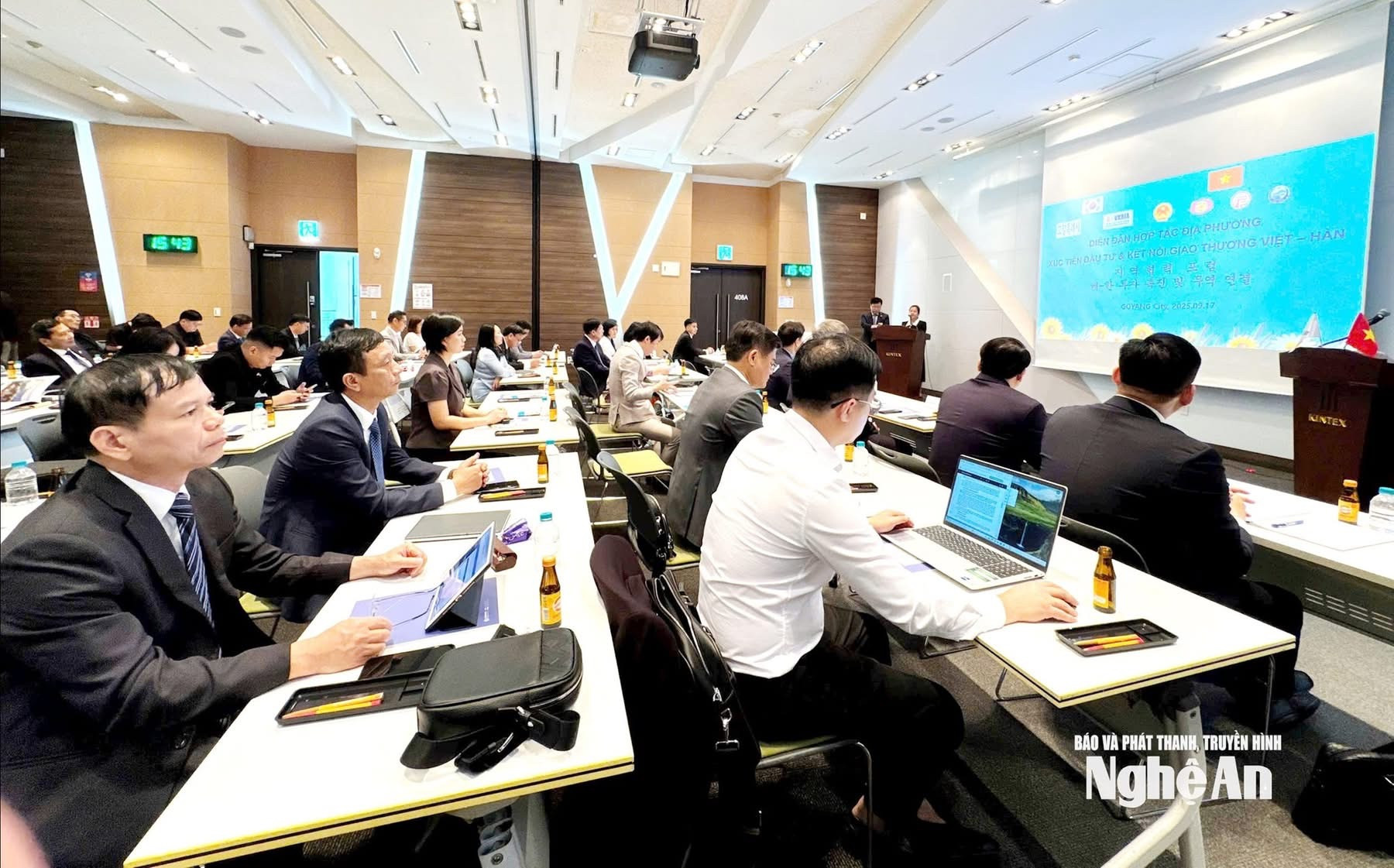
This is also a key difference between Korean investment in Nghe An compared to previous periods. Instead of independent projects, businesses are gradually creating interconnected production networks, opening up opportunities to form an ecosystem of electronics and supporting industries right in the locality.
Notably, the influx of South Korean capital into Nghe An is no longer developing in a " каждый за себя" (every man for himself) manner, but is gradually forming a closed production ecosystem. When a large-scale manufacturing enterprise invests, satellite enterprises within the same value chain also emerge to supply raw materials, components, packaging, logistics, molds, precision mechanics, equipment maintenance services, environmental treatment, and services supporting the lives of experts and workers.
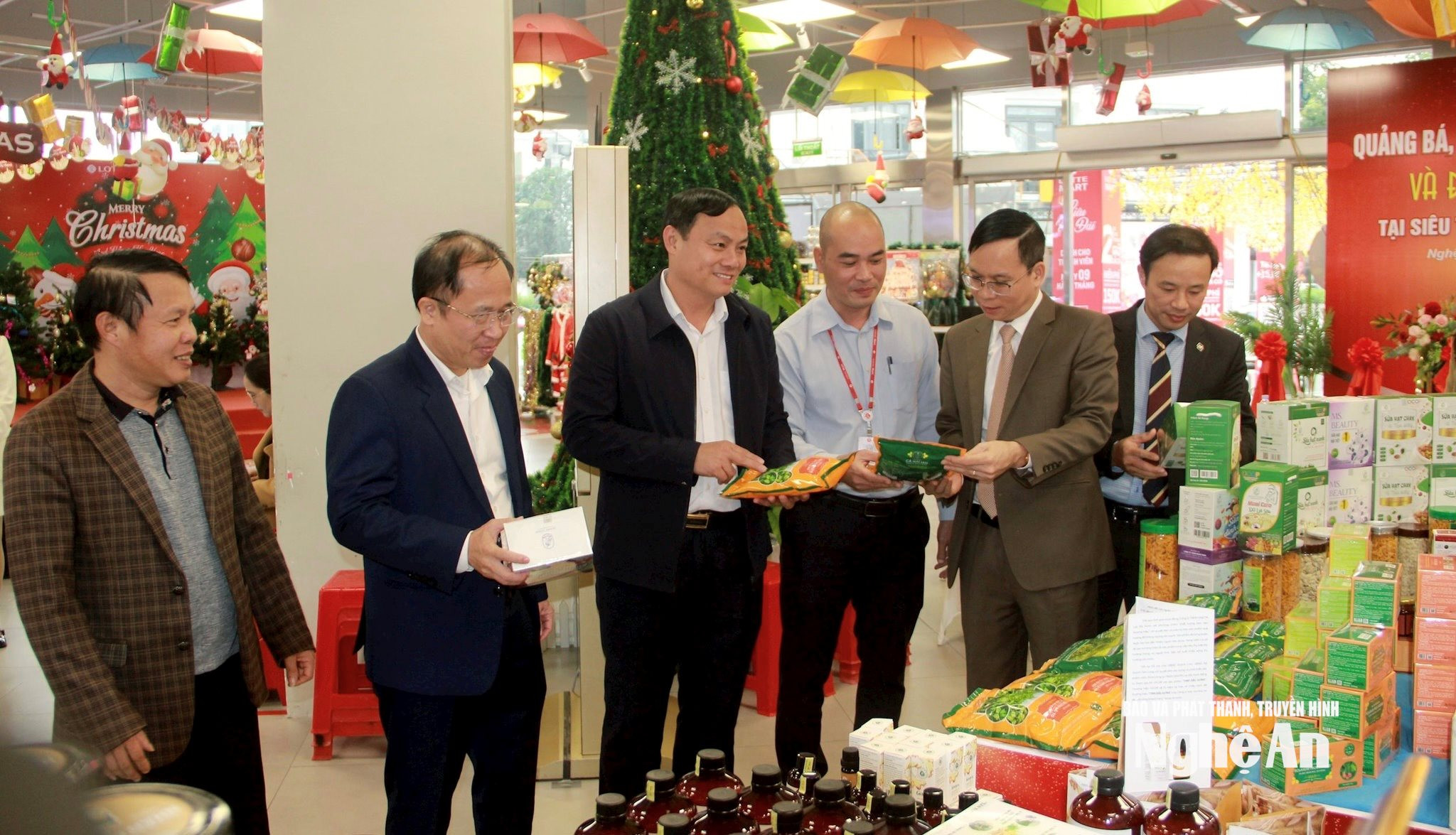
This is clearly evident in the increasingly diverse presence of Korean businesses in Nghe An. Alongside electronics, component, and manufacturing plants, there are businesses in textiles, embroidery, packaging, materials production, logistics services, trade, and retail. Lotte Group's investment in a shopping mall is not simply about expanding the consumer market, but also contributes to completing the ecosystem serving the community of Korean experts, engineers, and workers living and working in the area.
In particular, Korean businesses tend to prioritize using products and services from their own compatriots. An electronics company will seek out a Korean company for molds, components, and packaging; a garment company will use suppliers of materials, embroidery, printing, and transportation also from Korea or a Vietnamese company that has become their long-term partner. This linkage helps reduce transaction costs, ensure consistent quality, shorten delivery times, and improve supply chain control.
"The 'leading enterprise - satellite enterprise' model is creating a strong ripple effect. When a large project comes into operation, the demand for orders from tier 1 and tier 2 suppliers will increase, attracting more new investors to Nghe An," said Mr. Nguyen Manh Loi, Deputy Head of the Southeast Economic Zone Management Board.
Furthermore, if Nghe An can develop a network of supporting domestic businesses to participate in the supply chains of Korean corporations, the added value created will be much greater than simply attracting independent FDI projects. In that case, Korean capital will not only bring investment, jobs, and budget revenue, but also create momentum for technology transfer and its spread to domestic businesses.


