
Nghe An province begins construction of Que Phong Medical Center.
On January 19th, in Que Phong commune, the Nghe An Department of Health, in coordination with relevant units, held the groundbreaking ceremony for the construction project of the Que Phong Medical Center.
The Que Phong Medical Center construction project has a total investment of 90 billion VND, funded by the provincial budget. The new medical center will be built on the existing site of the unit. The main component of the project includes a 6-story building for examination, treatment, and administration, with a total floor area of over 6,800m².
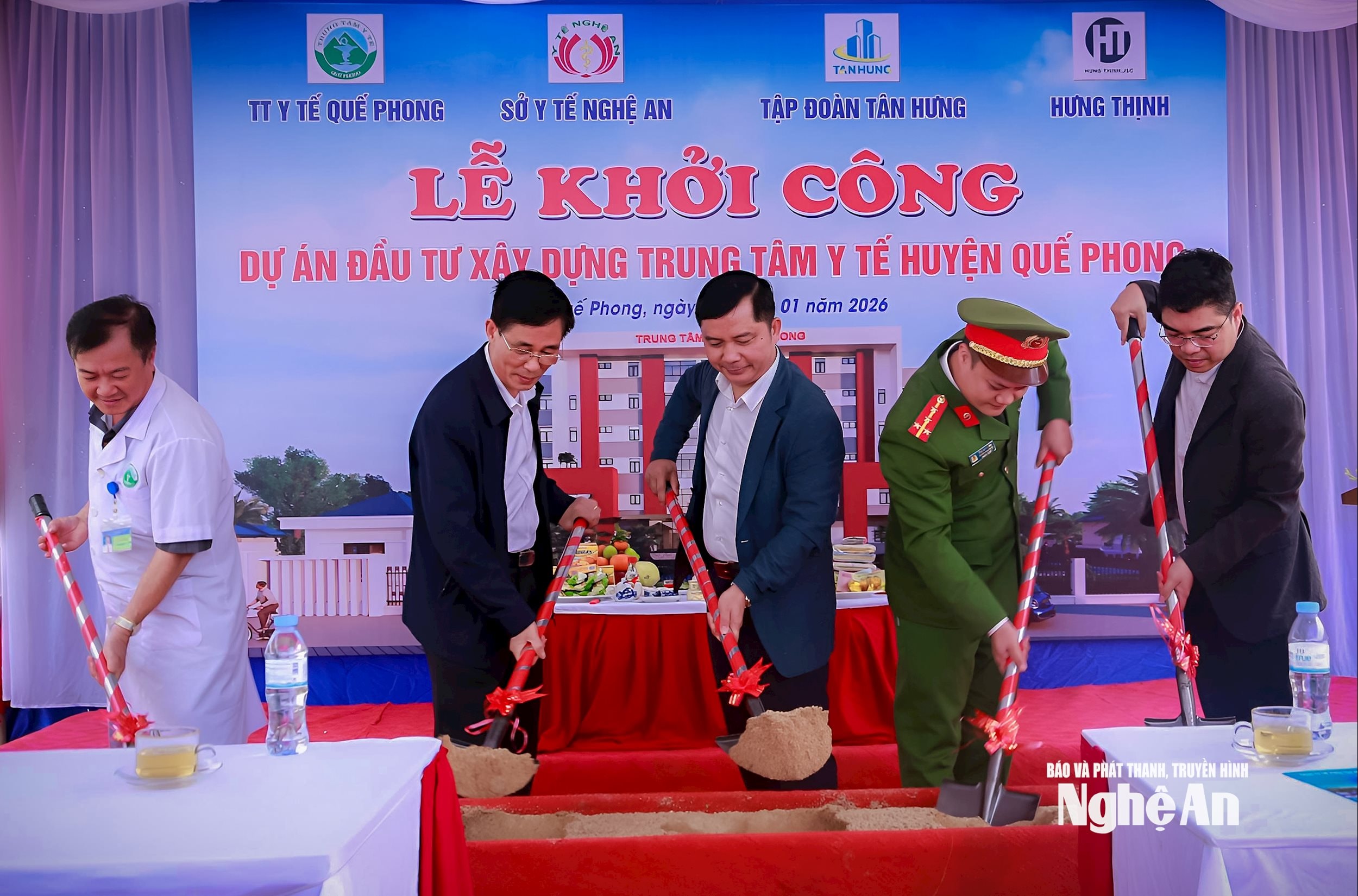
This facility is fully equipped with functional departments and rooms such as: Emergency, examination, diagnostic imaging, laboratory, internal medicine - pediatrics, surgery, traditional medicine, rehabilitation, drug storage, technical area… along with a comprehensive infrastructure system.
Speaking at the groundbreaking ceremony, Master Nguyen Van Nam – Deputy Director of the Nghe An Department of Health – stated: The Que Phong Medical Center is currently responsible for providing medical examination and treatment services to people in the communes of the former Que Phong district and two communes of the former Tuong Duong district, namely Nhon Mai and Huu Khuong. This is a mountainous, border area with fragmented terrain, difficult transportation, and a high poverty rate.

However, the facilities at Que Phong Medical Center are currently dilapidated and cramped, failing to meet the healthcare needs of the new situation. Investing in the construction of a new Que Phong Medical Center is an urgent requirement and a fundamental solution to ensure healthcare for people in border areas, reduce the burden on higher-level facilities, and contribute to maintaining national security and defense in this border region.
Upon completion, the Que Phong Medical Center, with a capacity of 170 beds, will help people access safe, convenient, and timely medical services; pregnant women, the elderly, and children will receive healthcare right in their local area. This is also an important condition for improving the working environment, retaining and attracting medical personnel to this disadvantaged region.


