
Nghe An strives to achieve its reforestation plan ahead of schedule.
Taking advantage of the favorable weather conditions recently, in many localities across Nghe An province, people are urgently clearing undergrowth, digging holes, fertilizing, and planting seedlings, striving to achieve the 2026 reforestation plan ahead of schedule.
Take advantage of the weather to speed up the progress.
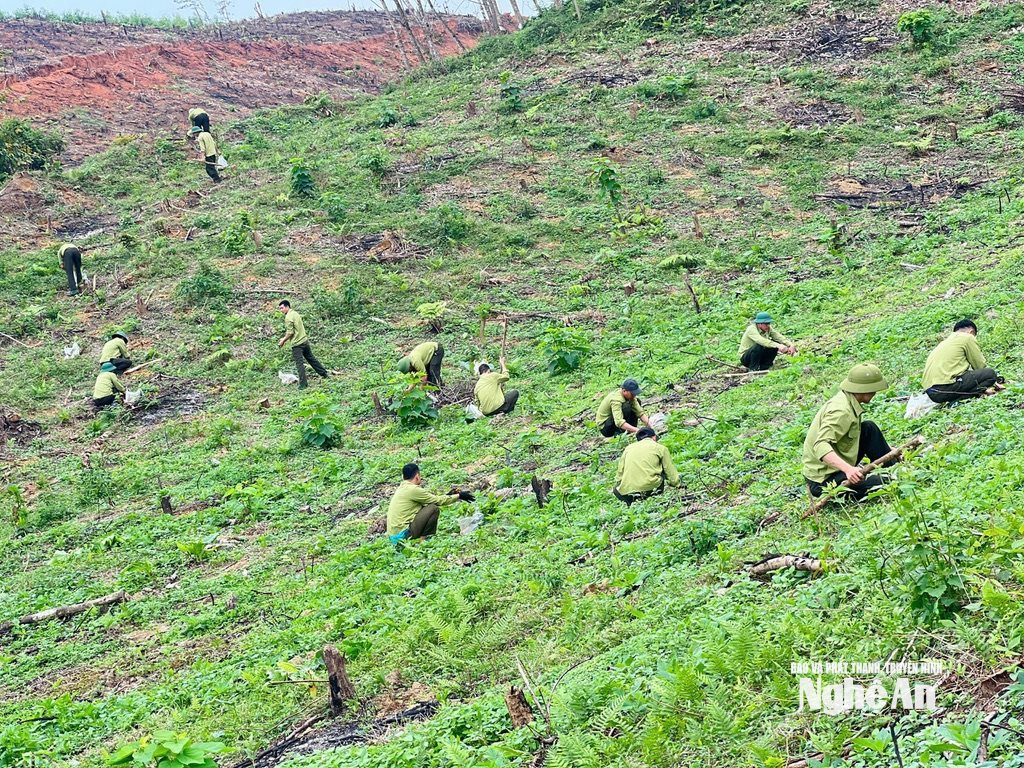
In early August, the hillsides of Mau Thach commune were bustling with activity as people began planting trees. Some were clearing undergrowth, others digging holes, and still others transporting seedlings. Rows of young acacia trees were gradually covering the areas of land that had just been harvested.
Mr. Nguyen Van Giang, from Dong Tam village, Mau Thach commune, said that after harvesting 5 hectares of acacia trees, his family immediately started digging holes to replant the forest. To date, his family has planted about 1.5 hectares, and they are continuing to dig holes and prepare seedlings and other necessary conditions for planting on the remaining area. Compared to before, his family no longer plants too densely but follows the guidelines, with about 2,500 trees per hectare. "In particular, we focus on applying base fertilizer to ensure the trees have nutrients and grow well from the start."
Not far away, Nguyen Dinh Hai's family is also busily digging holes, preparing to plant new trees on over 10 hectares of forest. Areas cleared after logging are being prepared, holes are being dug in designated zones, and manpower is being mobilized to speed up the planting process.
According to Mr. Ngo Tri Dai, Head of the Economic Department of Mau Thach Commune People's Committee, the entire commune currently has over 8,000 hectares of acacia forest for raw materials. In 2026, the locality aims to plant over 1,800 hectares of new acacia trees for raw materials. To date, people have planted about 1,100 hectares, achieving more than 60% of the plan.
However, some households still plant trees too densely. Some households plant up to 3,600 trees/ha, while the recommended density is only about 1,600 trees/ha. This excessively dense planting is mainly for harvesting young acacia trees, which has a short cycle and low economic value. On average, after deducting costs, 1 hectare only yields about 80 million VND. Meanwhile, households that plant at the correct density, provide good care, and extend the cycle to about 5 years will achieve higher yields, better wood quality, and greater economic efficiency.
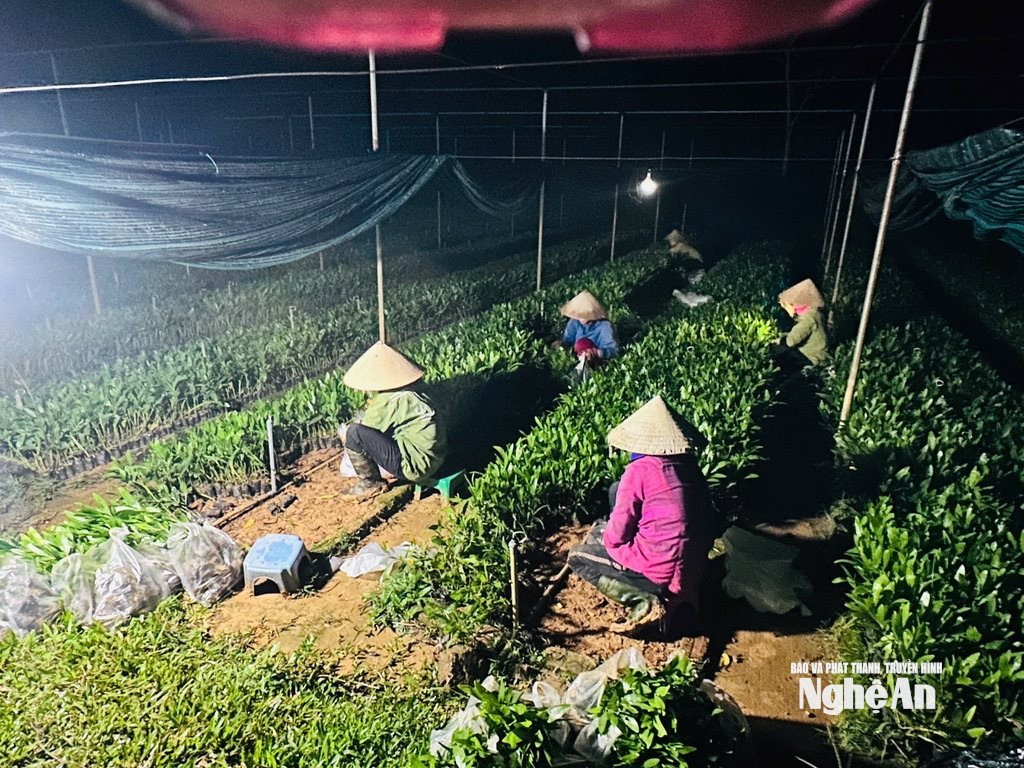
Not only in Mau Thach commune, but also in Muong Chong commune, the reforestation movement is being accelerated during these days of favorable weather. Mr. Vi Van Nhong, from Tham village, said that his family had just harvested 7 hectares of acacia trees. This year, the price of raw acacia wood is around 1.5 million VND/ton, giving reforestation farmers more motivation to reinvest.
After completing the excavation, Mr. Nhong's family did not leave the land fallow but quickly began replanting. To date, the family has dug holes and planted trees on about 2 hectares, and the remaining area is still being replanted. It is expected that by the end of September 2026, the entire area will be replanted.
According to Mr. Vy Van Thoai, Head of the Economic Department of Muong Chong commune, the locality plans to plant 500 hectares of new forest in 2026. To date, the entire commune has planted over 400 hectares, achieving more than 80% of the plan. With the current progress, it is expected that the remaining area will be completed around September 10th. The local authorities have also assigned technical staff to go to the grassroots level to supervise and guide people in implementing the correct procedures, from clearing and processing undergrowth, digging holes, applying base fertilizer to caring for the forest after planting.
Along with local households, forestry units in the province are also accelerating the pace of reforestation. Mr. Nguyen Ngoc Hoang, Chairman of the Board of Directors of Song Hieu Forestry and Agriculture Company Limited, said that in 2026, the company plans to plant 1,000 hectares of acacia trees for raw materials. Thanks to proactive preparation and taking advantage of favorable weather conditions, the company has planted over 800 hectares so far, achieving more than 80% of the plan. It is expected that the entire planned area will be planted by August 15th.
Notably, out of the total newly planted area, the company has implemented 150 hectares of mature timber forests, concentrated in Nghia Dan, Quy Chau, and Co Ba forest farms. To improve forest productivity and quality, the unit focuses on investing from the land preparation and seedling stage to post-planting care. The current investment level is over 25 million VND/ha, including the cost of digging holes, fertilizer, seedlings, and other technical items. Trees are planted according to a process that includes the use of hole-digging machines, with a planting density of approximately 2,000 trees/ha.
One of the directions the company is particularly interested in is the transition from traditional acacia seedlings grown from cuttings to tissue-cultured acacia seedlings. This is considered a significant step towards improving the quality of planted forests, as tissue-cultured seedlings have the ability to grow uniformly, develop well, and produce higher quality timber.
Proactively secure seed sources and improve the quality of planted forests.
According to a report by the Provincial Forest Protection Department, Nghe An province aims to plant 21,000 hectares of timber forests in 2026, an increase of 1,000 hectares compared to the previous year. To date, the province has planted 14,761.1 hectares, reaching 70.29% of the annual plan; and has also planted nearly 4,000 scattered trees.
To meet the demand for seedlings for reforestation, the province currently has more than 30 legally registered forestry seedling production and trading units. To date, these establishments have produced over 8 million seedlings of various types, basically meeting the reforestation needs in the area.
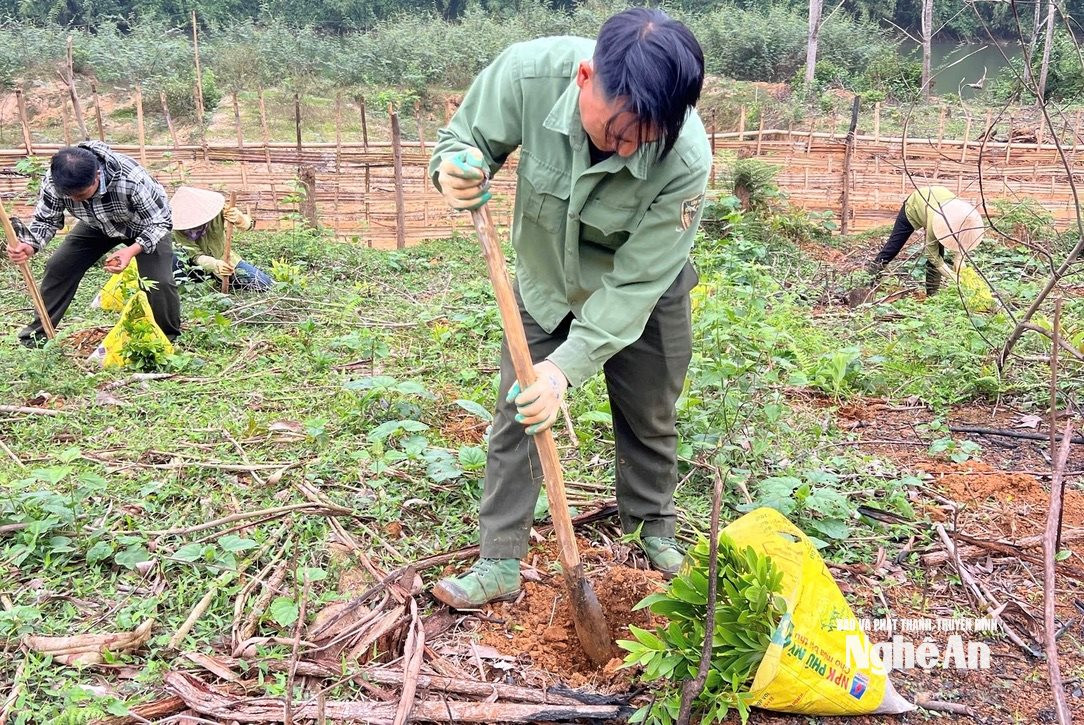
Alongside increasing the number of seedlings, Nghe An province is focusing on improving the quality of the seed source. The Provincial People's Committee has allocated over 1.5 billion VND to support 9 organizations, households, and individuals in the province in producing tissue-cultured acacia seedlings. This support contributes to the development of a high-quality seed production system, gradually ensuring a self-sufficient seed source for reforestation.
The supported units include Tuong Duong Forestry Company Limited, Do Luong Forestry Company Limited, Song Hieu Forestry Company Limited, Tan Huong Production and Business Company Limited, Thanh Thuy Forestry and General Services Cooperative, Thanh My Forestry Seedling Service Cooperative, and seedling producers in the area.
Along with developing seed sources, quality management is also being strengthened by relevant authorities. The Provincial Forest Protection Department recommends that localities closely inspect and monitor the production and trading of forestry seedlings; and guide people to choose seedlings with clear origins and guaranteed standards.
The Nghe An Forest Protection Department has also directed its subordinate Forest Protection Units to strengthen inspections, checks, and strictly handle violations of regulations on the management of forestry plant varieties. This is one of the important solutions to control the quality of inputs and limit the situation of poor-quality seedlings affecting forest productivity in the future.
At the same time, the forestry sector continues to strictly implement the principle of "replanting wherever harvesting takes place," ensuring no land is left barren after harvesting, contributing to maintaining forest cover and completing the 2026 reforestation plan.
A representative from the Nghe An Forest Protection Department added: Besides the efforts of the people and businesses, the forestry sector needs to continue to have appropriate support policies, especially preferential credit, investment in transportation infrastructure serving forestry production, research and transfer of high-yield and high-quality tree varieties.
In particular, it is necessary to continue encouraging the expansion of large-timber forest areas, extending the harvesting cycle, increasing the rate of using tissue-cultured seedlings, and improving the quality of forest management. When forests are not only reforested but also systematically invested in to create high-value raw materials, Nghe An's forestry will have a stronger foundation for sustainable development, increasing people's income and making an increasingly significant contribution to the local economy.


