
Nghe An province is taking decisive action to address over 300 redundant office buildings following mergers.
Following the reorganization of commune-level administrative units and the implementation of a two-tiered local government system, many communes and wards throughout the province have proactively arranged and effectively utilized both new and old headquarters to avoid waste and ensure efficient service for the administrative apparatus and the needs of the people. At the same time, localities are gradually developing plans for handling surplus headquarters in a way that is appropriate, effective, and in accordance with regulations.
Broadcastmaximize the functionality of the headquarters.
After the merger, the problem of geographically vast areas and distances became the biggest obstacle to local administration, especially in the former mountainous districts. For example, in Tam Thai commune, the main office is located at the former Tam Hop commune People's Committee, more than 20 km from National Highway 7. Meanwhile, the old Tam Thai commune office is located right on the highway, convenient for transportation, but is no longer the administrative center.
To address this issue, the People's Committee of Tam Thai commune has implemented a two-shift work schedule per week. Specifically, for the first three days of the week, commune officials will work at the Public Administration Center (the old headquarters on National Highway 7); for the last three days of the week, they will travel over 20 km to work at the main office. Although the travel distance between the two offices is nearly 30 km, causing considerable difficulties in terms of time for officials, in return, residents in both isolated areas can access administrative services in the most convenient way.
Mr. Lo Duong Khanh, Chairman of the Tam Thai Commune People's Committee, shared that maintaining operations at both locations is not only for the benefit of the people but also a way to "care for" and preserve the infrastructure, preventing the rapid deterioration of the headquarters. This is also the general spirit that the leaders of Nghe An province are resolutely directing: Public assets must not be wasted.
.jpg)
Furthermore, Tam Thai commune also plans to "renovate" its old headquarters. It is known that the old headquarters are expected to be transformed into a community cultural space, a venue for fairs and events, managed by the Public Service Center. Even when the multi-level schools are completed, the old school buildings in remote villages like Can village will be repurposed as a military outpost or rest rooms for teachers.
While distance is a challenge in mountainous areas, in merged urban areas, the challenge lies in population size and the pressure to serve the community. Vinh Hung Ward – a new administrative unit formed from the merger of Quan Bau, Hung Dong wards, Nghi Kim commune, and Nghi Lien commune (formerly) – is a prime example. With 48 hamlets and over 63,000 inhabitants, Vinh Hung Ward is one of the most populous wards, placing a huge demand on public infrastructure.
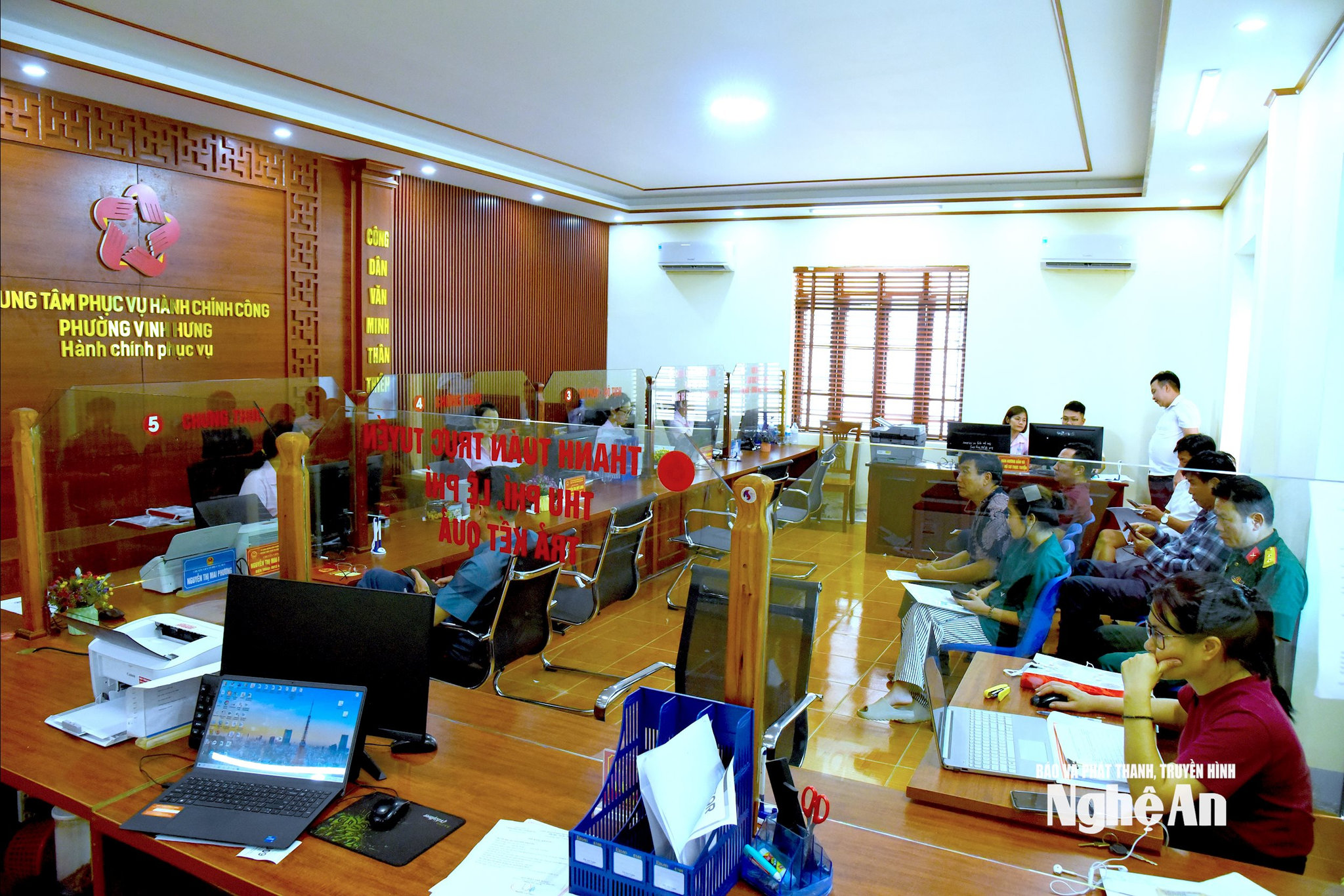
Currently, Vinh Hung ward is maintaining and utilizing its existing public offices. The ward Party Committee is located at the former Quan Bau ward People's Committee, and the ward People's Committee headquarters is located at the former Nghi Kim commune People's Committee. Mr. Hoang Anh Tien, Head of the Economic, Infrastructure and Urban Planning Department of Vinh Hung ward, said that regarding the arrangements for public offices after the new government takes office, the ward is basically keeping the old offices for use. Due to the large population and wide geographical area, maintaining the old offices and public service locations helps reduce the burden on the main headquarters and creates a sense of familiarity for residents in the merged areas who are already familiar with the old addresses.
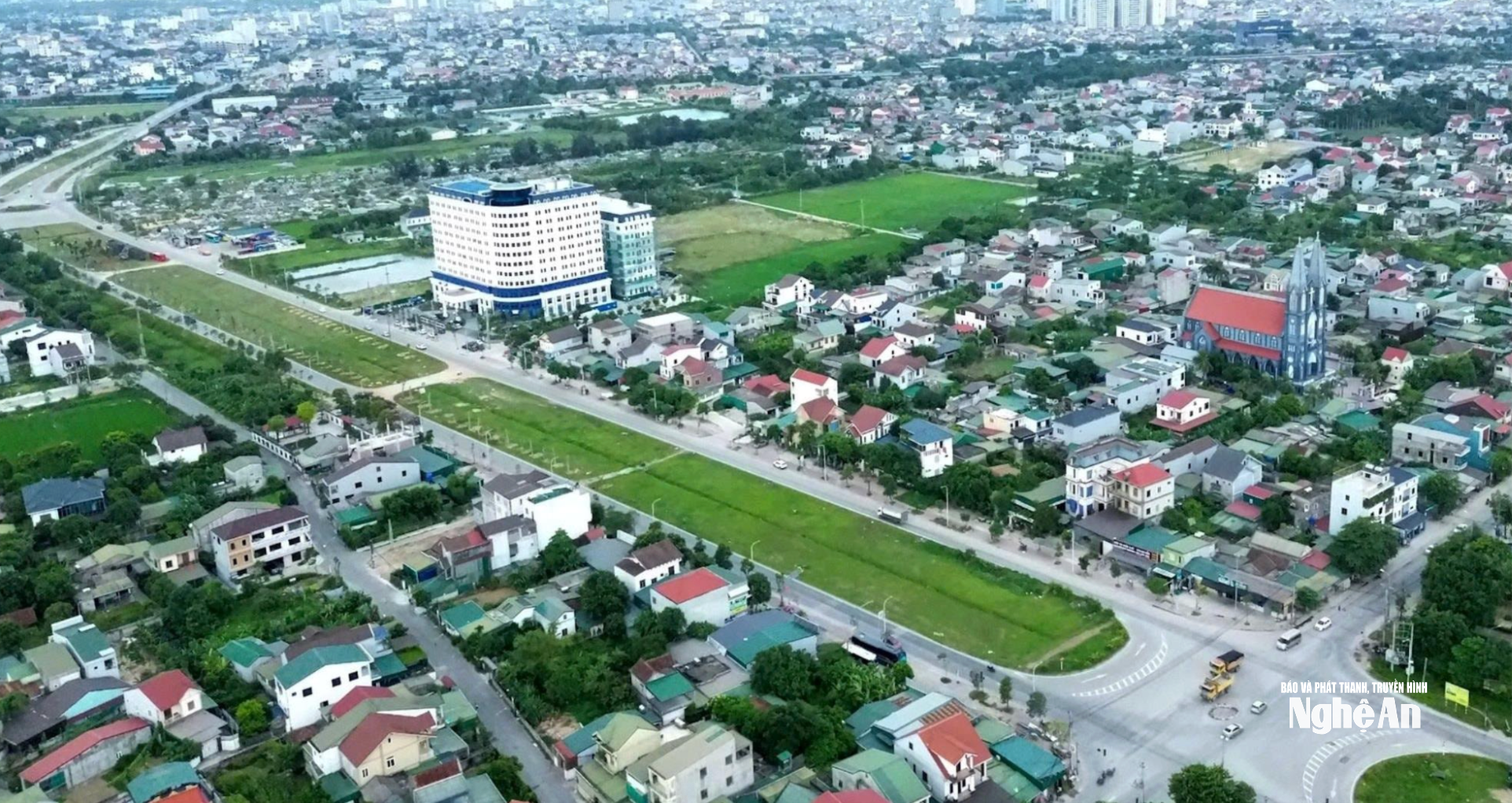
In particular, the cultural and educational institutions in Vinh Hung ward, following the second phase of village and hamlet mergers, are being fully utilized. All community cultural centers, schools, and health stations from the former units continue to operate. Instead of being left idle and closed, these facilities are being transformed into community service centers, helping Vinh Hung ward address the pressure on community living space – a difficult problem for large cities. This demonstrates that, depending on the characteristics of the population and the operational methods of each locality, retaining old facilities is not a patchwork solution, but rather a way to use public resources most effectively to serve the people.
Prevent the waste of public assets.
Across the province, data from the Department of Finance shows that as of the beginning of 2026, there were a total of 4,357 land and property establishments. After mergers, the number of surplus establishments is 382. As of the end of January 2026, the province had only resolved 47 establishments, meaning there are still more than 300 "bottlenecks" that need to be addressed in 2026.
At the 2026 work plan meeting of the Department of Finance, Mr. Bui Thanh An, Member of the Standing Committee of the Provincial Party Committee and Permanent Vice Chairman of the Provincial People's Committee, emphasized the need to address surplus office buildings promptly to prevent the waste of public assets. Accordingly, it's not enough to just submit proposals or approval plans; public assets must be actually handed over and repurposed in practice. The priority for these options includes: converting them into parks, green spaces, or community activity areas; transferring them to the Health or Education sectors to expand infrastructure; and auctioning or leasing them to generate revenue for the budget and address public debt arising from the merger process.
However, implementing this process is not simple. The biggest "bottleneck" lies in the planning adjustment phase. Therefore, the provincial People's Committee leaders also emphasized that the Department of Finance must closely coordinate with the Department of Construction and the Department of Agriculture and Environment to review and compare the construction plan and the land use plan. Only when the plan is adjusted to suit the new function will the handover have sufficient legal basis to proceed.
Furthermore, the province clearly recognizes the difficulties faced by commune-level authorities. Localities often struggle with constantly changing legal documents, lack the professional capacity to independently develop restructuring plans, and are particularly burdened by outstanding debts from previous infrastructure projects. Therefore, the head of the Department of Finance has affirmed that they will not completely delegate management responsibilities to the grassroots level. Instead, the province will apply a temporary management mechanism by assigning public service centers to manage and utilize surplus office buildings on a short-term basis to avoid waste, while simultaneously supporting communes in resolving resource constraints. Data on surplus office buildings will also be digitized and updated into the Ministry of Finance's public asset management software to ensure transparency in the process.
Practical experiences in Tam Thai commune and Vinh Hung ward demonstrate a flexible management approach: No assets are "superfluous," only those that haven't been put to good use to serve the people. With a clear roadmap, Nghe An province hopes to soon resolve the issue of redundant office buildings.


