
Nghe An province issues urgent dispatch to respond to Typhoon No. 3 and floods caused by the storm's remnants.
On the evening of July 20th, the Chairman of the People's Committee of Nghe An province, Head of the Steering Committee for Disaster Prevention, Search and Rescue and Civil Defense of Nghe An province, signed urgent dispatch No. 21/CĐ-UBND, directing the response to typhoon No. 3 and floods caused by the typhoon's remnants.
On the morning of July 19th, the storm, internationally named WIPHA, entered the East Sea, becoming the third storm of 2025, reaching intensity level 10 with gusts up to level 12. According to the National Center for Meteorological and Hydrological Forecasting, the storm is expected to continue strengthening (the strongest winds at sea could reach level 12 with gusts up to level 15). From July 21st to 22nd, coastal areas from Quang Ninh to Thanh Hoa will be directly affected by the storm, causing strong winds and heavy rain in the Northern provinces and the North Central provinces (Thanh Hoa, Nghe An, Ha Tinh).
This is a very strong, fast-moving storm with a wide and dangerous impact area both at sea and on land. Besides the potential direct impact of the storm, the storm's circulation is forecast to cause widespread heavy rainfall, increasing the risk of flooding, flash floods, and landslides in many areas. Therefore, localities and units should not only focus on responding to the storm but also proactively implement measures to prevent, mitigate, and respond to the storm's aftermath.
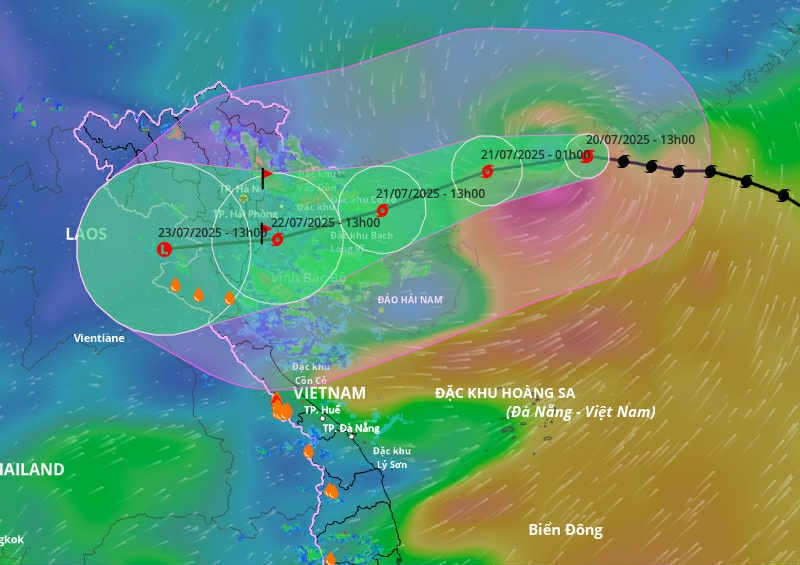
To proactively respond and ensure the safety of people's and state's lives and property, the Chairman of the Provincial People's Committee - Head of the Provincial Steering Committee for Disaster Prevention, Search and Rescue and Civil Defense requests:
Chairpersons of the People's Committees of wards and communes:
- Closely monitor the development of storms and floods caused by storm circulation; provide complete and timely updates on the natural disaster situation to the people so that they can proactively respond and ensure safety; disseminate information and guide people on measures and skills to respond, especially to strong winds, flash floods, landslides, and inundation.
- Organize a review and prepare evacuation plans for households in dangerous areas, especially coastal areas and areas at high risk of landslides, flash floods, and deep flooding, to move them to safe locations; develop plans to provide temporary housing, food, and essential supplies for evacuated people, ensuring their stable living conditions.
- There are plans in place to ensure the safety of tourists on the islands and coastal areas.
- Be prepared with measures to ensure safety and minimize damage to houses, warehouses, offices, public works, industrial zones, factories, power grids, and telecommunications systems.
- Inspect and review the readiness of dike protection and flood control plans in the area according to the "four on-the-spot" principle.
- Be prepared to deploy forces to guard and control people and vehicles passing through underpasses, overflows, areas with deep flooding, strong currents, areas that have experienced landslides or are at risk of landslides; resolutely prohibit people and vehicles from passing through if safety cannot be guaranteed, preventing unfortunate casualties due to carelessness or negligence; deploy forces, materials, and equipment to address incidents and ensure smooth traffic flow on main transportation routes when heavy rain occurs.
- Inspect and review critical infrastructure, unfinished construction projects, and small reservoirs that are already full; organize a standing team to be ready to regulate water levels and ensure the safety of the structures and downstream areas in the event of heavy rain and flooding.
- Prepare plans to ensure drainage and prevent flooding in agricultural production areas, industrial zones, urban areas, and densely populated areas.
- Establish a 24/7 duty roster to monitor the natural disaster situation and organize the implementation of measures to respond to storms and storm remnants.
Director of the Nghe An Provincial Meteorological and Hydrological StationThe authorities are closely monitoring the developments of Typhoon No. 3 and its remnants, providing timely forecasts, warnings, and information about rain, floods, and natural disasters to relevant agencies and the public so that they can proactively implement response measures and minimize damage.
Director of the Department of Agriculture and EnvironmentBased on its functions and responsibilities, the agency proactively directed and urged localities to implement appropriate response measures to the developments of Typhoon No. 3 and the subsequent floods; and directed efforts to ensure the safety of agricultural production, dikes, and irrigation reservoirs, especially key irrigation projects that are still under construction, such as the Ban Mong reservoir.
Director of the Department of Industry and TradeDirecting efforts to ensure safety in industrial production and the safety of hydroelectric dams, especially small hydroelectric reservoirs.
Director of the Department of ConstructionDirecting and guiding traffic and ensuring traffic safety in areas affected by rain and floods, promptly addressing incidents, and ensuring smooth traffic flow, especially on major transportation routes.
Commander of the Provincial Military Command, Director of the Provincial Police Department, Head of the Provincial Border Guard CommandActively direct and prepare forces and resources to support the people in responding to storms and post-storm floods, and conduct rescue operations when requested by localities. The Provincial Border Guard Command will preside over and coordinate with relevant units to carry out the work of counting, guiding, and ensuring the safety of ships and vessels (including tourist boats) operating at sea and along the coast, enabling them to proactively move out of dangerous areas or to safe shelters; based on the development and forecast of the storm, promptly advise the Provincial People's Committee to issue a ban on sea activities.
Chairpersons and Directors of Irrigation and Hydropower CompaniesOperating and regulating hydroelectric and irrigation dams scientifically and appropriately according to practical conditions, ensuring absolute safety of the structures, and contributing to flood reduction in downstream areas.
The agencies:Nghe An Newspaper, Radio and Television, and other mass media agencies promptly reported on the natural disaster situation and the response efforts of relevant agencies, and intensified the dissemination and guidance on measures and skills for responding to storms, heavy rains, floods, landslides, and flash floods for the people.
GiDirectors of Departments, Heads of AgenciesIn accordance with the assigned state management functions, proactively direct and coordinate with relevant localities and units to promptly implement response and recovery efforts when natural disasters occur.
Provincial Steering Committee for Disaster Prevention, Search and Rescue and Civil DefenseThe on-duty team closely monitors the disaster situation, proactively directs, inspects, and urges localities to implement disaster prevention, mitigation, and recovery efforts to minimize damage; promptly compiles damage reports, and proposes solutions to the Provincial People's Committee for issues beyond its authority.


