
Nghe An launches shared data repository
On the morning of September 30th, the People's Committee of Nghe An province, in coordination with MobiFone Nghe An and SunTechX, held a ceremony to launch the Nghe An province's shared data warehouse.
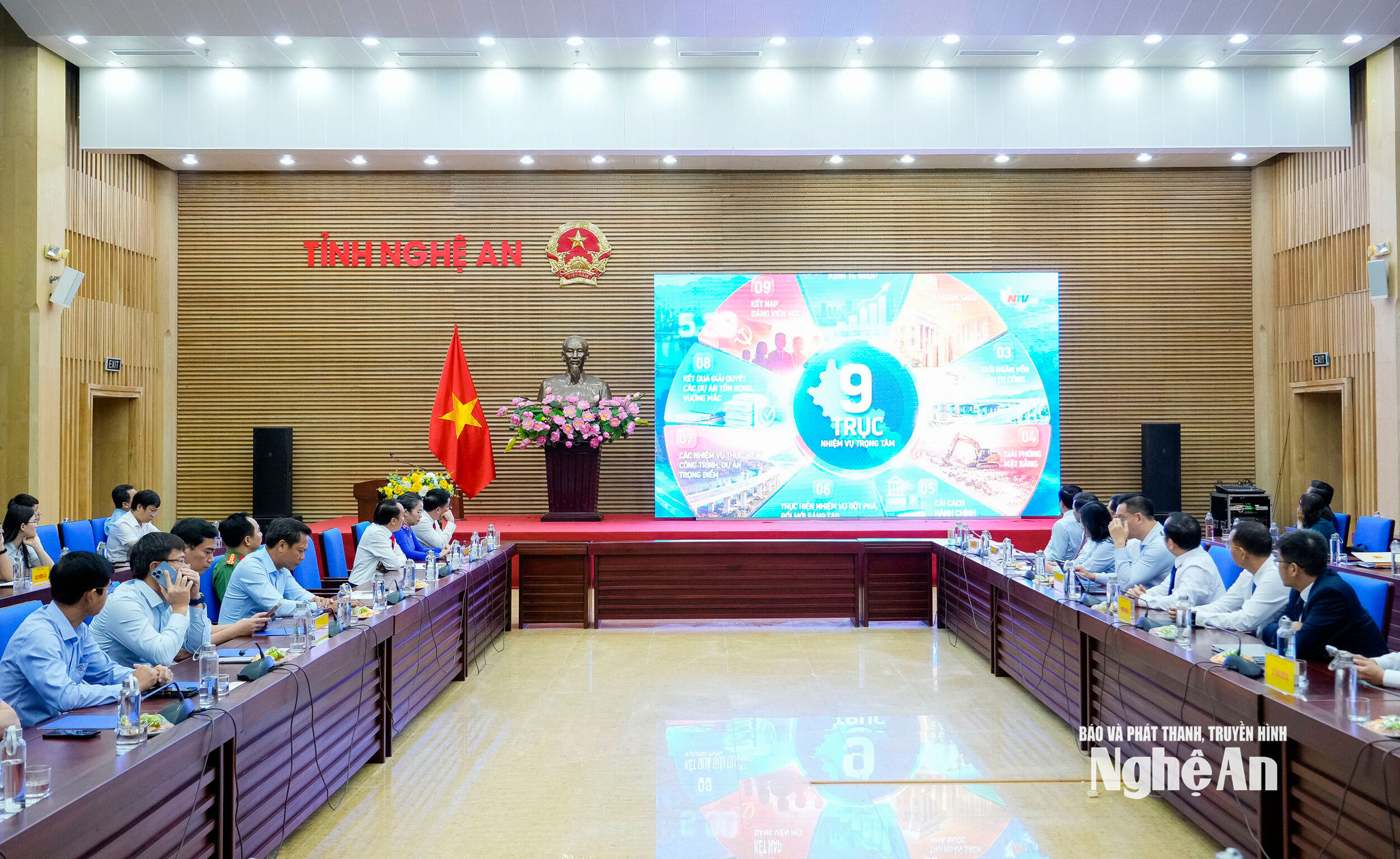
Attending the opening ceremony were: Mr. Nguyen Khac Than - Member of the Central Committee of the Party, Secretary of the Provincial Party Committee, Head of the Provincial National Assembly Delegation; Mr. Vo Trong Hai - Deputy Secretary of the Provincial Party Committee, Chairman of the Provincial People's Committee; Ms. Vo Thi Minh Sinh - Deputy Secretary of the Provincial Party Committee, Chairwoman of the Vietnam Fatherland Front Committee of the province; along with members of the Standing Committee of the Provincial Party Committee, leaders of the Provincial People's Council, departments, agencies, localities, and businesses.

In implementing Resolution No. 57 of the Politburo, Nghe An province has focused on improving its database, strengthening connectivity, sharing, and reusing data, and gradually shifting its leadership and management methods to a data-driven approach.
Based on the province's guidelines, the Department of Science and Technology, in coordination with MobiFone, SunTechX, VNPT, and Viettel, is focusing on building a shared provincial data warehouse.
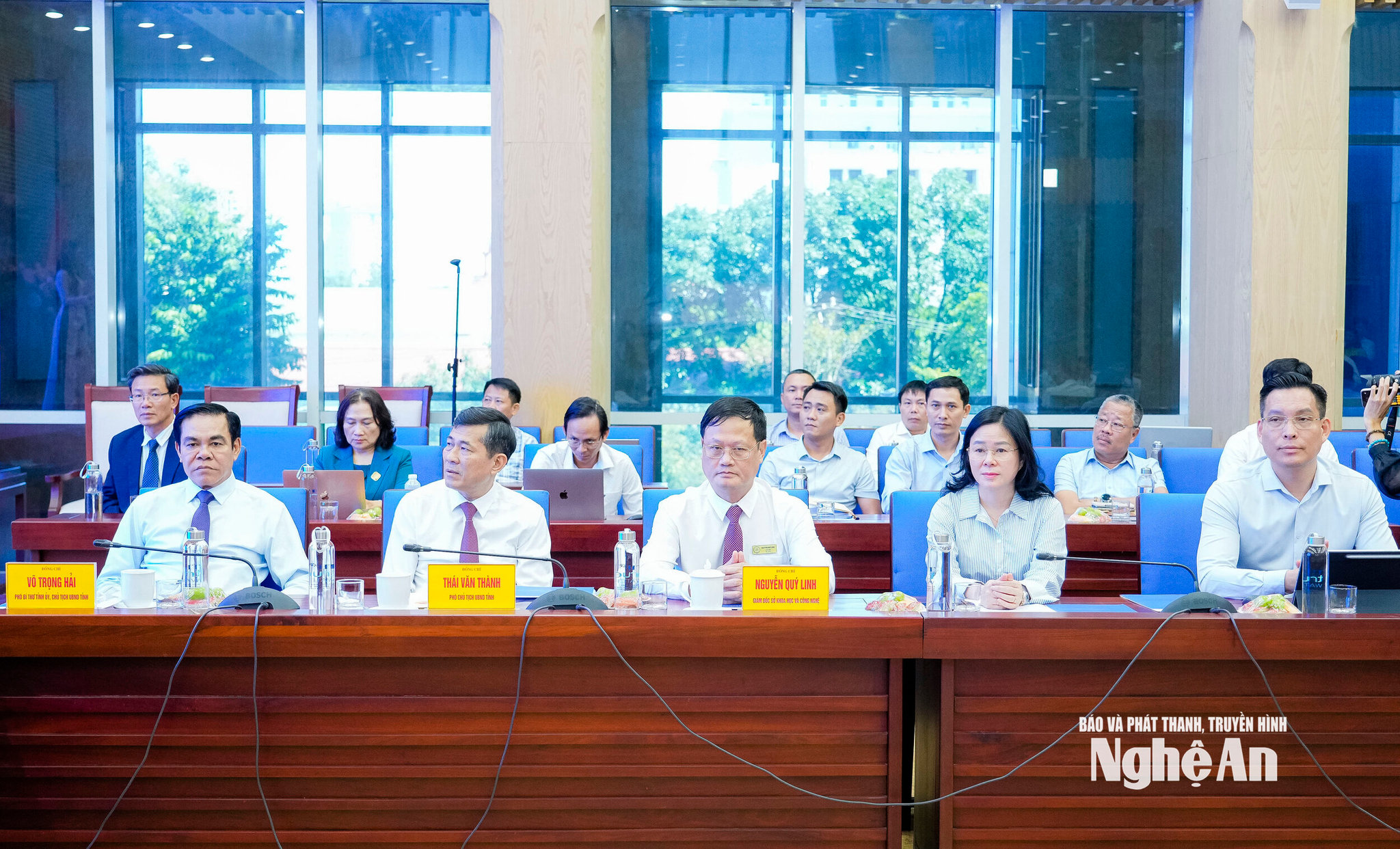
A shared data repository is a place that connects data sources according to a unified architecture. Here, data catalogs and dictionaries are built, their origin and quality are tracked, and access rights are managed.
To date, 8 out of 10 sectors have established unit-level data repositories with 158 datasets. At the provincial level, the shared data repository has recorded 138 datasets belonging to 31 categories.
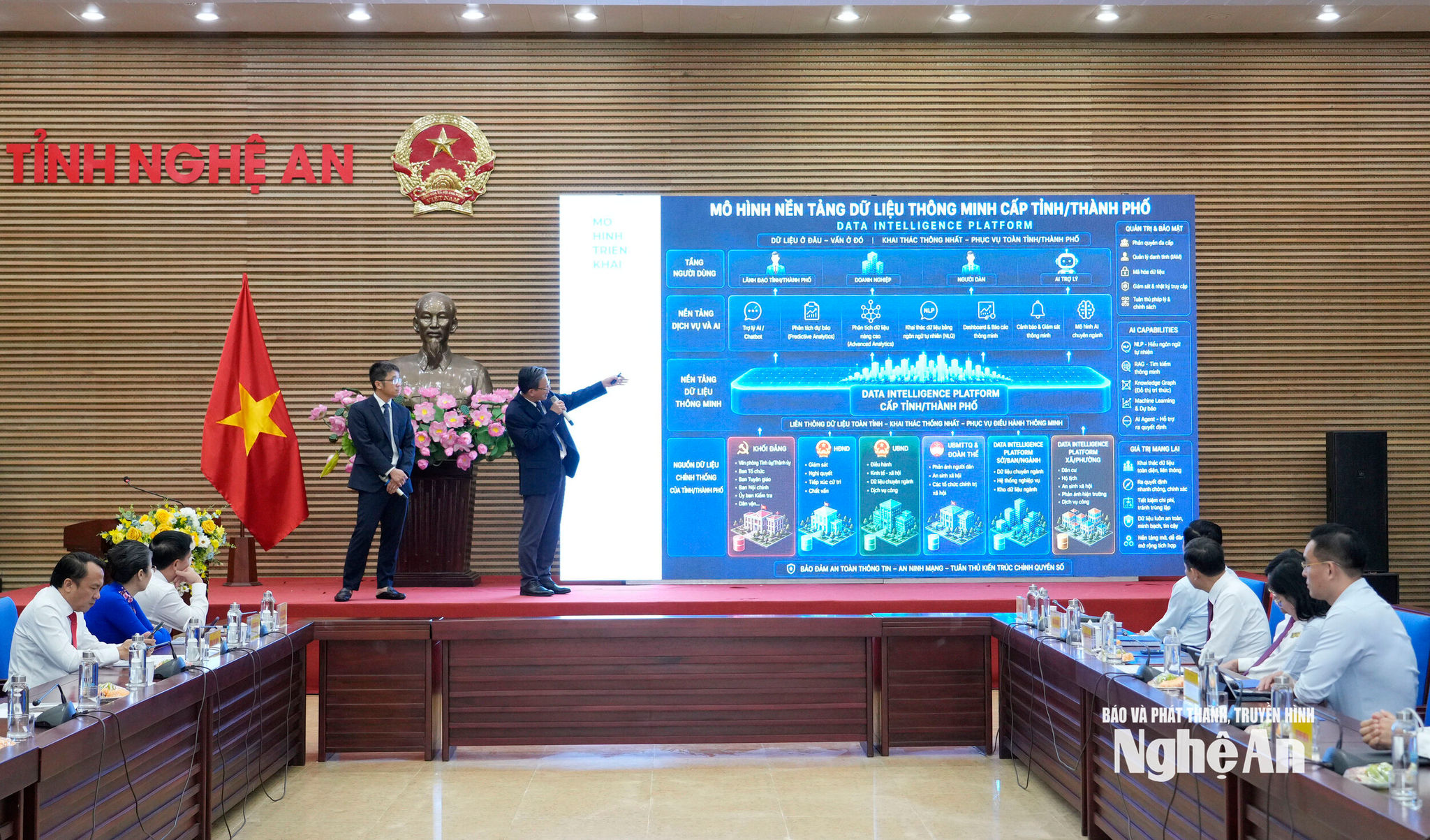
Technically, the shared data warehouse is established according to the National Data Architecture Framework and the Provincial Data Architecture Framework, capable of connecting via API and LGSP, standardizing and controlling data quality according to the requirements of "accurate - complete - clean - active". The system consists of four components: Shared Data Warehouse; iNgheAn Operation Manual; Real-time Operation Platform; Open, Openly Shared Data.
In terms of operation, the system has established a three-tiered control panel and nine key data axes; the iNgheAn application, built on iOS and Android, supports leaders in monitoring and accessing information anytime, anywhere, gradually forming a data assistant using artificial intelligence. An open data portal has been established, facilitating access to publicly available data for citizens and businesses.
.jpg)
Speaking at the ceremony, Vice Chairman of the Provincial People's Committee Thai Van Thanh emphasized that building a shared data warehouse is not simply about gathering data in one place for storage, but more importantly, about facilitating the flow of data between different levels and sectors; transforming data into a resource to serve governance and development.
Data must be accurate, complete, clean, active, consistent, and shared; it must be connected, shared, and exploited efficiently, securely, and in accordance with regulations. Technology must help transform data into valuable information, enabling leaders to see the situation, detect problems early, clearly define responsibilities, and make timely decisions; while simultaneously serving citizens and businesses better and better.

Emphasizing that this is only the initial result, Vice Chairman of the Provincial People's Committee Thai Van Thanh requested a clear definition of the responsibilities of the heads of agencies regarding the data. The head of the agency or unit that creates and manages the data must be responsible for the completeness, accuracy, timeliness, and connectivity and sharing capabilities of the data. The data must be updated regularly, ensuring it is correct, complete, clean, relevant, consistent, and for common use.
The Department of Science and Technology, in coordination with the Provincial People's Committee Office and other departments and agencies, will select key data groups and indicators to directly serve the guidance and management work; initially focusing on socio-economic development, budget revenue and expenditure, disbursement of public investment capital, administrative procedures, progress of task implementation, and other essential areas. Each indicator must help to visualize results, progress, problems, and responsibilities for handling them.
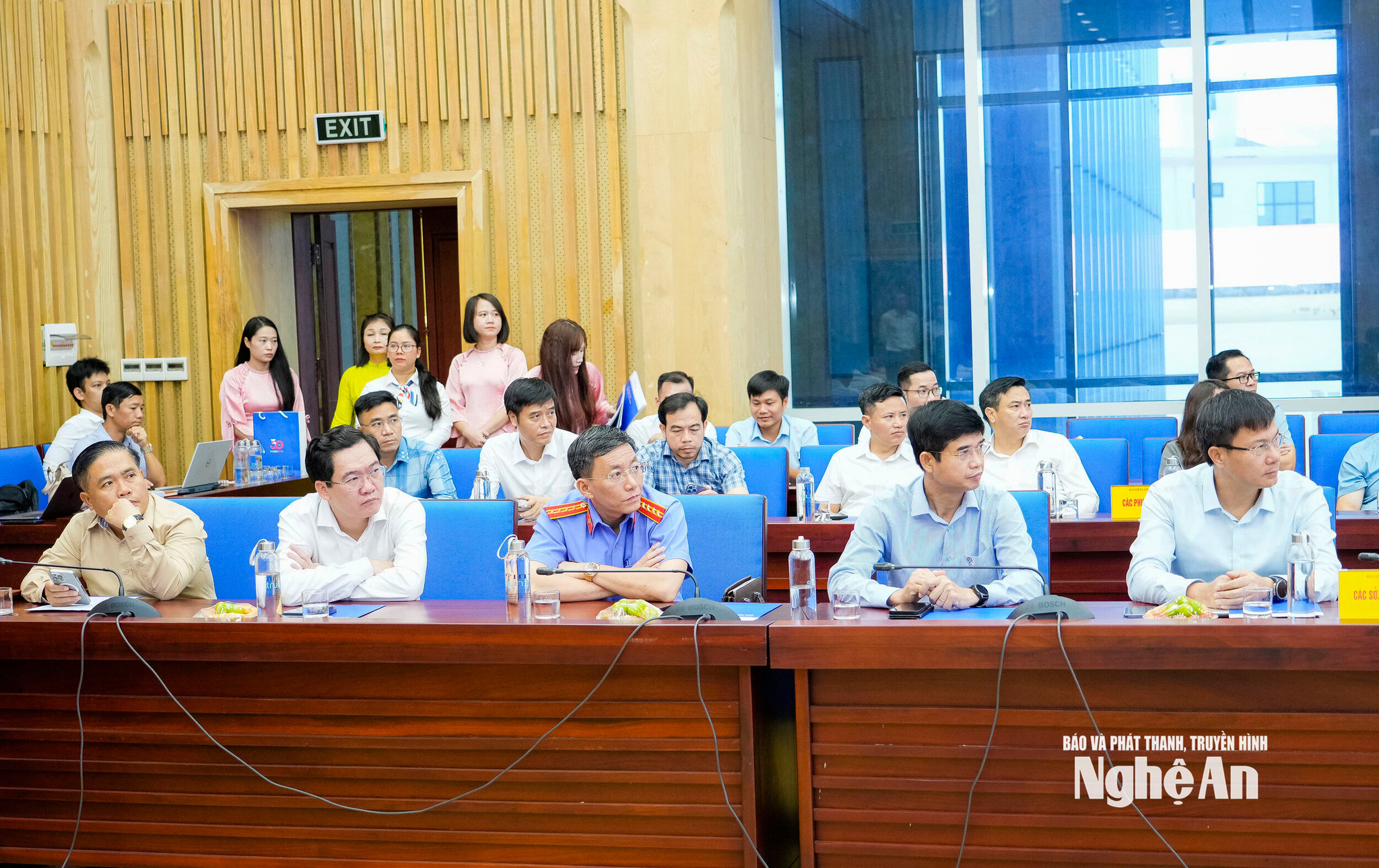
Gradually shift the management and operational methods to be based on data and real-time data; initially, implement this in areas and units that already have sufficient data resources, thereby reducing the time spent compiling reports, increasing the time spent analyzing and processing work, and improving the quality of decisions.
The Department of Science and Technology, in coordination with relevant agencies, is urgently working to finalize the data architecture, governance framework, data catalog, data dictionary, and regulations for managing, connecting, and sharing data in the province.
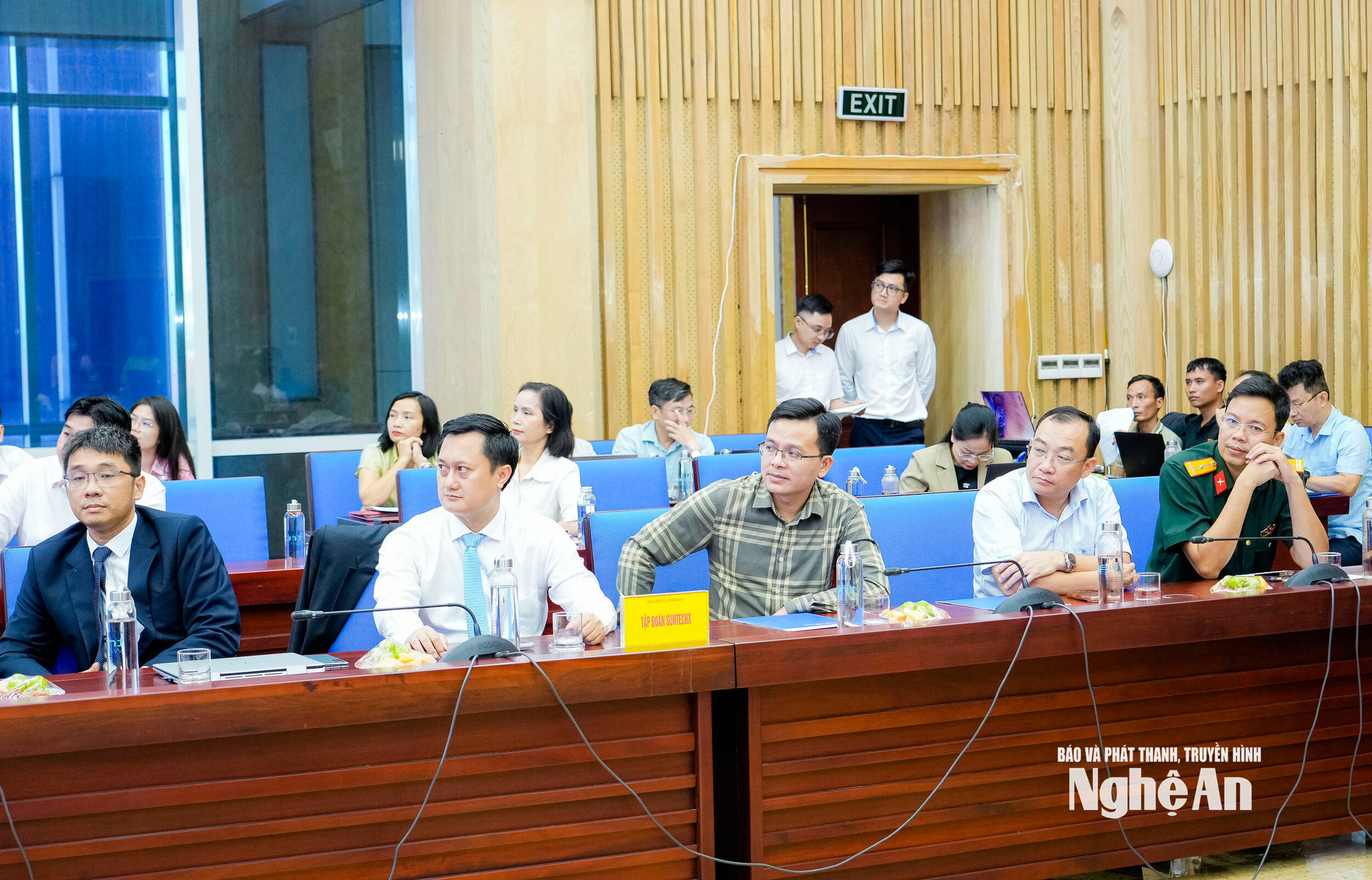
Strengthen connections with national, ministerial, and sectoral databases; prioritize the reuse of existing data and avoid duplicate investments. Data exploitation must be linked to ensuring cybersecurity, protecting state secrets, and safeguarding personal data in accordance with regulations.
Vice Chairman of the Provincial People's Committee, Thai Van Thanh, suggested that practical effectiveness should be the measure of success, not quantity or formality. All connected data and all built functions must be truly exploited, used, and bring efficiency to management, administration, the State, the people, and businesses.
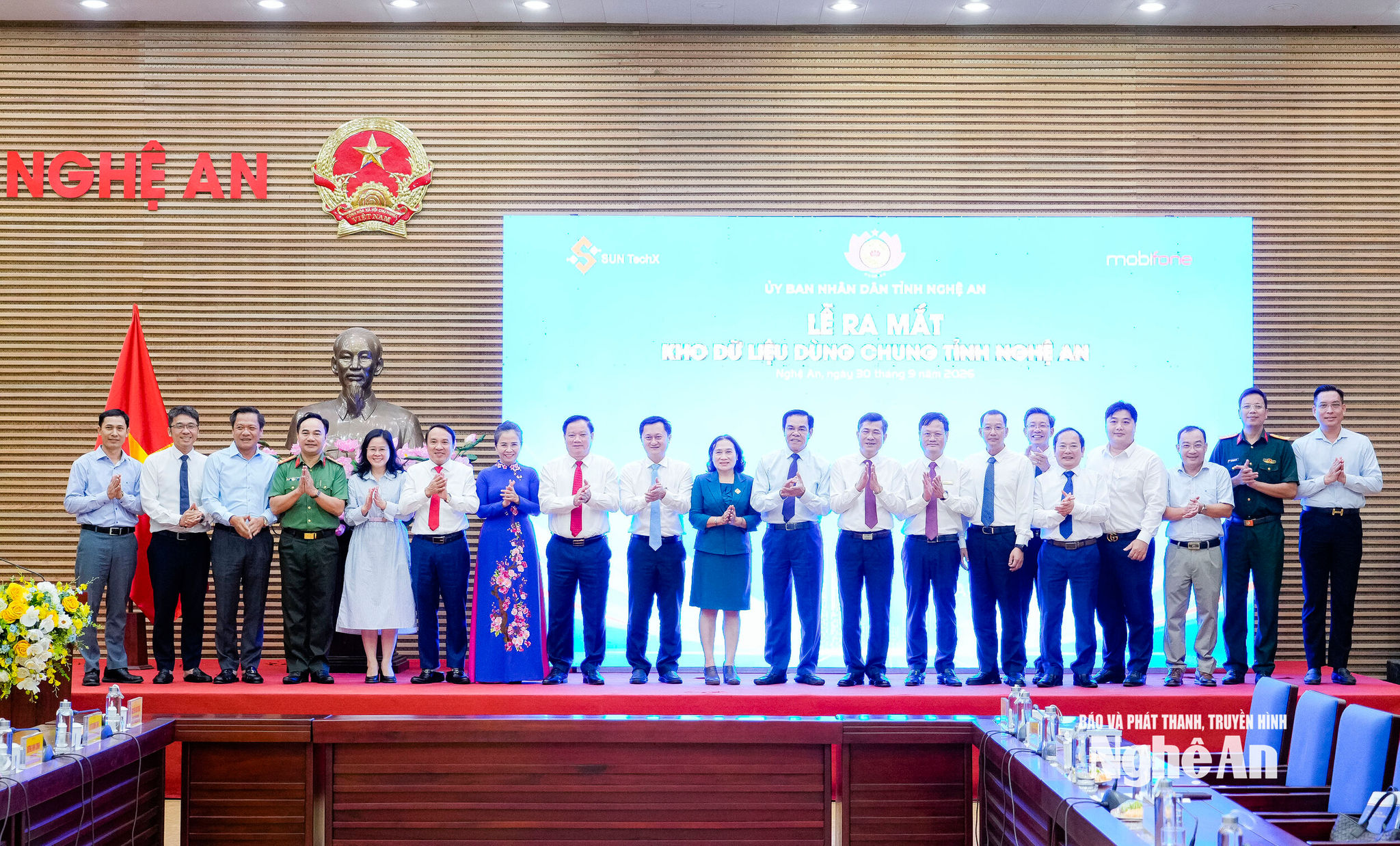
Departments, agencies, and localities, especially their leaders, need to genuinely use, update, and exploit data in their daily work, so that the shared data repository gradually becomes an important foundation for the digital government, digital economy, and digital society of Nghe An province.


