
Nghe An: Vibrant reforestation movement underway for Spring 2026.
In the early days of Spring 2026, a vibrant atmosphere of reforestation campaigns swept across the hillsides of many localities in the province. With decisive leadership from the Party committees and authorities, and the proactive efforts of the people, Nghe An is determined to complete its plan to plant 21,000 hectares of forest in 2026, creating a foundation for sustainable and efficient forestry development right from the beginning of the year.
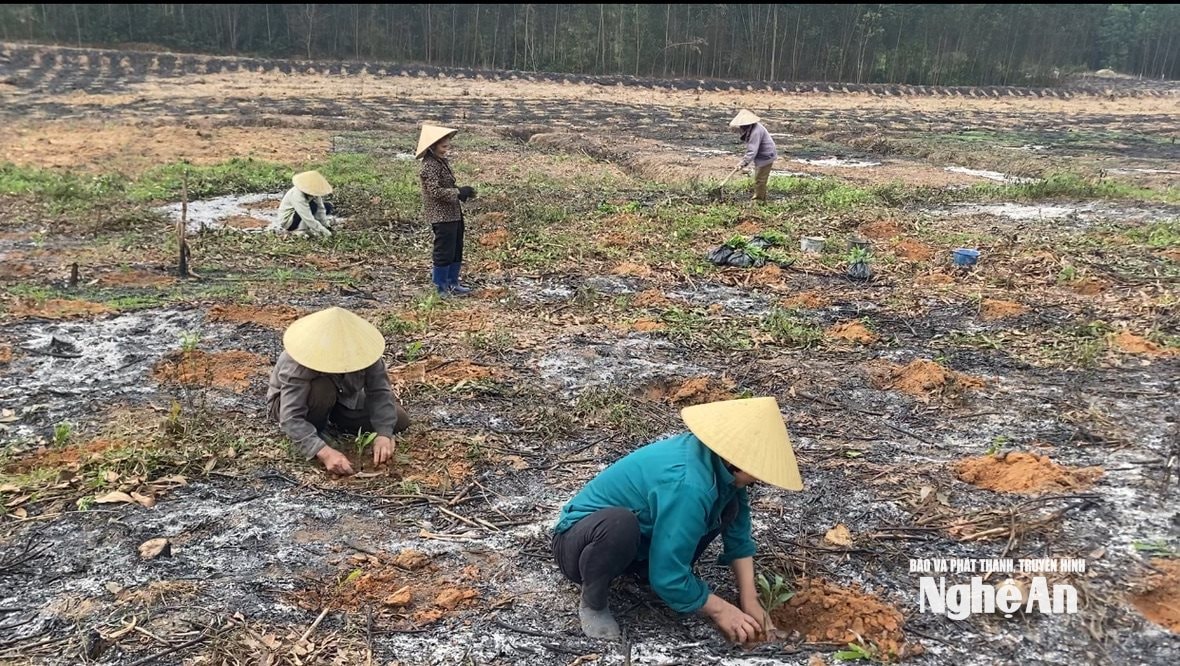
Bustling activity in planting acacia trees in the spring.
Along the Ho Chi Minh Trail passing through Tan Ky commune these days, it's easy to spot people busily clearing undergrowth, digging holes, and transporting seedlings up the hills. A bustling and enthusiastic atmosphere of hard work permeates the entire forest area.
Mr. Nguyen Van Tinh, a resident of Hamlet 6, Tan Ky Commune, said that although the festive atmosphere of the early spring days still lingered, his family had already started planting trees on the 6th day of Tet (Lunar New Year). On an area of over 2.5 hectares, all preparations had been underway before Tet, such as hiring laborers to clear the undergrowth, dig holes, and prepare the soil, ensuring smooth planting. According to the plan, his family aims to complete the spring tree planting within approximately 12 days.
According to Mr. To Anh Dung, Head of the Economic Department of Tan Ky Commune People's Committee, the commune currently has over 5,000 hectares of acacia forest for raw materials. Every year, the locality plants about 500 hectares of new acacia trees. However, due to the impact of storms causing extensive damage, this year the commune aims to plant over 800 hectares of acacia trees for raw materials. To date, the commune has planted more than 200 hectares of forest in the spring. From the 6th day of the Lunar New Year, people throughout the commune continue clearing the undergrowth and replanting the remaining forest area.
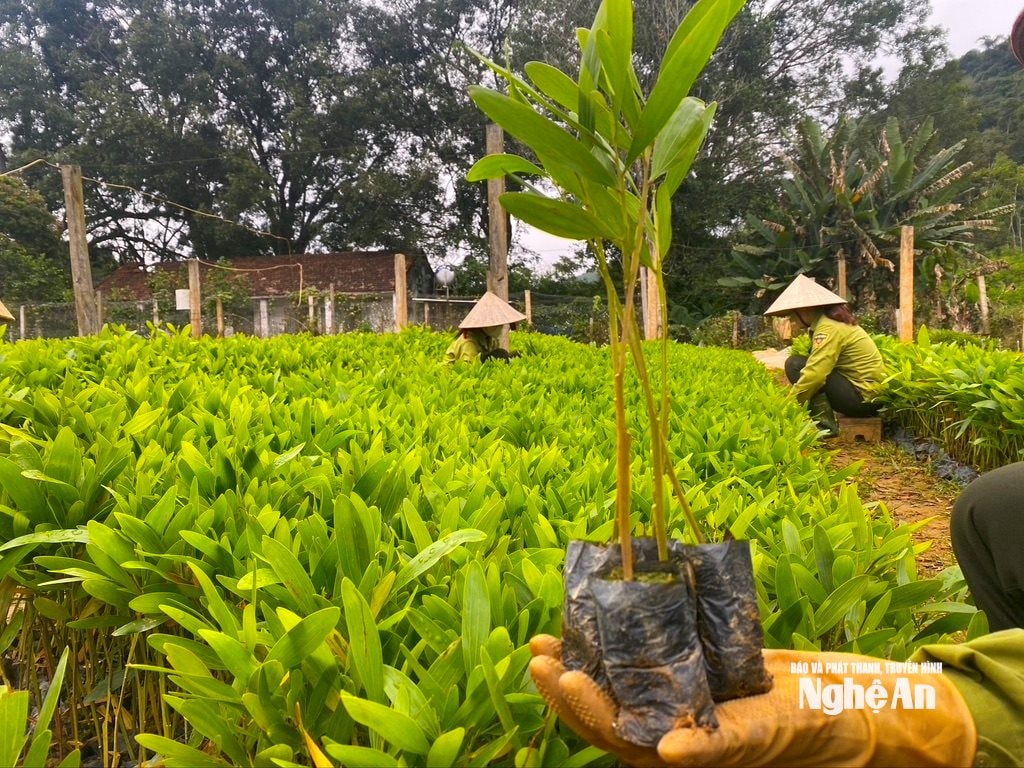
A noteworthy aspect of current reforestation efforts is the shift in production mindset. Previously, people primarily planted forests using extensive methods with minimal care, but now they have strongly shifted to intensive cultivation, focusing on investment from land preparation and seed selection to care, even building protective fences to prevent cattle from trampling and damaging the trees.
Many households have dug planting holes according to proper standards, such as planting 1,600 acacia trees per hectare, applying base fertilizer, and using tissue-cultured or hybrid acacia seedlings of clear origin and guaranteed quality. Thanks to adherence to technical procedures, the productivity of planted forests has increased significantly, the harvesting cycle has been shortened, and the economic value per unit area has increased considerably.
Not only in Tan Ky commune, but also in Quy Chau commune, the reforestation movement is taking place enthusiastically in these early spring days. On the hillsides, groups of laborers are diligently planting trees, greening the barren areas left after logging.
Mr. Vi Van Tuan from Quy Chau commune said: His family planted 2.2 hectares of acacia trees. Before Tet, taking advantage of favorable weather, his family completed the clearing of the undergrowth. On the 6th day of Tet, they started planting the forest, and they expect to complete the entire spring planting area within the next 6 days.
According to Mr. Thai Van Quang, a specialist at the Economic Department of Quy Chau commune, the entire commune currently has over 12,000 hectares of acacia trees. In 2026, the commune was assigned a plan to plant over 2,100 hectares of acacia trees in the spring. However, storms in the past year caused hundreds of hectares of acacia trees to be felled. Since the fourth day of Tet (Lunar New Year), many households have been urgently clearing and preparing the undergrowth to replant the forest as soon as possible.
Despite the large workload, the commune still aims to plant approximately 1,800 hectares this spring, determined to ensure progress according to the plan, contributing to stabilizing livelihoods for the people and improving the efficiency of forestry production in the area. However, the reforestation process in Quy Chau commune still faces many difficulties, such as the continued localized shortage of seedlings.
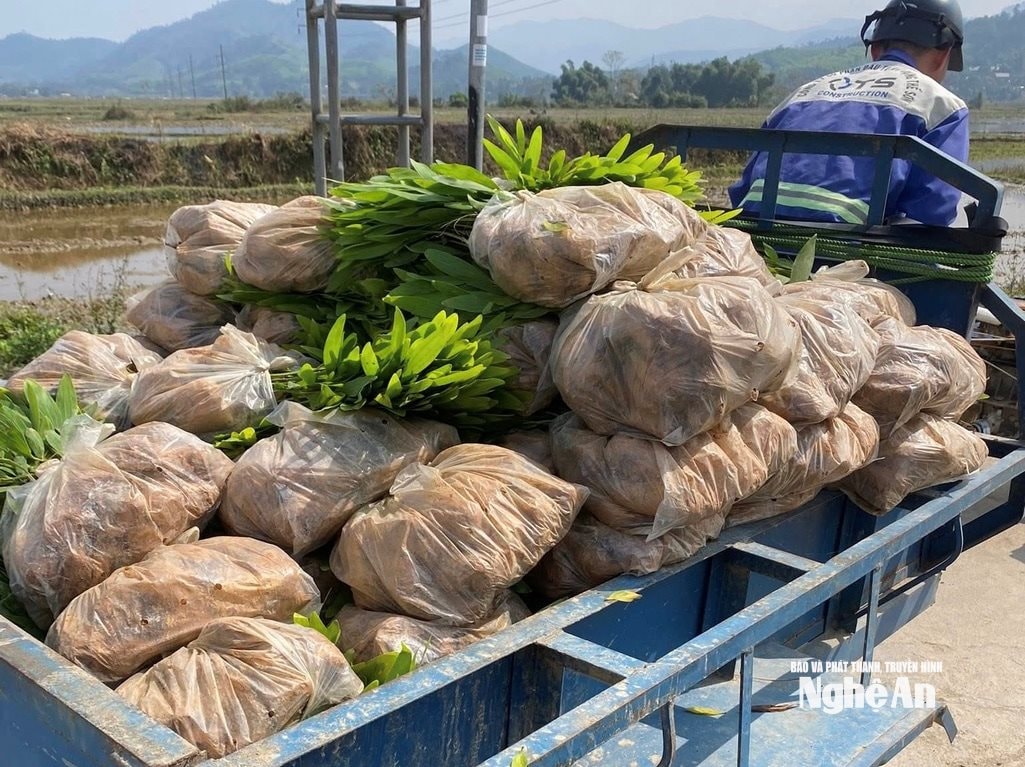
The entire province is striving to plant 21,000 hectares of forest.
According to a report from the Provincial Forest Protection Department, Nghe An province aims to plant 21,000 hectares of timber forests in 2026, an increase of 1,000 hectares compared to the previous year. Specifically for the spring planting season, the province strives to plant 9,500 hectares. To date, localities have planted over 3,500 hectares, achieving more than half of the plan. According to the schedule, spring forest planting will be basically completed by the end of April.
To meet the demand for seedlings for reforestation, the province currently has more than 30 legally registered businesses producing and trading forestry seedlings. At this time, they have produced over 8 million seedlings of various types for spring reforestation.
Alongside increasing seed production, quality management is also given special attention. The Forest Protection Department recommends that localities strengthen inspection and supervision of the production and trading of forestry seedlings; and guide people to choose seedlings with clear origins and meeting standards.
At the same time, the principle of "replanting wherever harvesting takes place" was strictly enforced, ensuring no land was left fallow, maintaining forest cover, and completing the annual plan. To date, the Forest Protection Department has coordinated the renovation and upgrading of approximately 13 nurseries belonging to forest management units operating in the area.
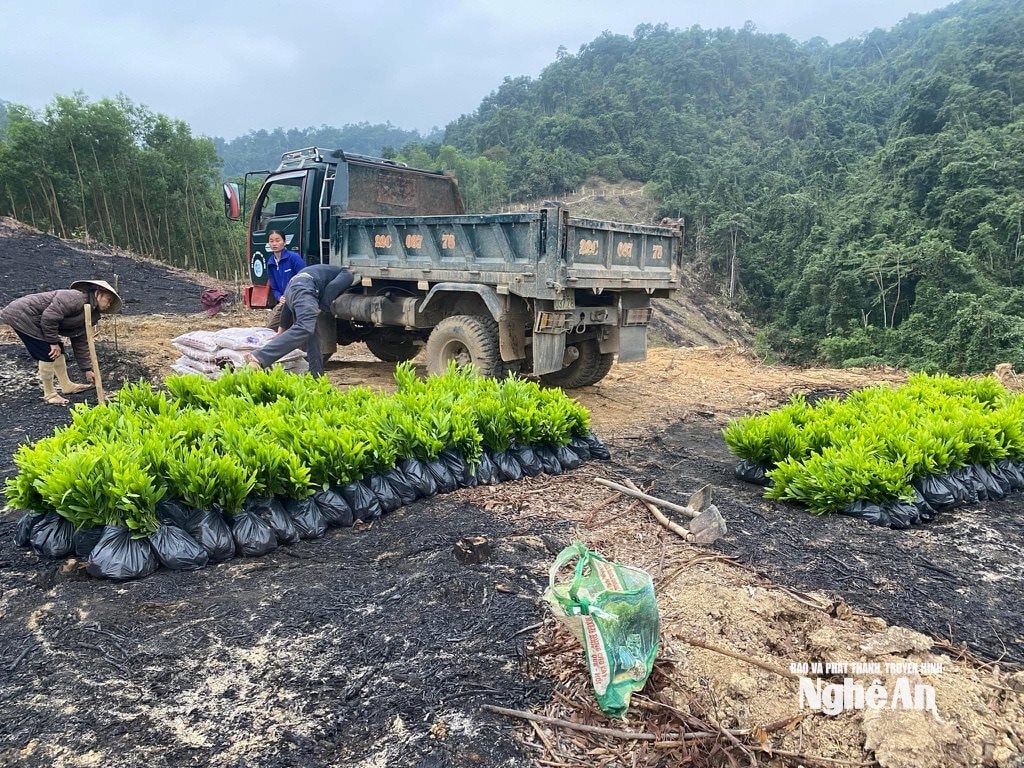
Forest planting not only contributes to increasing forest cover, protecting the ecological environment, and limiting soil erosion and landslides, but also creates jobs and increases income for tens of thousands of rural workers. With the increasing demand for wood and forest product processing, both in the domestic and export markets, Nghe An's forestry sector is facing many opportunities for development.
To effectively harness this potential, in addition to the efforts of the people, the support of relevant agencies is crucial through preferential credit policies, investment in forestry and transportation infrastructure, and encouragement of research and transfer of high-yield tree varieties. Expanding the area of large-timber plantations and extending the harvesting cycle to increase added value also needs to be prioritized.
In the early days of the new spring, the image of people working diligently on the hillsides demonstrates their determination to get rich from the forest and to remain closely connected to it.
With close guidance from all levels of government, support from specialized agencies, and the proactive spirit of the people, Nghe An expects to successfully complete the 2026 reforestation plan, contributing to the sustainable, efficient, and environmentally friendly development of the forestry economy.


