
Nghe An focuses on eliminating 22 traffic 'black spots'.
(Baonghean) - In the first months of 2018, the number of traffic accidents decreased significantly, but the number of fatalities did not decrease. What is worrying is that most accidents often occur at traffic "black spots"...
National Highway 1A, the section passing through the Nam Cam Industrial Zone (Nghi Loc), including the N5 intersection and the Bai Lu junction, has recently seen a series of traffic accidents, many of which resulted in casualties (including 2 fatal accidents at the intersection).
The reason is that the road has a high volume of traffic, lacks traffic signs and traffic lights, and drivers often speed, leading to a loss of control and increased risk of accidents.
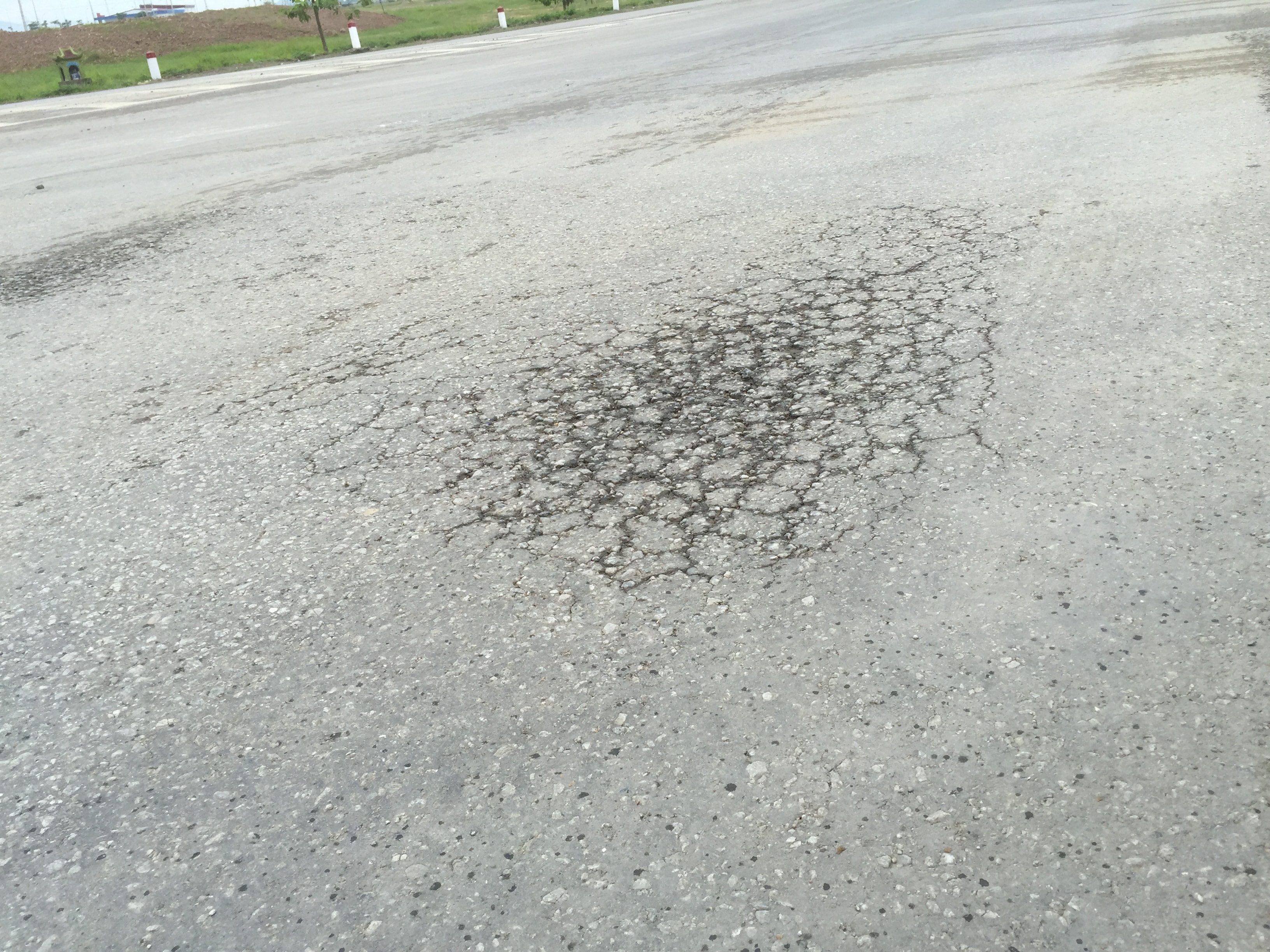 |
| Some sections of the road are in poor condition. Photo: Mạnh Cường |
Similarly, the Vinh bypass road in Hung Nguyen and Nghi Loc districts is also a worrying traffic "black spot" for drivers. Since 2017 alone, the intersection of the Vinh bypass road and National Highway 46B has seen 3 accidents, resulting in 3 deaths and 1 injury.
For example, at 8:00 AM on June 27, 2018, on the Vinh City bypass, a passenger bus with license plate 36B-005.67 carrying approximately 30 passengers traveling from North to South suddenly lost control and overturned on the side of the road. The accident resulted in 2 deaths at the scene and 7 other people injured.
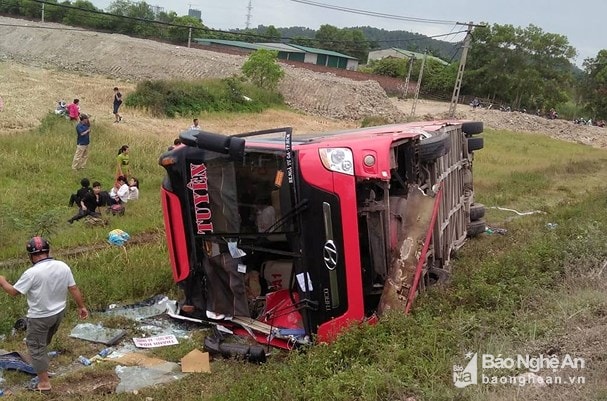 |
| Scene of the bus accident on the Vinh bypass road that left 2 dead and 7 injured. (Photo: Archival image) |
According to driver Vo Trong Quyen, "I frequently pass through the intersection between the Vinh bypass and National Highway 46B (Hung Tay intersection), and I always feel apprehensive. Some people are unaware of the dangers when they don't follow traffic laws, leading to many tragic accidents on this stretch of road..."
According to statistics from the Nghe An Provincial Traffic Safety Committee and the Road and Rail Traffic Police Department, Nghe An province currently has 22 traffic "black spots". From May 2017 to the present, 98 traffic accidents have occurred in Nghe An province, resulting in 70 deaths and 77 injuries.
Most traffic black spots have limited or obstructed visibility, especially at the corners of intersections; narrow curves; lack of nighttime lighting; absence of traffic signals; and inconsistent intersections with national highways. Furthermore, the transportation infrastructure is inadequate, with poor road surface quality, faded or missing road signs and lane markings, narrow and degraded roads with numerous potholes and long, deep trenches. Many construction contractors in the area have yet to implement solutions to ensure traffic safety...
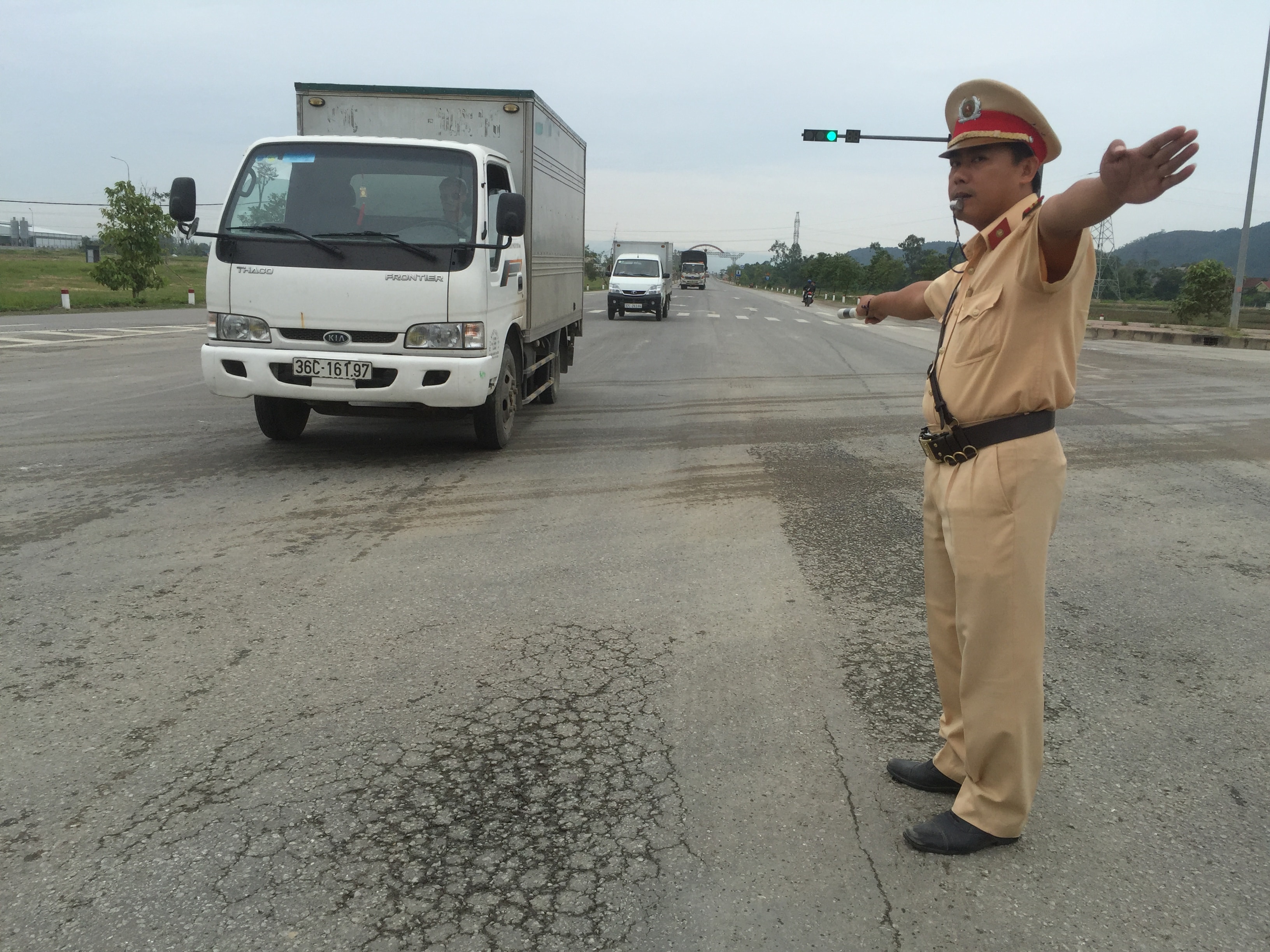 |
| Traffic police are increasing patrols and regulating traffic during bad weather and rush hours at traffic "hot spots". Photo: Mạnh Cường |
This is also a contributing factor to tragic accidents involving the public. To mitigate this situation, the Traffic Police force of Nghe An province has increased its personnel, organized comprehensive patrols throughout the area, and handled violations. They promptly regulate traffic during bad weather or peak hours. At the same time, they organize campaigns to disseminate laws and the Road Traffic Law to every ward, commune, agency, business, and school...
However, the number of traffic accidents and fatalities has not decreased. According to Mr. Le Thanh Nghi, Deputy Head of the Road and Rail Traffic Police Department: "Traffic accidents in the past period depend on four factors: infrastructure conditions, human factors, vehicles, and the residential environment. Focusing on eliminating 'black spots' is necessary, but analysis of recent accidents, especially those involving intercity passenger buses, shows that the fault lies with the vehicle drivers."
Therefore, eliminating "black spots" is only a supportive measure; simply removing them doesn't guarantee an end to accidents. More importantly, it's about the awareness of road users. The Traffic Police Department of Nghe An Province has surveyed black spots and traffic organization irregularities on various routes to propose solutions and repairs to relevant agencies. Simultaneously, they have directed traffic police to increase patrols and inspections, conduct public awareness campaigns through mass media, and strictly enforce regulations against violations such as speeding, driving under the influence of alcohol, driving in the wrong lane, and running red lights.
Mr. Vo Minh Duc, Chief of the Provincial Traffic Safety Committee Office, said: “At traffic black spots in the province, the Provincial Traffic Safety Committee has coordinated with relevant departments and agencies to conduct on-site inspections and surveys. We have also sent a letter to the Department of Roads 2, the unit managing the route, requesting them to report to the General Department of Roads to create a black spot project. This project will include many accompanying solutions, such as addressing curve issues, improving visibility, expanding lanes, and adding auxiliary equipment to definitively address the shortcomings in traffic infrastructure.”
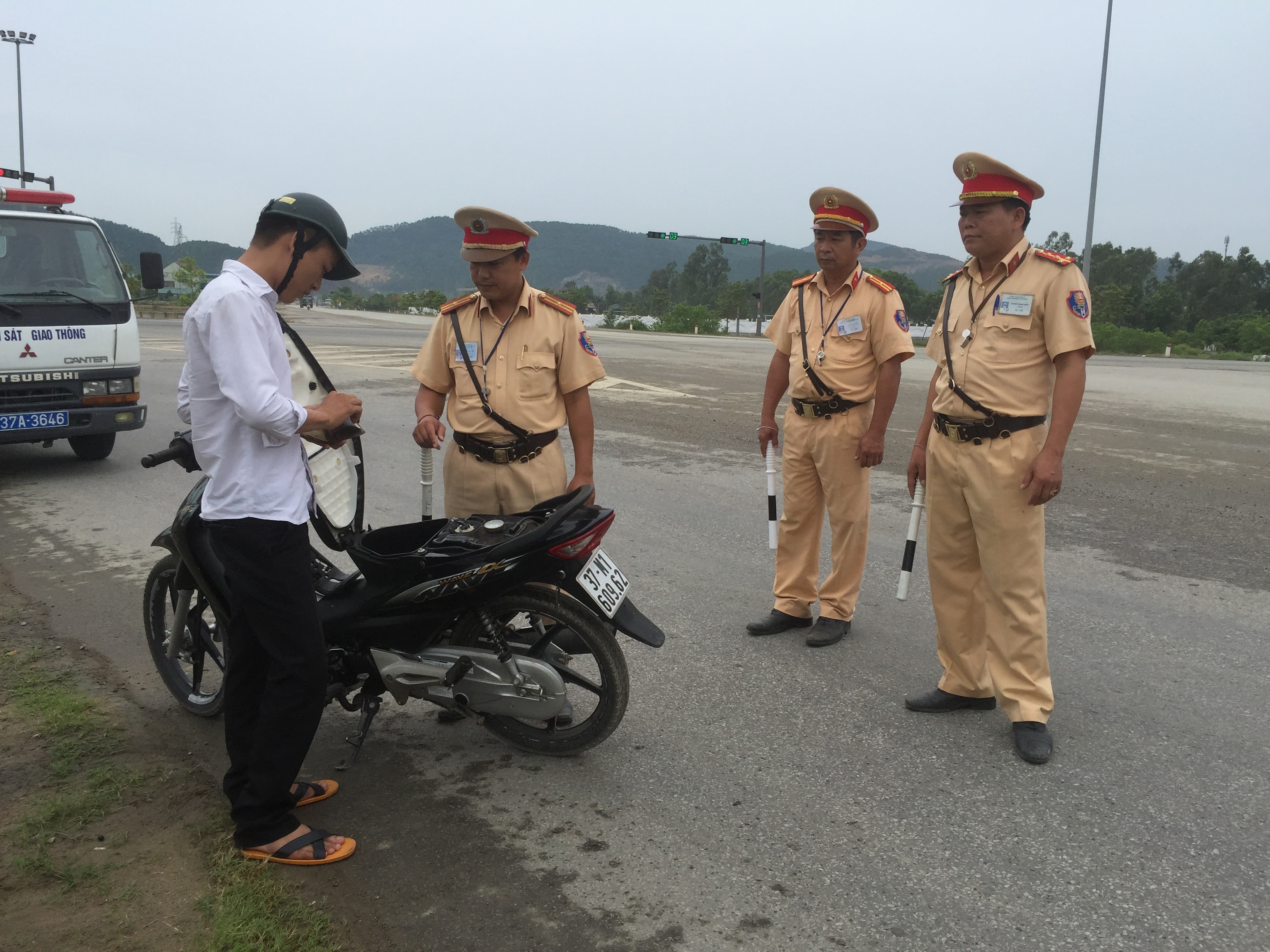 |
| Traffic police officers handle traffic violations. Photo: Mạnh Cường |
I believe it's time that, in addition to maintaining and repairing dilapidated roads or straightening sharp turns, the Public Works and Transportation sector should install more median strips, paint more speed bumps, install traffic lights, supplement public lighting systems, traffic control stations, and signage... to prevent tragic traffic accidents.
On the other hand, traffic police need to increase patrols and impose heavy penalties on traffic safety violations so that road users consciously comply with traffic laws. All agencies and departments must work together decisively to completely eliminate traffic "black spots" in the area, aiming to ensure the safety of road users.


