
Nghe An province has built over 10,000 waste treatment models.
After three years of implementing the project, Nghe An province has now replicated more than 10,000 models of waste treatment techniques, contributing to the protection of the rural environment.
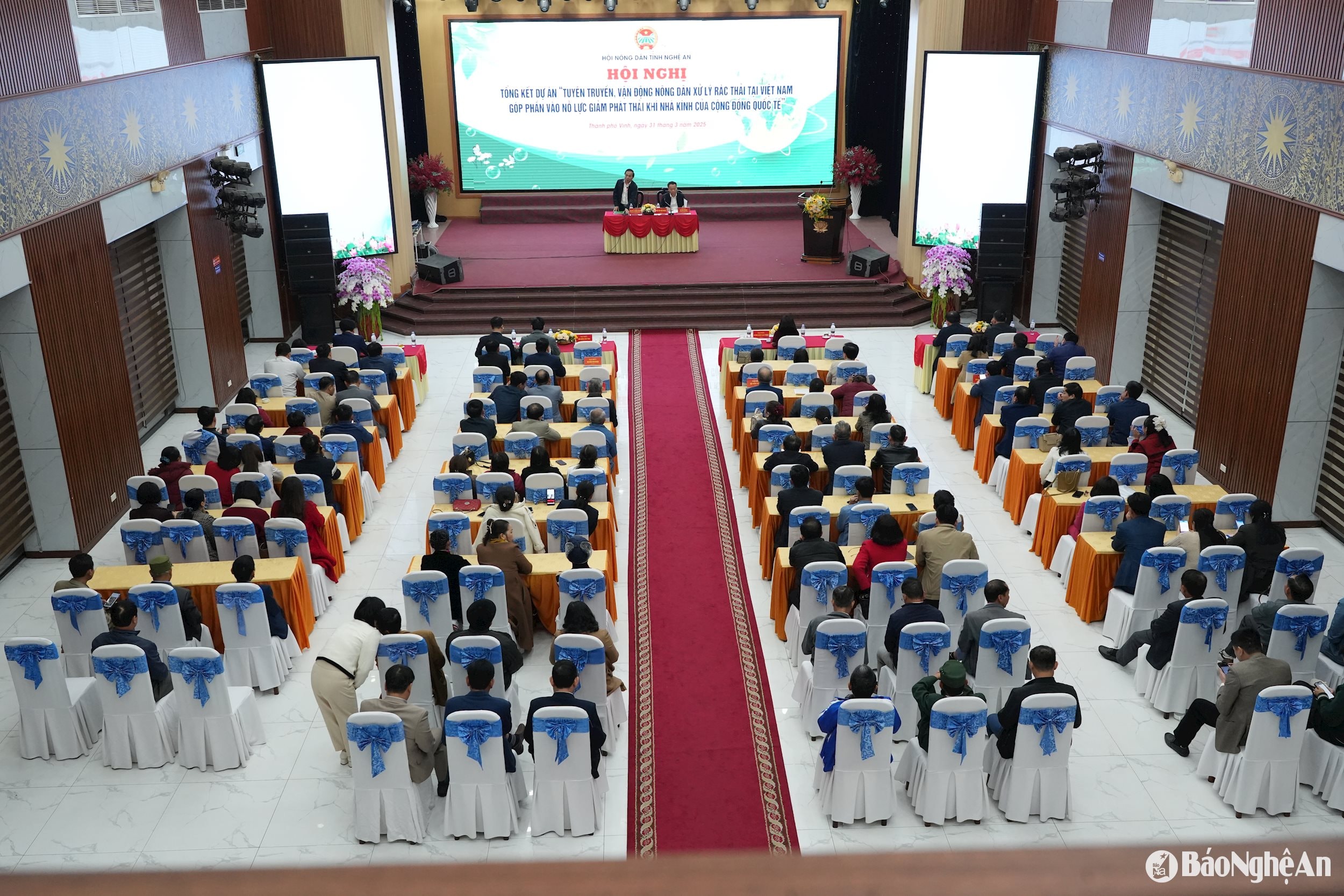
On March 31st, the Nghe An Provincial Farmers' Association held a conference to summarize the project "Raising awareness and mobilizing farmers to manage waste in Vietnam, contributing to the international community's efforts to reduce greenhouse gas emissions".
Attending the conference were leaders of the Provincial Farmers' Association; members of the Provincial Project Management Board; leaders of the Farmers' Associations of districts and towns; and exemplary farmers participating in the project in their respective localities.
At the workshop, representatives from the Provincial Farmers' Association Project Management Board assessed the project's performance during the period from 2022-2024.
Specifically, the project "Raising awareness and mobilizing farmers to manage waste in Vietnam, contributing to the international community's efforts to reduce greenhouse gas emissions" is being implemented in 15 communes across 3 districts and towns, including: Hoa Son, Tan Son, Xuan Son, Thinh Son, Lac Son, Dang Son communes (Do Luong district); Kim Lien commune, Thuong Tan Loc town, Xuan Lam, Nam Thanh communes (Nam Dan district); and Nghia Tien, Tay Hieu, Dong Hieu, Nghia My communes (Thai Hoa town).
.jpg)
The project aims to transform organic waste into a valuable resource; increase farmers' income from organic waste; protect the environment; reduce greenhouse gas emissions from agricultural production and feed waste; improve soil health and enhance animal health; and improve public health.
The project focuses on five technical solutions: techniques for fermenting crop by-products into animal feed, techniques for raising chickens on thick biological bedding, techniques for composting organic fertilizer in the fields, techniques for raising earthworms, and techniques for raising calcium-rich worms.
.jpg)
After 3 years of implementation, the project has organized 42 training courses on environmentally friendly organic waste treatment techniques for 1,320 farmer members in 15 participating communes; and has built 670 waste treatment models in the participating communes (including: 110 models of fermenting crop by-products for animal feed; 150 models of raising chickens on thick biological bedding; 110 models of composting in the fields; 150 models of raising calcium worms and 110 models of raising earthworms).
In addition, the Provincial Farmers' Association directed the Farmers' Associations of the three districts and towns participating in the project to implement it in 100% of the communes and towns in the area, aiming to spread and replicate exemplary models.
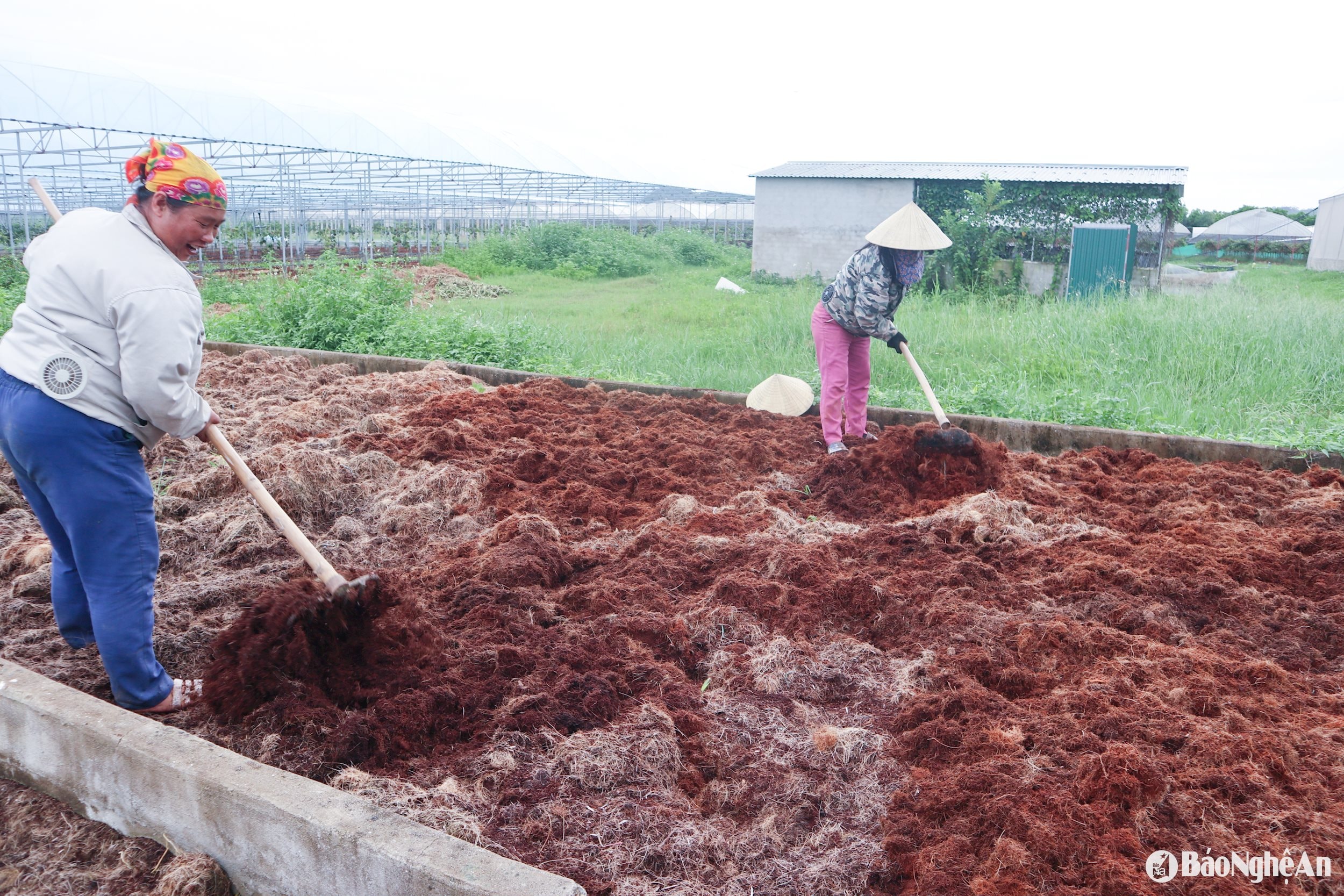
To date, the units participating in the project have replicated more than 10,000 TOT1 (including techniques for fermenting crop by-products as animal feed, techniques for composting organic fertilizer from crop by-products, and techniques for raising chickens on thick biological bedding) and TOT2 (including techniques for raising earthworms and techniques for raising calcium worms) technical models.
In addition, the Project Management Board directed and guided the establishment of 11 "Preserving a Green Future" groups in the communes participating in the project.
Speaking at the conference, Comrade Nguyen Quang Tung - Chairman of the Provincial Farmers' Association and Head of the Project Management Board - emphasized: "The application of environmentally friendly waste treatment techniques has helped households reduce input costs in agricultural production."

The project aims to gradually develop sustainable circular agricultural models. Simultaneously, through its activities, it seeks to raise awareness among the people and farmers about environmental protection, climate change adaptation, maintaining and expanding environmental protection models, and participating in the development of new rural areas.
At the workshop, delegates shared, exchanged, and discussed experiences, advantages, difficulties, and proposed solutions to expand the project in the future.

At the conference, the Project Management Board evaluated and rewarded the groups that had achieved good results in participating in project activities during the 2022-2024 period.


