
Nghi Duc proposes speeding up the process of issuing land ownership certificates ("red books") to residents.
(Baonghean.vn) - This was the content that voters raised with representatives of the Provincial People's Council and the Vinh City People's Council at the voter consultation meeting on the morning of June 16th.
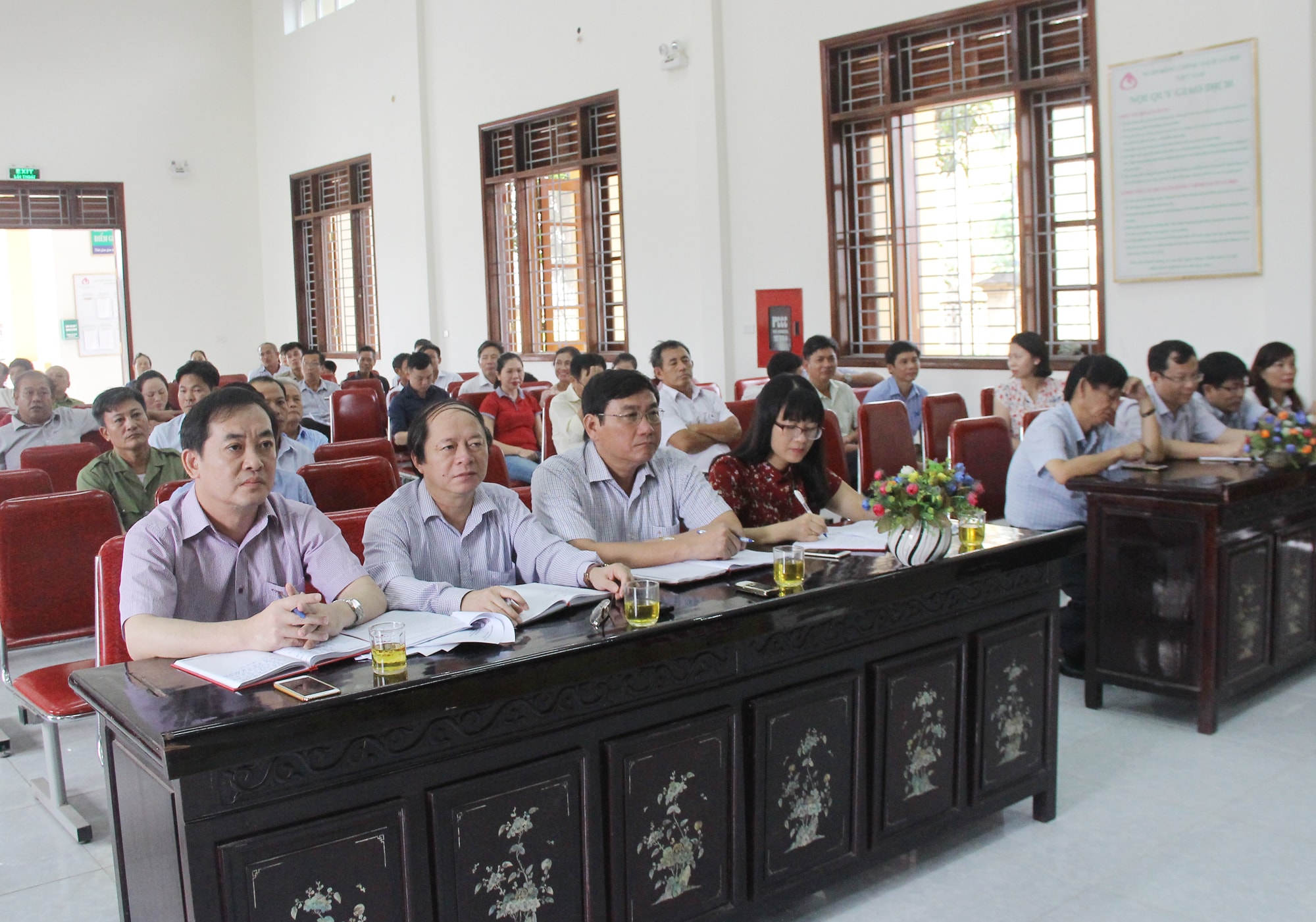 |
| Provincial and Vinh City People's Council representatives participate in a meeting with voters in Nghi Duc commune, Vinh City. Photo: Minh Chi |
Nghi Duc was merged into Vinh City 10 years ago; this area is currently in a development phase with many projects being implemented, especially transportation infrastructure such as the Vinh - Cua Lo Boulevard and the 35-meter road.
This is a factor that affects the psychology and rights of the people, especially the issue of compensation for land clearance and resettlement, which has been raised by many voters with representatives of the Provincial and City People's Councils.
Based on the practical experience in the area, where numerous infrastructure plans and investment projects are affecting economic development opportunities and housing improvements, Mr. Nguyen Dinh Truong from Xuan Huong hamlet suggested that the State or the investors should have policies to compensate households located within the planned areas; and at the same time, measures should be taken to limit the situation of "suspended" planning projects.
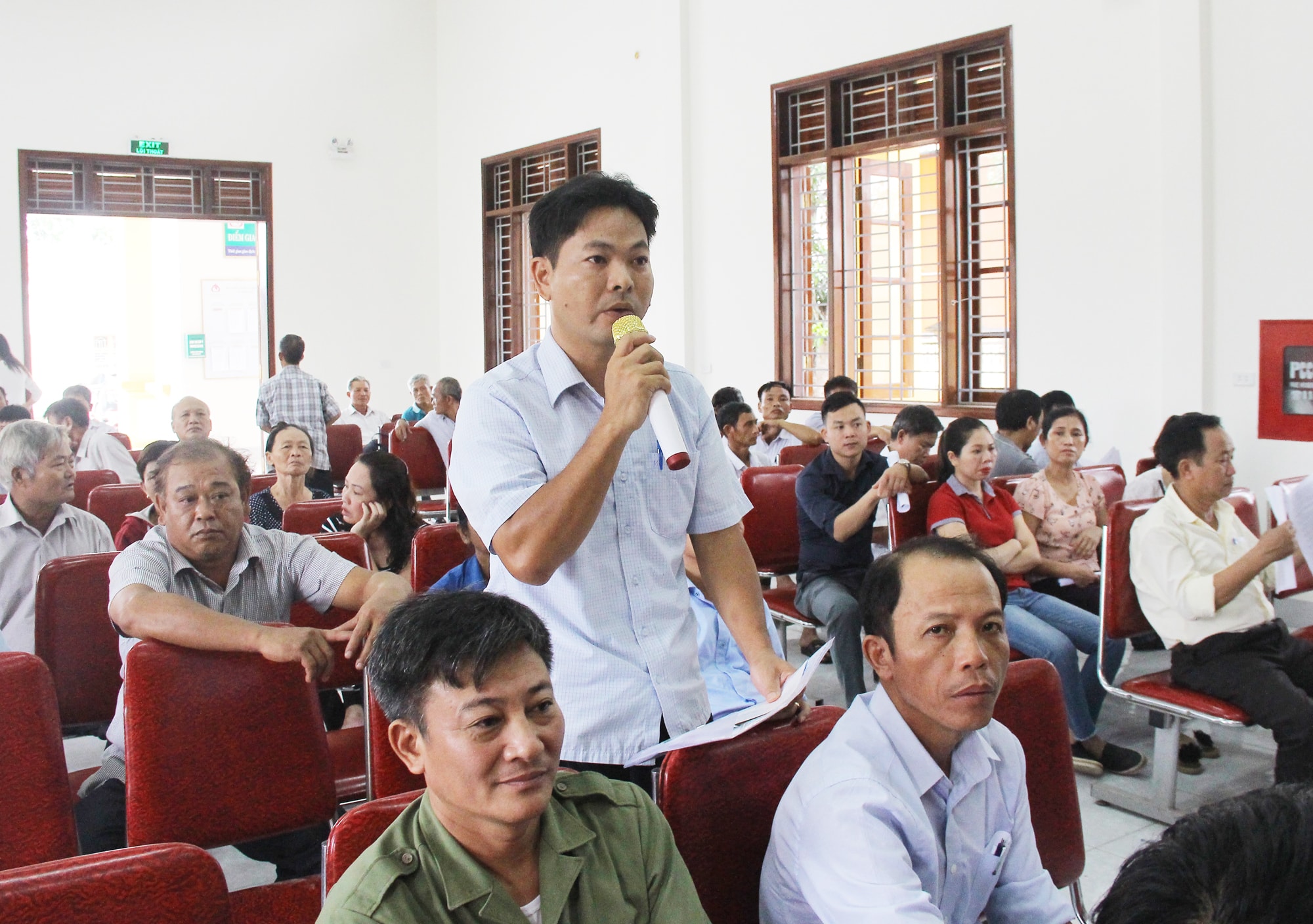 |
| Voter Nguyen Van Thong from Xuan Huong hamlet requested timely compensation and support for land clearance. Photo: Minh Chi |
A common issue raised by many voters is the slow progress in issuing land use right certificates to residents, affecting their rights. Mr. Bach Huy Trang, from Xuan Binh 14 hamlet, reported that out of 100 households in his hamlet, only 2 have received land use right certificates, leaving 98 households without them. He also pointed out that the new regulations stipulate a very low land allocation for residential purposes, which residents disagree with.
Regarding another issue, Mr. Pham Dinh Quan from Xuan Huong hamlet reflected that in 2016, Nghi Duc commune was recognized as a New Rural Area but still owed some criteria. The Vinh City People's Committee promised to provide cement to complete the remaining criteria, but to date, the Xuan Huong hamlet cultural center, despite being planned for a new location, still lacks land and funding for construction.
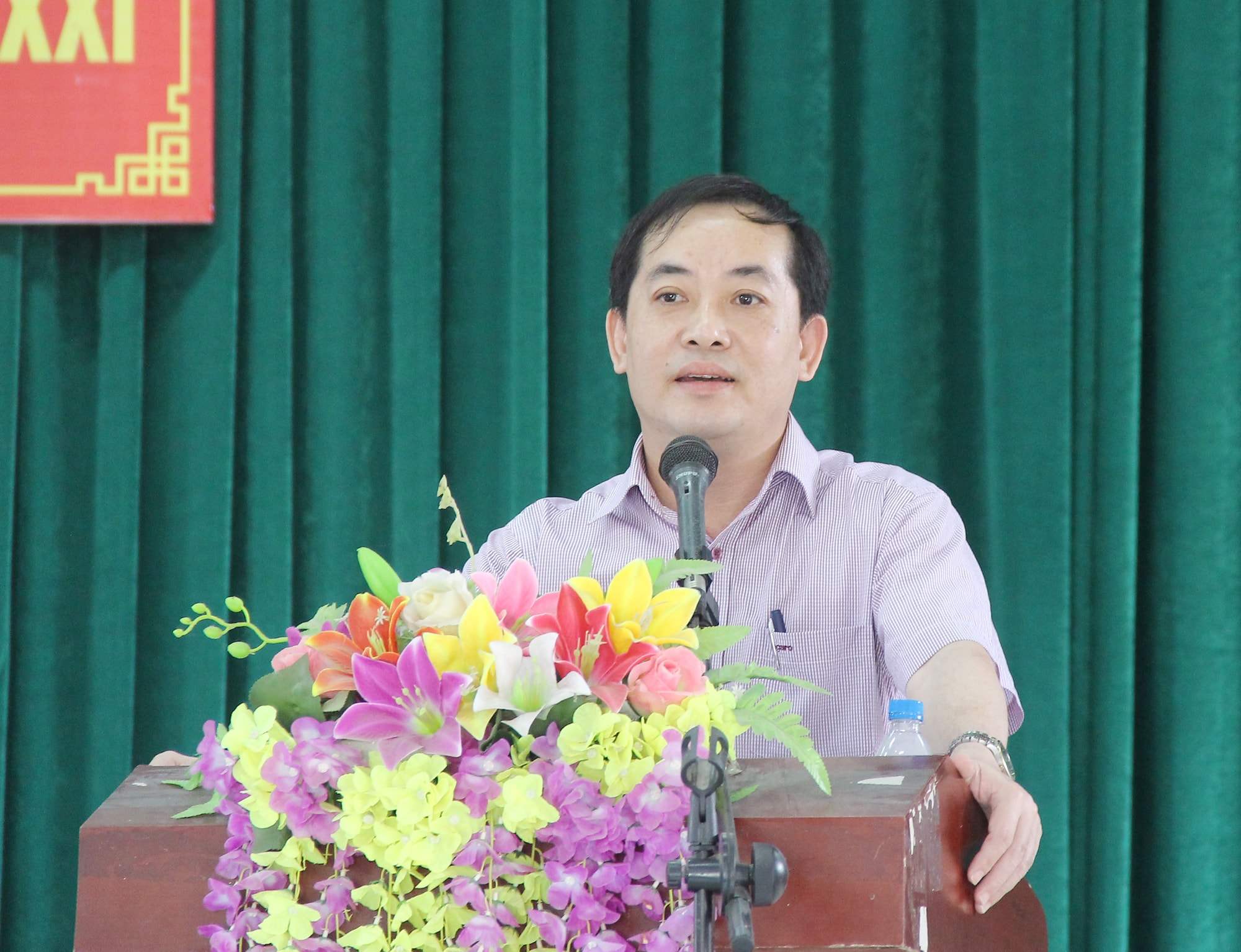 |
| Provincial People's Council representative Nguyen Van Lu explains the opinions and feedback of voters. Photo: Minh Chi |
Many voters also reflected on the low compensation rates for agricultural land and reclaimed land; the poor quality of resettlement infrastructure; and the slow progress in providing compensation for land clearance for the Vinh - Cua Lo Boulevard project.
Concluding the meeting with voters and addressing their concerns and suggestions, Provincial People's Council representative Nguyen Van Lu – Standing Deputy Secretary of the Vinh City Party Committee and Chairman of the City People's Council – stated that Nghi Duc is currently undergoing a revolution for itself and the city with many projects being implemented, which has led to certain difficulties and disadvantages for the people.
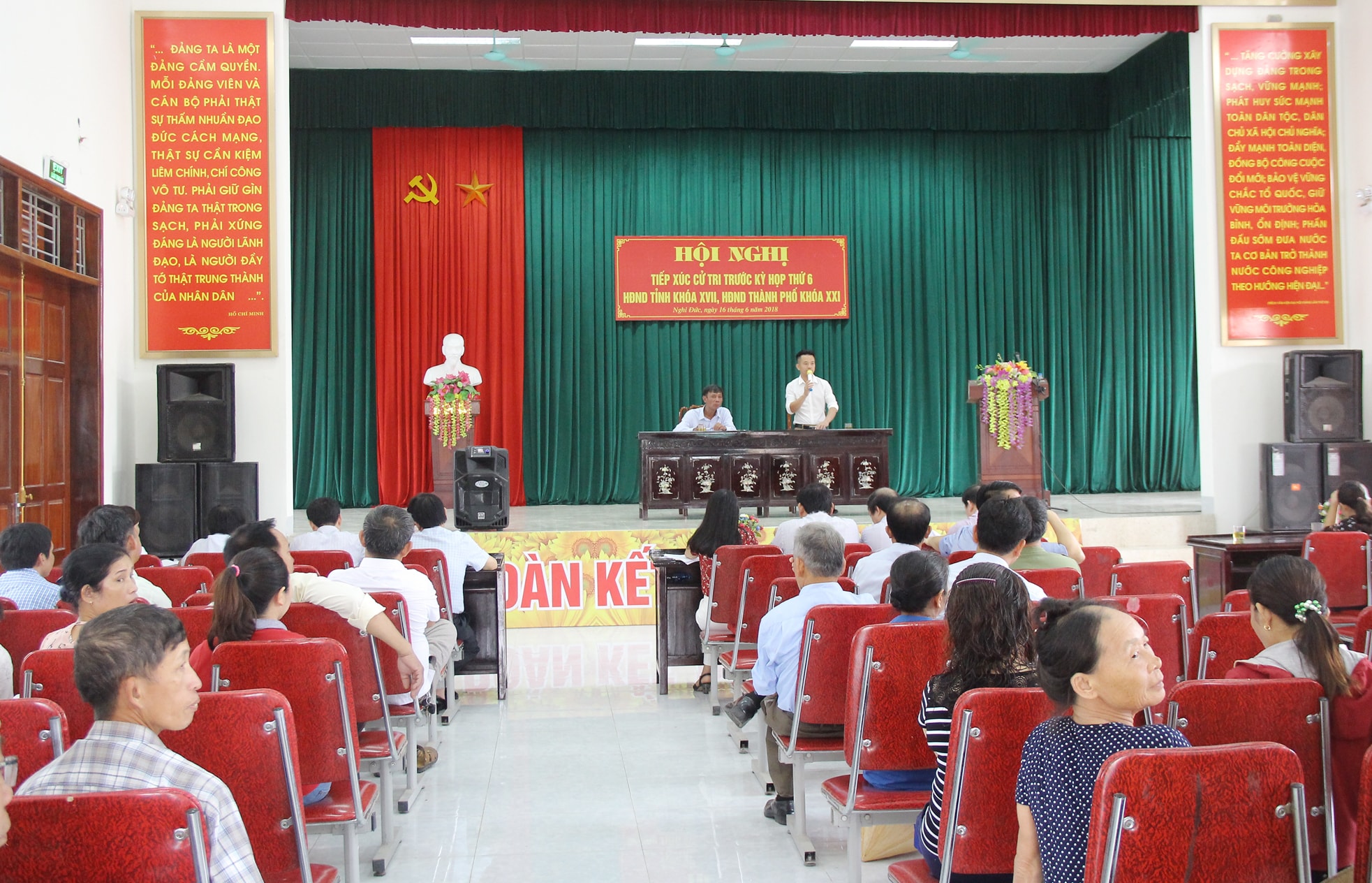 |
| A view of the voter outreach event. Photo: Minh Chi |
Representative Nguyen Van Lu also affirmed that these difficulties and disadvantages faced by the people pose a challenge for the Party committees and authorities at all levels of the city, requiring them to make efforts and take responsibility to focus on addressing them in the coming period.
Representative Nguyen Van Lu also promised to direct the City People's Committee to supplement and complete the criteria for New Rural Areas in Nghi Duc. Acknowledging the slow progress in issuing land use right certificates, Representative Nguyen Van Lu stated that the primary cause is the responsibility of the commune government, and also the responsibility of the people in cooperating to determine the origin of the land.
Representative Nguyen Van Lu also addressed many issues related to "stalled" planning, slow compensation for land clearance, administrative reform, and improving the capacity and sense of responsibility of officials and civil servants at all levels in resolving the issues at hand…


