
Resolution on the Legislative Program for 2027
The 2027 legislative program includes 21 draft laws to be submitted to the National Assembly for consideration and approval, focusing on various fields; it also emphasizes improving the quality, discipline, and effectiveness of lawmaking.
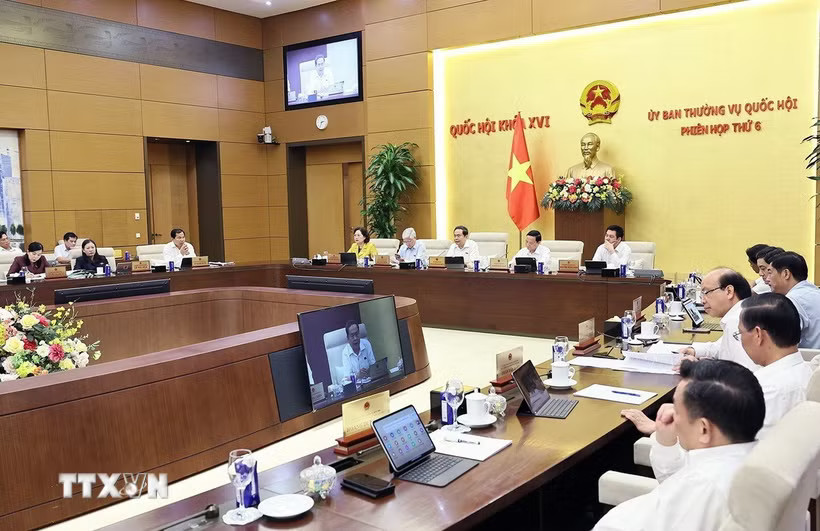
National Assembly Chairman Tran Thanh Man signed and promulgated Resolution No. 20/2026/UBTVQH16 on the legislative program for 2027.
According to the resolution, the Standing Committee of the National Assembly decided to submit to the National Assembly for consideration and approval at the 3rd Session of the 16th National Assembly (May 2027) nine draft laws, including: the Law on Water Supply and Drainage; the Law on Militia and Self-Defense Forces (amended); the Law on Meteorology and Hydrology (amended); the Law on Disaster Prevention and Control (amended); the Law on Construction Materials; the Law on National Defense (amended); the Law on Inspection (amended); the Law amending and supplementing a number of articles of the Law on Environmental Protection Tax; and the Law amending and supplementing a number of articles of the Law on the Organization of the People's Procuracy.
Twelve draft laws will be submitted to the National Assembly for consideration and approval at the 4th Session of the 16th National Assembly (October 2027), including: the Law on Occupational Safety and Health (amended); the Law on Enterprises (amended); the Law on Dikes (amended); the Law on Geology and Minerals (amended); the Law on National Defense and Security Education (amended); the Law on Diplomatic Ranks and Titles; the Law on Commercial Mediation; the Law on Administrative Procedure Control; the Law on Crop Production (amended); the Law amending and supplementing a number of articles of the Law on Science, Technology and Innovation; the Law amending and supplementing a number of articles of the Law on Export and Import Taxes; and the Law amending and supplementing a number of articles of the Law on Road Traffic Order and Safety.
Submit to the Standing Committee of the National Assembly for consideration and approval in 2027 one draft ordinance and one draft resolution, including: the Ordinance amending and supplementing a number of articles of the Ordinance on Prevention and Control of Prostitution; and the Resolution of the Standing Committee of the National Assembly on the expenditure levels for the organization and operation of social insurance and unemployment insurance for the period 2028-2030.
The Standing Committee of the National Assembly also assigns the submitting agency, the reviewing agency, and the projected timeline for submitting draft laws, ordinances, and resolutions.
The resolution states: The Government and the agencies submitting the draft projects shall continue to thoroughly understand and seriously implement the requirements of Resolution No. 66-NQ/TW, Conclusion No. 09-KL/TW, Conclusion No. 17-KL/TW, and the directives of General Secretary and President To Lam on renewing the thinking in lawmaking, perfecting the structure of the legal system, and orienting legislation for the 16th National Assembly term; fully comply with the provisions of the Law on the Promulgation of Legal Normative Documents in the process of drafting, submitting for consideration, and approving draft laws, ordinances, and resolutions; strengthen discipline and order, proactively innovate methods, improve the quality and effectiveness of legislative work, and ensure strict implementation of the 2027 legislative program; strengthen control of power, prevent and combat corruption, and prevent the integration of "group interests" and parochial interests in the lawmaking process. Continue to promote the application of digital technology, artificial intelligence, and big data in lawmaking.
The Standing Committee of the National Assembly requests the Government to direct, supervise, and inspect the agencies assigned to lead the drafting, receiving, and revising of draft laws to ensure quality and timely submission to the National Assembly and the Standing Committee of the National Assembly; to allocate sufficient time for discussion and feedback on the draft and the explanations and responses to the opinions of National Assembly deputies; and to develop and issue detailed regulations ensuring that they take effect at the same time as the laws, ordinances, and resolutions.
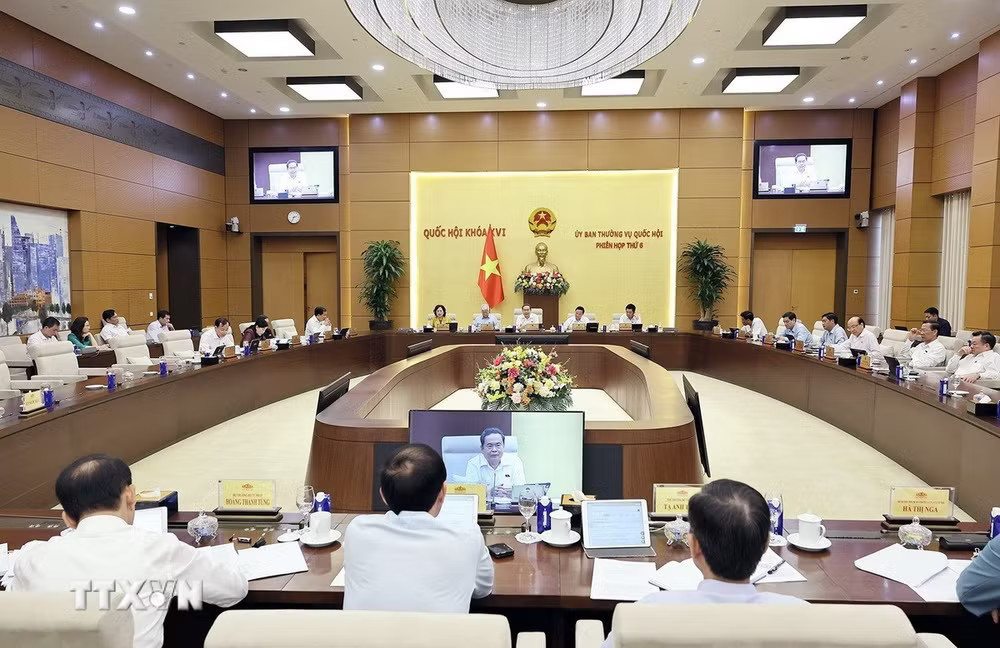
The Government and competent agencies submitting draft laws, ordinances, and resolutions will continue to direct research and review of the Party's 14th Congress documents, the guidelines and policies in the documents of the Central Committee, the Politburo, the Secretariat, and the Central Steering Committees, promptly proposing the addition of legislative tasks to the Legislative Orientation for the 16th National Assembly term, and adding necessary projects to the annual program to soon institutionalize the Party's new guidelines and policies.
Proposals for drafting laws, ordinances, and resolutions must adhere to the principles of program formulation.
Proposals for drafting laws, ordinances, and resolutions must clearly state the issues to be addressed, the scope of regulation, the main policies, the resources, and the capacity for implementation; political and sensitive issues, or those without established policies, must be submitted to the competent authority for consultation before being included in the Program.
The proposal for drafting a legal document must be placed within the overall context of relevant legal regulations, clearly defining the boundaries of regulation and the relationships between documents. This will limit the issuance of numerous separate documents regulating closely related issues within the same field; maintain discipline regarding the stability and consistency of the legal system; and prevent continuous amendments without sufficient time for practical verification, which increases the burden of legal compliance for citizens and businesses, negatively impacting and hindering the investment and business environment.
For documents of the Standing Committee of the National Assembly that need to be issued based on provisions already assigned in laws and resolutions of the National Assembly, it is not necessary to go through the full procedure of proposing their inclusion in the Program; it is sufficient to clearly state the legal basis for their inclusion in the Program.
The agencies and organizations assigned to lead the drafting process must effectively organize the drafting, acceptance, and revision of draft laws, ordinances, and resolutions in the legislative program, ensuring quality and adherence to the established schedule; they must carry out the policy development, consultation, and approval phases effectively before proceeding with the drafting of the project; for projects not requiring policy development procedures, they must provide clear explanations and reports when submitting the project; they must conduct thorough and serious activities to summarize and gather opinions from affected parties and relevant agencies and organizations; and they must closely coordinate with the lead agency responsible for review during the review, acceptance, and revision of the project to ensure quality and timely completion.
The Ministry of Justice strengthens its role in appraising, advising, and assisting the Government in developing proposals for laws, ordinances, and resolutions; monitoring, inspecting, and urging the implementation of the Program; closely coordinating with ministries and ministerial-level agencies in preparing and finalizing dossiers for draft laws, ordinances, and resolutions under the Government's authority; and continues to effectively perform its task as the lead agency in conducting technical reviews of documents submitted by the Government before they are presented to the National Assembly and the Standing Committee of the National Assembly for consideration and approval.
The National Assembly's Ethnic Council and Committees continue to uphold responsibility, strengthen capacity, and promote democracy in legislative work; continue to innovate methods of review, coordination in receiving and revising draft laws, ordinances, and resolutions in the direction of early and distant approaches, comprehensive and in-depth research, close adherence to reality, and effective resolution of practical issues arising from socio-economic life; preside over and coordinate the review of laws, ordinances, and resolutions within their scope of responsibility to identify inadequacies or contradictions and overlaps, and promptly propose amendments and additions to relevant documents; strengthen supervision, promptly detect, clarify, and propose solutions to institutional bottlenecks and legal gaps.
The Secretary General of the National Assembly - Head of the National Assembly Office promptly organized the compilation of opinions from National Assembly deputies discussed in committees and in the plenary session on draft laws and resolutions; provided complete information and documents to serve National Assembly deputies in discussing and giving opinions on the drafts; and directed the implementation of solutions applying information technology and digital transformation in monitoring the implementation of the National Assembly's legislative orientation and the annual legislative program.
The National Assembly delegation and individual National Assembly members dedicate time to studying and consulting with local agencies and organizations, experts, scientists, and voters; organizing discussions and contributing high-quality opinions to help refine draft laws and resolutions submitted to the National Assembly for consideration and approval.
The Standing Committee of the National Assembly requests the Vietnam Fatherland Front and other political and social organizations to continue to promote and improve the quality of social critique of draft laws.
The Vietnam Federation of Commerce and Industry actively participates in contributing opinions during the process of formulating and promulgating policies and laws, especially in the fields of economics, trade, investment, and the production and business activities of enterprises.


