
Iranian lawmakers propose developing intercontinental ballistic missiles (ICBMs).
A group of 85 Iranian lawmakers has submitted a document to Supreme Leader Mojtaba Khamenei proposing mass production of ICBMs and an end to nuclear negotiations with the United States.
A group of 85 members of Iran's parliament has formally submitted a petition to Supreme Leader Mojtaba Khamenei, requesting authorization for the development and mass production of intercontinental ballistic missiles (ICBMs). This move comes amid deep skepticism from the Iranian legislative branch regarding international negotiations and pressure from US sanctions.
Changes in foreign policy and defense strategy
According to the Asriran newspaper, Iranian lawmakers are demanding that the head of state authorize the national armed forces to develop long-range weapons on a large scale. The main reason given is a lack of confidence in the US stance on peaceful solutions to the current regional conflict.
In addition to developing missiles, the group of lawmakers also proposed tough measures to reaffirm the nation's position:
- All negotiations related to the nuclear program must cease.
- Demand that the United States compensate for war damages.
- Establish permanent control over the Strait of Hormuz, a strategic shipping lane in the Gulf region.
Technical and deterrence capabilities analysis
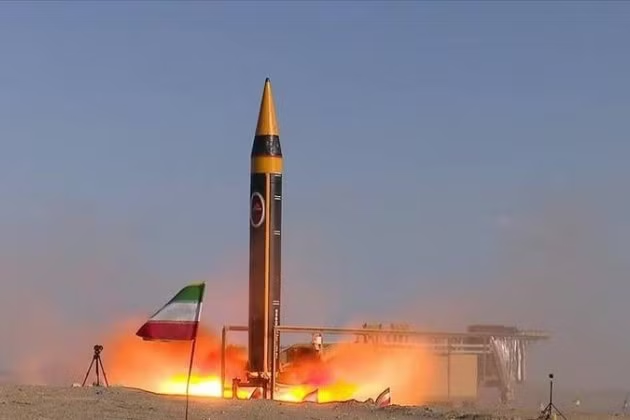
Currently, Iran has not officially tested any missiles classified as ICBMs (with a range exceeding 5,500 km). The country's most publicly disclosed long-range ballistic missile arsenal includes the Khorramshahr, Sejjil, and Shahab-3 series, with a maximum range of approximately 2,000 km.
Analysts at the US-based Institute for the Study of War (ISW) believe that the congressional group's call is essentially aimed at developing weapons capable of directly striking US territory. Upgrading existing medium-range missiles to intercontinental ballistic missiles requires new advances in engine technology and re-entry materials.
Strategic impact
Notably, Iranian lawmakers want to establish a permanent military presence in the Strait of Hormuz to gain an advantage in geopolitical confrontations. If this proposal is approved, it would represent a major shift in Iran's military doctrine, from regional defense to global deterrence with long-range strategic weapons.


