
The Apache helicopter maintenance cost paradox: Why is the software as expensive as manufacturing a new one?
The Pentagon recently spent $2.7 billion on Boeing solely for the maintenance of its AH-64 Apache helicopter fleet, reflecting a trend towards modern weapons becoming entirely dependent on source code and intellectual property.
The Pentagon has just awarded Boeing a $2.7 billion contract to ensure the combat readiness of its entire fleet of AH-64 Apache attack helicopters. Notably, this is not a new order, but a massive budget specifically for logistics, system updates, and lifecycle management for existing airframes in service.
The logistics paradox in the digital age.
The cost of nearly equipping a new squadron just to "keep the old one from rotting" has highlighted a new reality in military aviation: the cost is no longer primarily in rotors, engines, or armor protection. Instead, the focus of value has shifted to access to data, software, and intellectual property (IP).
The AH-64 Apache today is a complex combat platform with sophisticated sensor systems, fire control radar, and data links such as Link 16. As the volume of source code and threatening libraries increases, the digital logistics footprint even exceeds the cost of the physical airframe. The U.S. military may possess the helicopter physically, but the operational control of its "digital brain" is deeply dependent on the manufacturer.
Why is maintenance more profitable than new production?
From a defense economics perspective, new airframe assembly lines are often constrained by fixed-price contracts and rigorous auditing processes. Conversely, long-term technical assurance packages become a stable and sustainable source of revenue, similar to the "software subscription" model in the civilian sector.
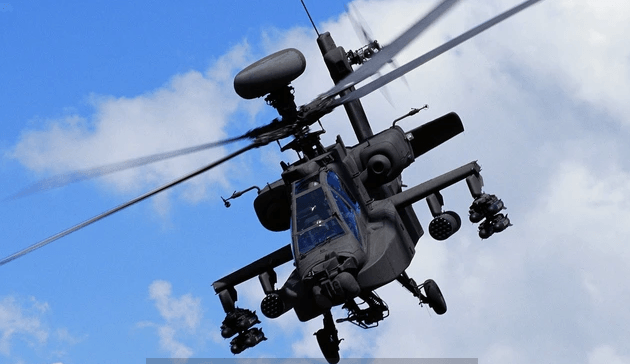
Boeing not only performs purely mechanical maintenance but also manages the entire ecosystem of upgrades, bug fixes, and the integration of new sensors. In fact, an AGM-114 Hellfire missile or radar system only performs at its best when it has the latest algorithms and target data. The $2.7 billion expenditure is therefore seen as an "entry ticket" to maintain the right to use proprietary source code and data.
Supplier locking mechanism
The "vendor lock-in" mechanism operates through technical data access. Because Boeing holds the control source code and digital architecture, third parties are virtually unable to engage in in-depth maintenance without legitimate access to the core system. Although the US Department of Defense is promoting an open architecture model (MOSA) to reduce dependence, with the AH-64E Apache Guardian variant, the electronics are so tightly integrated that decoupling would require restructuring the entire internal data network.
Pressure on allied nations
This paradox isn't limited to the US. When countries like Poland, Australia, or South Korea sign multi-billion dollar contracts to purchase Apache helicopters, they simultaneously enter into a decades-long commitment. Local assembly of certain components doesn't equate to complete control over the fire control system.
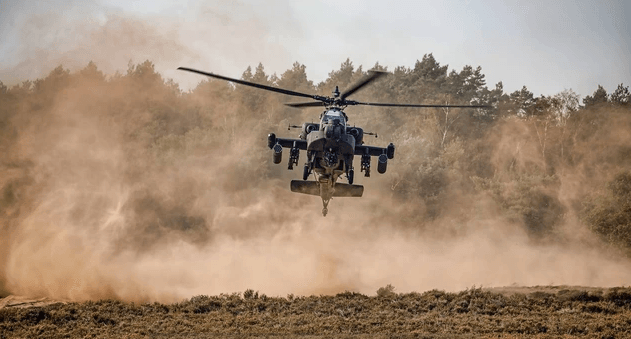
Any integration of indigenous combat management systems or modification of sensor configurations must pass the manufacturer's certification hurdle. Unauthorized interference with the core software can result in the loss of flight certification and the قطع of technical support. In modern warfare, a code embargo can sometimes be more effective at disrupting enemy air defense systems than any other.
The trend of turning iPhones into modern weapons.
This model reflects the trend of "iPhone-izing" weapons: users own the hardware, but the operating system is in the hands of the manufacturer. Weapons like the AH-64 Apache, Abrams tanks, and F-35 fighter jets are gradually becoming "armored shells" for expensive source code inside. As the cost of manufacturing the airframe stabilizes, the cost of maintaining digital updates will continue to escalate.
The $2.7 billion contract is indicative of a new power structure in the defense industry. In an era of software-defined warfare, whoever controls the data and source code will control the actual combat capabilities of the weapon system. The Apache remains the world's leading attack helicopter, but its value is now determined by the invisible code running behind the screen, rather than just the steel and engine.


